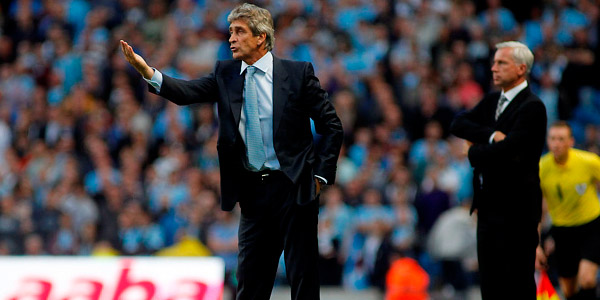
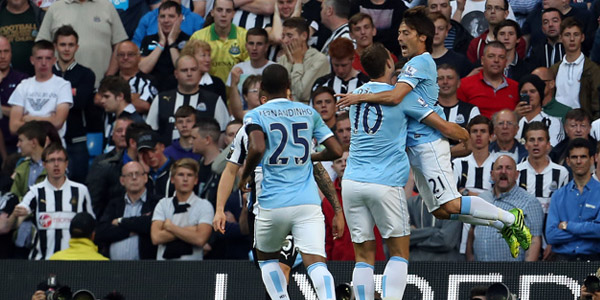
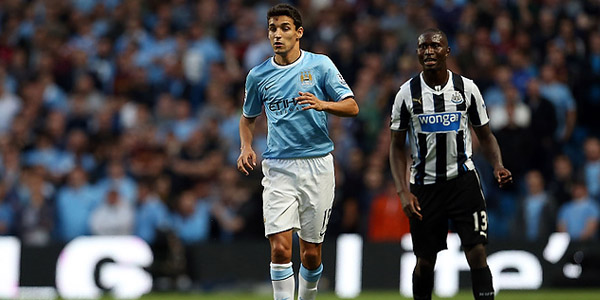
Manchester City, former Premier League champions, money to burn and expectations sky high, but when a new manager walks through the door they have the unenviable task of sorting things out that caused the previous regime to leave. Things were no different when cheerful Chilean Manuel Pellegrini entered the Etihad Stadium, with the club looking to wrestle the league back back from arch city rivals Manchester United. But this was not the only problem that the former Villarreal boss took on when he agreed to take charge of the Citizens. A club with so much expectation, and very short time frames in which to perform these miracles, the top job at City has become tougher than most, and it is a wonder than previous incumbent Roberto Mancini managed to stay in the role for as long as he did. Pellegrini's European pedigree was there for all to see, and when he took the job he had a proven track record of taking unfashionable clubs such as Malaga and Villarreal to extreme highs. Now he has taken on one of the biggest clubs in England, and after a mixed start that sees the club sitting in eighth place in the table, the problems highlighted here at to a large extent still visible.
5. Huge Squad With Huge Wages
Ok, so this would be the same case for any manager at most big clubs, but with cash rich City the problem is increased ten fold. The squad that the former Real Madrid coach inherited at the Etihad was not only full, but stocked with players who had a genuine shot at the first team. Unlike many of their rivals, City have set about buying up plenty of talent over the past few years, with some succeeding, but plenty of expensive flops. Jo, Roque Santa Cruz and Emmanuel Adebayor immediately spring to mind. By my count, 22 of the 25 man squad could claim to be worthy of a first team place at the club, which is fine, but keeping them all happy is a challenge that many do not envy. It's hard enough keeping your squad happy on FIFA 14 let alone in real life! Luckily for the club, Pellegrini is a man manager of the finest quality, and has gone a long way to ensure that everyone is fairly happy with their lot, but there are some cases that are beyond even his control. Players who were bought for hefty transfer fees but who cannot get a game for the club are a problem that still exist, and may have to be sold in the January transfer window for the problem to be sorted. The question then is getting rid of them, as with such high outlays when they were bought, other clubs baulk at the wages the players want, leaving many such as Santa Cruz to run their contracts down and leave when they expire rather than leaving for a fee. This is still something that Pellegrini needs to rectify over the coming transfer windows, either making use or getting rid.
4. Constantly Changing First 11
One of the problems of having a big squad is making sure each player gets game time, which could be beneficial as players are getting lots of rest whilst battling in four different competitions, but also means there is no consistent side. This was a major downfall for Pellegrini's predecessor at the club, with Mancini struggling to settle on one team, instead using multiple formations and tactics with players used in a variety of positions, which was one of the big factors that saw him leave the club. The problem being, when a club has so many world class talents in their side, how are you going to use them all on a consistent basis? The fact of the matter is you cannot, and Pellegrini is experiencing this at the moment, playing some players who aren't in form at the moment probably because he feels he has to. Take Javi Garcia, a good player yes but one who is forced out of position to centre back where he has become exposed, simply because his coach can't drop the players in his usual position of defensive midfielder. The team has used a different formation with different players in every league game this season, and whilst this helps keep them fresh, it will not benefit them in the long run, Pellegrini needs to find his best 11 and fast.
3. Strikers That Became Used To Playing Every Other Game
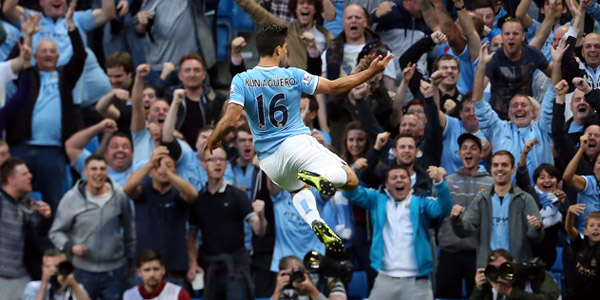
One fallout of not being able to choose his best 11 has meant that the club's strikers have been left in limbo for most of the season. An injury to new signing Stevan Jovetic has meant that the other three main strikers, Sergio Aguero, Alvaro Negredo and Edin Dzeko have rotated the attacking positions, which varied between lone and partnership roles. Despite this, Aguero has recently hit a purple patch and has taken on the role as the club's top striker, starting his last five games, leaving the other two to challenge for being his reserve, unless the manager uses two strikers, in which case Dzeko has been paired with Aguero three times whilst Negredo trumps him with five. With Jovetic getting back into full fitness this creates yet another selection headache for the manager, which will no doubt end in more rotation for the attacking quartet, which in turn can only have a detrimental effect on the club. Until Pellegrini finalises his favoured first 11, the strikers in the side bar Aguero will not be able to get a good run of games in the squad, a policy that has meant Dzeko only has three goals to his name while Negredo has four.
2. Goalkeeping Crisis
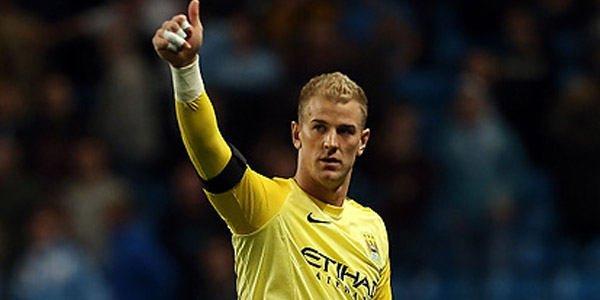
The problem of Joe Hart was present before the 60-year-old joined the club, and has still not been sorted properly, although Pellegrini has at least been proactive in this sense, bringing in reserve keeper Costel Pantilimon in place of the England No.1 in recent games. The Romania international provides a short term solution to the problem whilst allowing Hart to regain his composure on the bench, but his performances have showed no signs of improvement since Pellegrini took over, and reports suggest that he is rapidly running out of patience with the keeper. Rumours that he will make a January move for Malaga shot stopper Willy Caballero refuse to go away, with Pellegrini knowing the keeper well from his time at la Rosaleda. The introduction of the Argentine keeper will provide the quality competition that the England international needs, and we could see a dramatic improvement in his performances leading up to the World Cup next year.
1. Poor Champions League Performances
One glaring factor during the Mancini years was his failure in the Champions League, where his side failed to make the knockout stages of the competition in both years they took part. This was obviously something the club's Abu Dhabi based owners were looking to rectify when they appointed Pellegrini, a man who had experience of reaching the Semi-Finals of the tournament when in charge of Spanish outfit Villarreal. To a large extent, he has succeeded, with the club sitting second in Group D with reigning champions Bayern Munich ahead of them. This however still presents a problem, highlighted with the ease in which the German giants tore apart City at the Etihad last month, and they made hard work of beating plucky Russian side CSKA Moscow recently both home and away. Although they have certainly improved on the European front, should they qualify as is looking extremely likely, they will no doubt struggle in the latter stages of the competition, with most of the players in the squad still learning at the highest level. Whilst there is nothing wrong with that, it may take longer than the owners expect for Pellegrini to put right some of the wrongs he took on when he accepted the job, proving Manchester City will not be built in a day. How do you think City will cope this season under new management? Is Pellegrini doing better than you thought?
Began writing about football aged 16, I've previously worked for Goal and I'm currently writing for Inside Spanish Football. Specialise in anything linked, connected with or involving football!