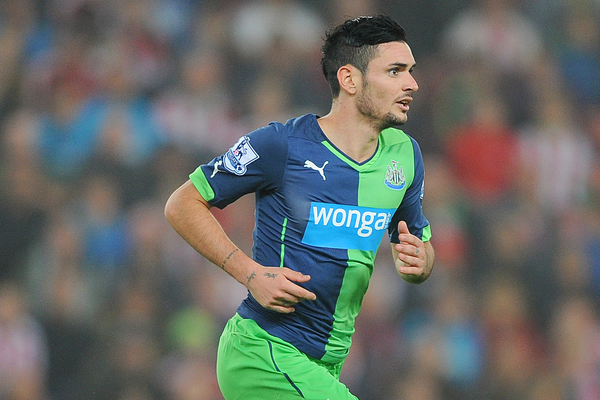
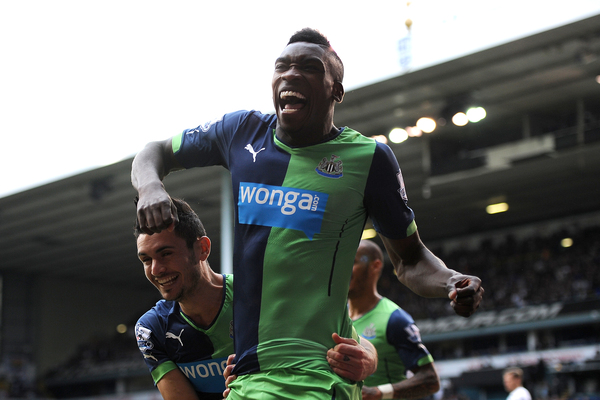
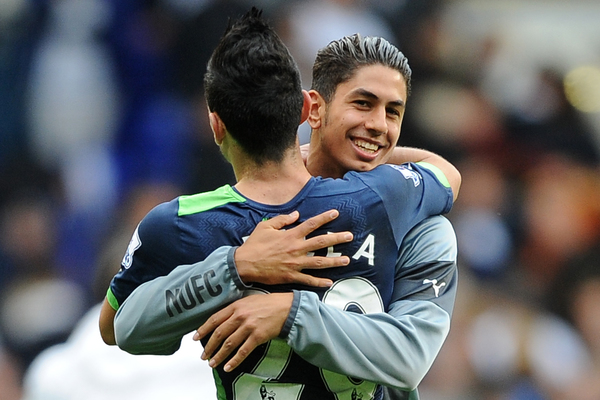
Spurs 1-2 Newcastle: 6 Big Lessons For Pardew

For the second season in a row, we absolutely picked Spurs' pockets.
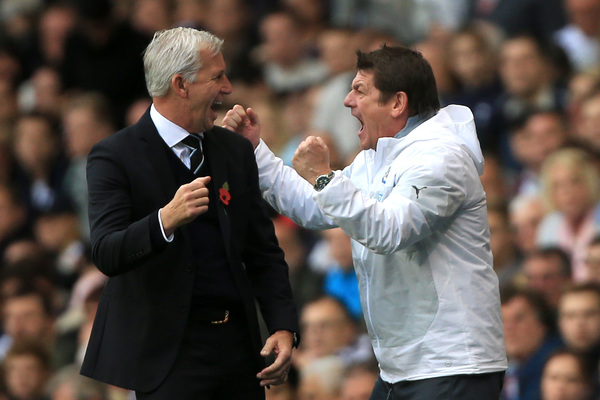
Ahead of the game, expectations of a victory at White Hart Lane would have been met with raised eyebrows or accusations of blind optimism - this was the team who'd just won 5-1 in Europe thanks to what some were calling the best goal they'd ever seen, after all - and when the line-up was announced too many fans just accepted defeat immediately. But as Jamie McClen and Clarence Acuna once proved at Highbury, miracles and miraculous victories can happen, and Newcastle scored another famous win at White Hart Lane. Even more gratifying than the three points and the rise to 14th place in the league was the revelation that Newcastle did not win by accident. Last year, the three points stolen from Tottenham were won very much despite the performance: we relied way too much on Spurs fluffing their attacking lines, and on Tim Krul having the game of his life. But this time out, the win came thanks to actual decisions made by the manager, and a change of personnel and tactics to take the game to Spurs. Hopefully, Pardew will have noticed the fact, and also that he deserves praise for those changes, but he should also be thankful for the performances of Moussa Sissoko and Fabricio Coloccini, who were both towers for their team. Let's just hope Pardew can take these major lessons into next weeks' tough game against Liverpool...

6. Steven Taylor Might Not Be The Best Answer, But He Is The Right One For Now
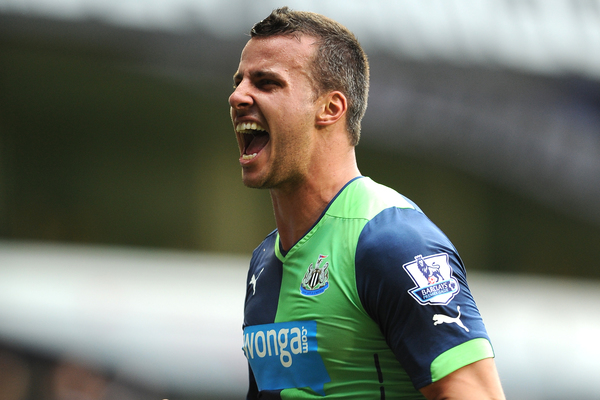
Of all the players on Newcastle's books, one of the most criticised is Steven Taylor. His behaviour on the pitch in attempting to whip up the crowd and distract opposition goalkeepers might make him something of a figure of fun, and his decision making leaves a lot to be desired, but he continues to be a better option than Mike Williamson. Williamson is an immobile stopper: designed to win the ball in the air (he can't direct or power his headers, sadly) or put in interceptions, and his lack of movement puts more pressure on Fabricio Coloccini. The Argentinian likes to roam a little, pushing out and wide to the wings to help cover at full-back, but with Williamson alone in the middle, holes open and Colo looks the fool for abandoning his post. With Taylor, the back four is more dynamic: he might not make every decision correctly, but he at least knows not to pay too much attention to the choices his captain makes. He has the ability to cover when Colo goes on a wander, and crucially, he will put his body on the line, as he proved against Leicester. Yes, he's not the most elegant player, but he is a mobile centre-half and he can still win things in the air - two key characteristics Newcastle have missed.

5. Play Your Own Football

The temptation with away games is always to play to contain the strengths of the opposition: it's not just a Pardew thing, and it's not just a Newcastle thing on the road, it happens at almost every club. Even Jose Mourinho admits to parking the bus to stifle tougher opponents. But Newcastle have been playing like the away team for about a year - since Yohan Cabaye left - seeking possession to over-run the opposition and stop them from playing, rather than playing to the team's own strengths. That usually means that creative players are asked too much to track back, or abandon their instincts to contain their opposite numbers, and it also, fatally, means Newcastle are usually on the back foot. That was the tale of the first half, but Tottenham were a lot smart with the ball, keeping 70% of possession and stopping Newcastle's containment game dead. But then, in the second half, after the changes to bring on more flair and directer players, Newcastle played to their own strengths and looked an entirely different team: for the first time in way too long, looking like a real team.

4. Encourage Colback To Play Like Scholes, Rather Than Keane
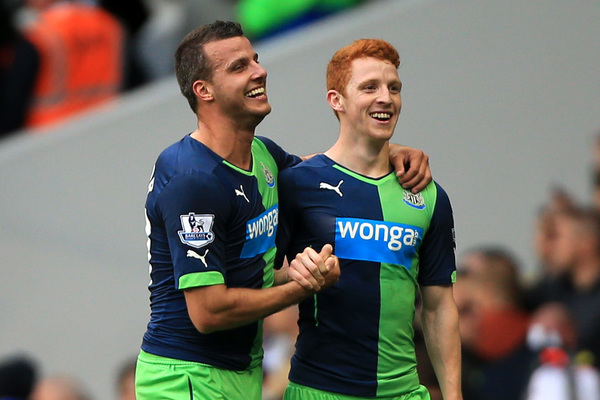
No doubt Sunderland fans would be falling over themselves to laugh at the suggestion that Colback's likeness to Paul Scholes could go further than the colour of his hair, but the point is that the Geordie midfielder is not a reductive player. For too many games, Pardew has asked him to play deeper than he is clearly comfortable with, and the gap in centre-midfield has been an issue in other teams countering. Colback is not like Roy Keane or Cheick Tiote: he will not go through players and form a brick wall in defensive midfield, preferring instead to look for the ball and to move it on quickly. He is a passing midfielder, rather than just one that breaks down the other team, and limiting him to that Keane-like role serves no purpose. He just ends up looking out of place. But then when he's given the chance to pass the ball a bit more, and unlock defences to link up with our attacking midfielders, the result is the breath-taking pass he threaded through to Sammy Ameobi for Newcastle's first goal.

3. Vurnon Anita Cannot Play An Enforcer Role

Similarly to Colback, there is no sense trying to get Vurnon Anita - a prodigiously talented technical footballer - to play in Cheick Tiote's role. He has neither the power in tackling nor the restraint to play in that one-dimensional style (that is no criticism of Tiote, incidentally, he's just very much a one-role player). The fact that he was turned into a defensive midfielder at Ajax does not mean he can play the enforcer role in front of the defence: he just isn't that type of defensive midfielder. He is the key to playing possession football, and his vision is his strongest point, helping his team attack from a deeper role, rather than being the last line of defence. Limited to the Tiote role, Anita has to invite more pressure, and spends too much time running back to his own goal, and it is only then that he looks like he actually deserves the "he's too small" accusations. Unfortunately, it doesn't look like Pardew will ever understand this, and the Dutchman is likely to be out sooner rather than later. Perhaps he'll go to Italy and show us exactly what we missed in playing him in the wrong role entirely?

2. Creativity Trumps Graft

There's a reason we're constantly being told that hard-work is top of the bill at Newcastle's Benton training ground these days: players, coaches and managers perpetually fall back on the evidence of graft to prove that everyone has the fight in them to fire the club away from the relegation zone. That is inevitable, but it's also an indication of the foundation that Pardew has built at Newcastle. The manager wants 11 Jack Colbacks, or 11 Shola Ameobis (a player he wrongly thought was a hard-worker), or 11 Yoan Gouffrans: all of whom will run and run and run for the cause, and sweat blood to try and get something to happen. Unfortunately, when faced with a brick wall, the answer isn't just to run through it, you have to have the insight and the creative thinking to navigate it somehow, which is why the alienation of creative players like Ben Arfa, Marveaux and to an extent Cabella because they don't have the work-rate is so frustrating. Yes, they probably aren't going to run through brick-walls, but they do have the ability to unlock doors in those walls that industrious players don't always see. And that is precisely why putting Cabella and Ameobi the younger on for the second half was so key to Newcastle winning.

1. Be Brave

When it emerged that Papiss Cisse was out injured, Alan Pardew could quite easily have chosen to play Yoan Gouffran up front alone, with someone else filling in out wide for the Frenchman, but in choosing to give Ayoze Perez his first start, he made an inspired and brave move that will benefit both the club and the player in the long run. Not only will Perez have gained a massive confidence boost, he will also look like more of an option to stand in (or at least be first under-study to a new striker) when Cisse heads off to Africa in January (if Senegal qualify as expected). He's shown flashes of brilliance so far, but now that he has a goal - and in testing circumstances - he will be a completely different prospect. And then of course there's the half-time substitutions that put Cabella and Sammy Ameobi on - both hugely attack minded moves, considering it meant sacrificing a defensive midfielder and seeking pressure rather than just possession (a move that had failed in the first-half). The fact that both men were instrumental in both goals proves that bravery can pay dividends, and for a manager who has been too safe and too reserved in his selections and system this season, that should prove a huge revelation. What else should Alan Pardew learn from the win against Spurs? Share your thoughts below in the comments thread.

Contributor
Contributor

WhatCulture's former COO, veteran writer and editor.