One MIND-BLOWING Secret From Every WWE Royal Rumble
1988 - The Real Inspiration Behind The Match
The Hell In A Cell match was heavily inspired by the ‘Last Battle of Atlanta’, promoted in 1983 by Georgia Championship Wrestling. The Ladder match originated in the Stampede territory. The Royal Rumble was also a twist on another territory’s match: San Francisco’s Cow Palace Battle Royal.
The Cow Palace Battle Royal was the biggest match on the Big Time Wrestling calendar.
In the ‘70s, the match was built by Roy Shire as a huge attraction to which the biggest territory stars across the land were invited - i.e., the match didn’t just utilise the existing roster. It was promoted in January in order to initiate the key storylines that would play out over the remainder of the year. Most of the time, the winner would receive a United States title shot at the next major Cow Palace show. The match was held under traditional battle royal rules - Pat Patterson’s interval format was his own, genius idea - but the WWF lifted or tweaked almost everything else.
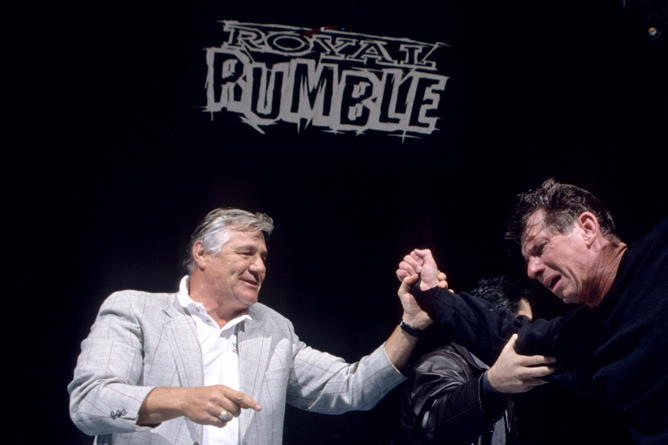
In 1988, the WWF promoted the first canon Royal Rumble event: a 20-man TV special pitched by Pat Patterson at the urging of NBC executive Dick Ebersol, who wanted a brand new attraction. Vince infamously hated the idea. The match was shunted onto PPV the very next year, since the ‘88 demo, won by Hacksaw Jim Duggan, was the third highest-rated wrestling event in the history of cable television.
This was not however the first Rumble match - and the first experimental version was such a failure that the fabled Road to WrestleMania almost looked very different. Vince was actually justified in doubting the Rumble as a spectacle; the non-televised October 1987 experiment was an artistic and commercial failure. The match was said to be rubbish, and incredibly, the best gimmick match format ever alienated a traditionally-minded St. Louis audience.
In an interesting trivia note, history would repeat itself: St. Louis was cursed to endure one of the worst Royal Rumble events ever in 2022.