10 Greatest Footballers Who Were Never Capped For England

It's not what you do for your country...

There are no shortage of headline grabbing players in the Premier League, but one of the narratives on the back pages in the last few weeks has been the excellent form of West Ham's midfield linchpin Mark Noble. The Hammers' home grown star has been in excellent form for Slaven Bilic's impressive side this season, and is due a testimonial at the club in March, a pretty rare thing for a player of just 28. When people talk about Noble, though, one other subject always rears its head: England. It seems incongruous that a reliable performer with years of Premier League experience on his CV is yet to get an England call up, especially in a world where Leon Osman gets a run-out. If there's anything to console him as he watches Euro 2016 at home, it's the fact that he's far from alone in being a talented Englishman willfully ignored by his nation. Take a look at this list of players who retired with zero England caps, and ask yourself what the managers at the time were thinking.

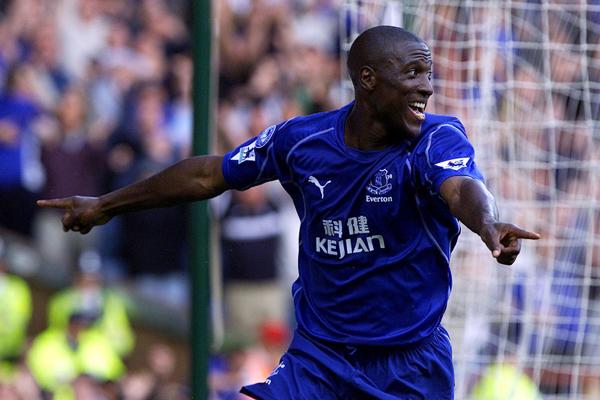
10. Kevin Campbell

You might be thinking this is an unimpressive way to start, and although Cambell was far from a glamorous player, he was undoubtedly an effective target man. His goals helped fire Arsenal to the title in the 1990/91 season, while he was a regular scorer with Nottingham Forest and Everton in his peak years. Never prolific, Campbell suffered from bad timing - the 80's and early 90's were a boom time for English strikers; from Lineker, Beardsley and Alan Smith as Campbell was coming through to the likes of Alan Shearer, Ian Wright and Teddy Sheringham in his later years, Campbell always had top class competition. If he was around in another era, who knows? England's desperate search for a target man since those heady days has seen Michael Ricketts, Emile Heskey and Andy Carroll all given a shot at leading the line. Campbell was better than all of them.

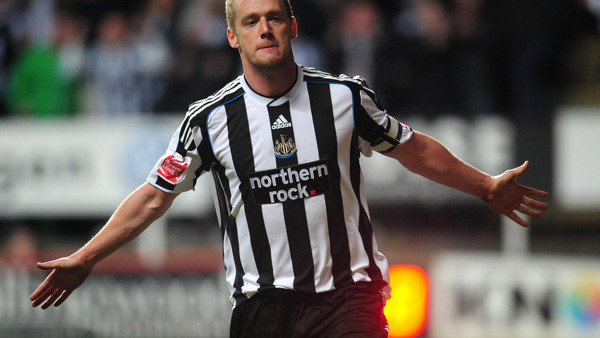
9. Kevin Nolan

Big Sam favourite Kevin Nolan may be a controversial inclusion in this list. Though he has forged a successful, respectable career (mostly) in England's top division, no one ever seriously talked him up for England. Well, except the man himself and his favourite manager, of course. Nolan was never the most skillful player but it seems odd that in a professional career spanning 15 years he never got the nod for his country. At his peak, Nolan was a clever attacking midfielder, timing late runs into the box to perfection to dispatch crosses and knock-downs into the net like a low-rent version of Frank Lampard. In the 2003/04 season Nolan nabbed 12 goals from midfield for unfashionable Bolton Wanderers yet when Euro 2004 rolled around he was not even in the conversation. Granted, England's midfield included the likes of Beckham, Scholes, Lampard and Gerrard, but as an option off the bench if in need of a goal, Nolan should have been a shoe-in for the squad. He was surely a better option as a squad player than the perma-crocked Kieron Dyer.

8. John Lukic

Depending on your age you either remember John Lukic as the reliable custodian between the sticks for Leeds United and Arsenal in the 1980's and early '90's, or you remember him as the professional substitute for, er, Leeds United and Arsenal in the late '90's and early 2000's. Lukic very much had a career of two halves. He started his career at Elland Road, establishing himself as Leeds' #1, before getting a big move to Arsenal in 1983. He was signed to fill the gloves of the legendary Pat Jennings and soon made the goalkeeping position at Highbury his own. For three years, from 1987 to 1990, he was an ever present for the team before returning to Leeds after being usurped at Arsenal by David Seaman (who had been his understudy in his first spell at Leeds!), though he eventually lost his place there, too, to Nigel Martyn,and had a second spell at Highbury to end his career, as back up to his former protegee Seaman. He was behind Seaman and Martin in the England pecking order in the '90's, too, and before that it was the legendary Peter Shilton. There's no disgrace in being behind any of those goalkeepers, but it's amazing to think even in his peak as a mainstay at Arsenal, he couldn't get a look in for England.

7. Jermaine Pennant

You would be forgiven for thinking ex-Arenal, Liverpool and Stoke City winger Jermaine Pennant had retired, but at the age of 33 he's still playing, turning out for Tampines Rovers in Singapore. It could, and should, have been so different. As a youngster coming through the academy of hometown club Notts County, Pennant was lauded as England's next superstar. He signed for Arsenal for £2m, a massive fee for a 15-year-old in 1999. Young Pennant struggled to make the grade an at Arsenal team well stocked with talent, but displayed his undoubted talent over two seasons for relegation-haunted Birmingham City, and earned a big money move to Liverpool. He started well but faded, and was loaned out to Portsmouth, before moving to Real Zaragoza and on to Stoke City. Pennant has shown flashes of quality throughout a nomadic career, and you would think that would be enough for at least a run out in a friendly, or against the likes of San Marino, in an era when England have flattered to deceive. Instead Pennant has watched from the sidelines while contemporaries like David Bentley have toiled on the flanks for the Three Lions. Don't forget, Pennant was once the Man of the Match in a Champions League final. How many Englishmen can say that?

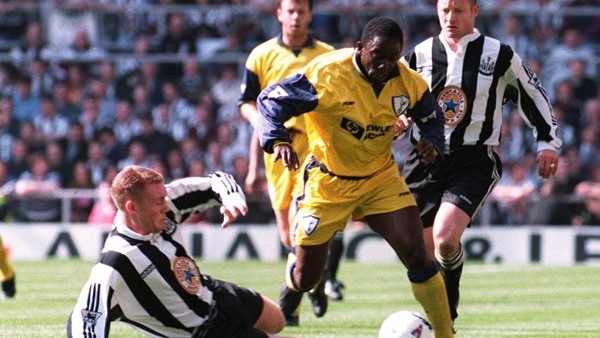
6. Ruel Fox

One of the great wingers of the early Premier League era, Ruel Fox spent years giving full backs twisted blood for Norwich City, Newcastle United and Tottenham Hotspur, before seeing out his career at West Brom. He was - briefly - a member of Kevin Keegan's "Entertainers", the much-beloved Newcastle United side of the mid '90's. Keegan called Fox "the best player in his position in the country" when he signed the winger from Norwich, and it was hard to disagree when watching the diminutive winger in full flight. Though the arrival of David Ginola hastened his departure from St. James' Park, he still had a productive five year spell with Spurs. Despite being a Premier League regular with pace to burn and excellent delivery from crosses, Fox was never in serious contention for an England spot. The closest he ever got was 2 England "B" caps, and he later declared for Monserrat, winning 2 caps and later coaching them.

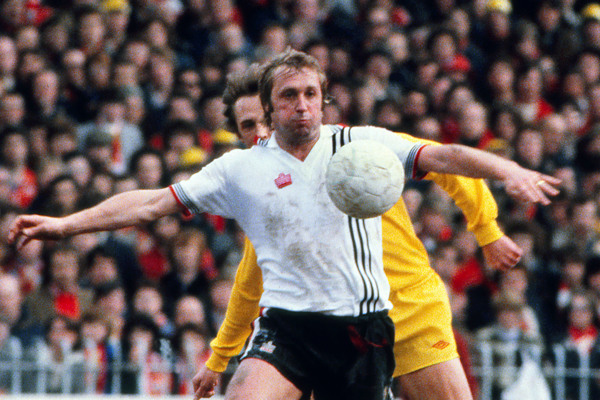
5. Jimmy Greenhoff

With over 150 goals in his career for the likes of Leeds United, Birmigham City, Stoke City and Manchester United, Greenhoff can consider himself unlucky to have had international recognition only at Under-23 level for England. Perhaps Greenhoff suffered for being a tricky, skillful forward in an era of direct football and battering ram target men in the traditional English style, or perhaps it was just because the peak years of his career in the 1960's and '70's were also good years for England goalscorers, but it's hard to see why Greenhoff was never given a chance for England. His younger brother Brian - a centre half - won 18 England caps, but in a more just world, Jimmy would have won at least that many.

4. Jimmy Case

Imagine an English footballer with the following list of honours: four top division titles, four European Cups, one UEFA Cup, one European Super Cup and one League Cup. Imagine that player as a mainstay in the midfield for the best English side of his era. Now, imagine that player does not win an England cap. Not one. That's what happened to Liverpool's Jimmy case. Despite a list of titles and trophies as long as your arm, and a laundry list of teammates who donned the England shirt (including Kevin Keegan, Ray Kennedy and Terry McDermott), the call never came for the combative Case. In fairness, he had plenty of competition. As well as some of his Liverpool teammates, Case was battling the likes of Trevor Brooking, Ray Wilkins and Bryan Robson for an England spot during his peak years, but it seems almost inconceivable these days that someone who was a mandatory pick for the best team in the land during their period of dominance was not even on the bench for England.

3. Billy Bonds

Billy Bonds was a West Ham United legend, spending a total of 27 years there as a player and manager. A tough, uncompromising defender befitting of the era when he played (the 1960's through to the late 80's), Bond's versatility meant that he featured at centre back as well as right back and central midfield for the Hammers. He was more than just a tough tackler though, and his play was marked by surging forward runs and intelligent use of the ball. Versatility like Bonds' is usually prized by international mangers, especially at tournaments - which explains why Phil Neville was capped over 50 times for England - but Bonds' only caps were at Under-23 level. He did, however, come closer than most on this list to making a bow for the full England side. He sat on the bench for a World Cup qualifier against Italy in 1977 (but wasn't subbed on) and broke his ribs in the final game of the 1980/81 season, ruling him out of a friendly against Brazil in which he was expected to make his long-awaited England bow.

2. Howard Kendall

Another who was a legend at his club both as a player and a manager, Kendall was one third of Everton's title winning "Holy Trinity" midfield alongside Colin Harvey and Alan Ball. While the ginger haired Ball was an England mainstay, and Harvey got a solitary cap, Kendall was never called upon to represent his country at the highest level. Kendall was an elegant, cultured midfielder, but was at his peak at the same time as teammates Ball and Harvey, as well as the likes of Bobby Charlton, Alan Mullery and Martin Peters. In the modern era of frequent, money-spinning Wembley friendlies, Kendall would have definitely won a few caps. Presumably Kendall's title medal with Everton soothed any England-related wounds, but in his heyday he might have wondered, along with the Everton fans, if "The Holy Trinity" could have been England's savours as they failed to add to the World Cup won in 1966.

1. Steve Bruce

Steve Bruce, of the oft-times broken nose, looks like your classic headers-and-blocks, meat-and-potatoes English centre half - like a 1990's version of John Terry. The man who made his name at the heart of Manchester United's defence, though, was much more than he appeared. As he developed from an erratic young player into a reliable centre half, Bruce became known for his calmness under pressure and judicious use of the ball. He also found the net regularly - in the 1990/91 Bruce netted 13 times in 31 games. That's a strike rate some centre forwards can't even match! A threat from corners and taker of a mean penalty, it beggars belief that an England call never came for the Georgie defender. Bruce won 8 England caps at youth level and had one run-out for the "B" side, but he had to watch on while his regular centre half partner Gary Pallister won 22 caps for his country. When it became clear that England managers had a blind spot when it came to Bruce, he was approached by Jack Charlton to represent the Republic of Ireland, as his mother was born there. Bruce turned the offer down (although his son, Alex, later turned out twice for them). It's hard to look through any England XI in the late '80's to mid '90's and understand why the ex-United captain was not given at least one cap. While Bruce was at his peak Keith Curle got 3 caps, Gary Mabbut played 16 times and midfielder Calton Palmer was even pressed into service at the back. Makes you wonder what Bruce had done to offend Bobby Robson and Graham Taylor.

In this post: 
Steve Bruce
 
Posted On: 
Contributor
Contributor

David is an office drone and freelance writer for WhatCulture and Moviepilot, among others. He's also foolishly writing a serialised novel on Jukepop and has his own irregularly updated website. He's available for freelance work. Reach out on Twitter to @davefox990