10 Worst Southampton Managers Of The Modern Era

How did so many big names get it so wrong?
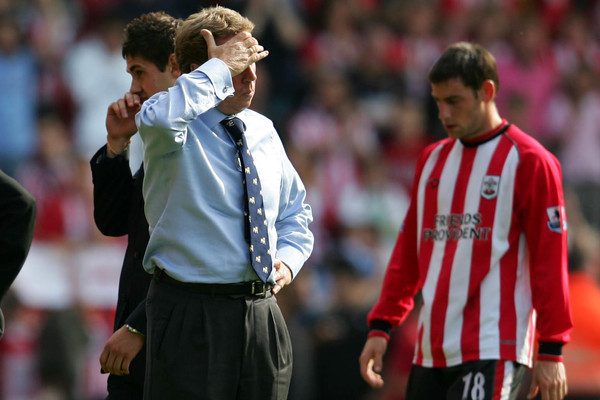
Southampton may be riding high in the Premier League right now under new manager Ronald Koeman, but Saints fans have had got used to never being too settled. After Ted Bates ("Mr. Southampton") and his protege-successor Lawrie McMenemy built the team up through the 1960s, 70s and 80s, establishing Saints as a top flight club, winning the FA Cup and finishing as high as second in the league over a thirty year period in which they were the club's only managers, the thirty years since have been far less stable. In that time 24 managers have passed through the doors of The Dell and latterly the St. Mary's Stadium, including three in as many years recently. Those thirty years have been something of a rollercoaster of success and failure with both types of manager often leaving as quickly as they arrived. While Southampton have done well with the run of Nigel Adkins, Mauricio Pochettino and Koeman, many of their predecessors did more to damage the legacy of Bates and McMenemy than to build on it. This list counts down ten of the worst incumbents of the Southampton hot seat over the last thirty years.

Dishonourable Mention: Clive Woodward
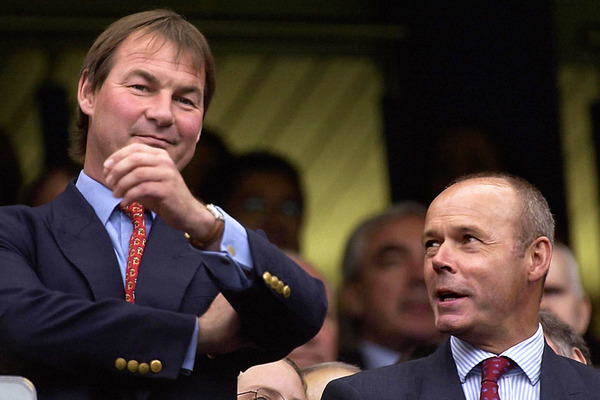
Never actually the manager of the first team and therefore not eligible for a place on this list, England rugby World Cup winning coach Woodward is nevertheless one of the most bizarrely ill-judged appointments to Southampton's managerial staff. Woodward's conviction that rugby and football coaching were virtually identical transferable skills would have been dubious even without the fact that his appalling post-World Cup form had done a fair bit of damage to his reputation as a top rugby coach. Meanwhile Saints fans felt his appointment was nothing but favouritism from Woodward's friend and Southampton chairman Rupert Lowe, doing nothing to help his reputation as a man who couldn't care less about football but loved rugby. In the always ill defined roles of Perfomance Director and Director of Football, Woodward was little but a disruptive influence. His methods and appointments clashed with those of the established coaching staff and constant rumours linking him to the manager's job just made the managers he worked with uncomfortable. After little more than a year Southampton and Woodward parted company in the summer of 2006 and Woodward has unsurprisingly not worked in football since.

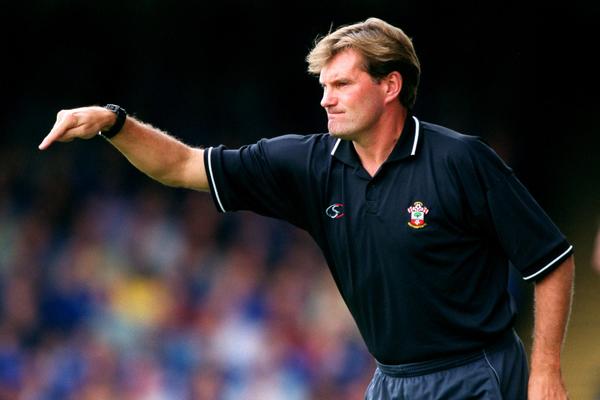
10. Glenn Hoddle

Never nearly so capable a manager as he was a player, Hoddle proved controversial in both his arrival and departure from Southampton during a brief 14 month spell in charge of the Saints. Fired from a not terribly successful term as England manager that was marred by a reliance on a faith healer and, in particular, grossly offensive remarks in which he stated his belief that disabled people had received karmic retribution for their past life sins, Hoddle nevertheless managed to get a job at Southampton in January 2000. Previous manager Dave Jones had done a solidly decent job in his time at the club, but was suspended while under investigation for charges of child abuse during his time as a care worker during the 1980s. The charges were unfounded, the judge said it should never even have come to trial, but chairman Lowe used it as an opportunity to terminate Jones' contract and appoint Hoddle permanently (Jones had cleared his name but still failed to win an industrial tribunal on unfair dismissal). In his short time at the club Hoddle achieved some reasonable results, Southampton just preserved their Premier League place in 1999-2000 and were on course for their best season in five years in 2000-01. However, he deserves mention here for the dubious manner of his appointment and his eager readiness to take a bigger job as soon as the opportunity presented itself. In March of 2001 Hoddle broke his contract with Southampton, having not managed a full season at Saints, to take up the managerial vacancy at Tottenham, further angering fans by taking star defender Dean Richards with him. Hoddle failed at Spurs, and in every managerial job since, while an extra dark twist in this already depressing story saw the gifted Richards never fulfil his promise due to severe health problems over the following years. Richards died in 2011, aged just 36.

9. Chris Nicholl

Superficially Nicholl, a key player in Saints' rise up the league in the late 1970s and early 80s before succeeding McMenemy as manager, may look like one of the club's managerial successes. At six seasons his tenure is longer than any Saints boss since and under him the club finished as high as 7th, made the semi-finals of the FA and League cups and introduced youth team stars like Alan Shearer and Matt Le Tissier to the first team line-up. So, why is he on this list then? Nicholl's failings lie in a lack of ambition and an excess of caution that saw him take an exciting young team fighting at the top of the table and send them well on a path to the perennial relegation battlers that Saints became in the 90s. The two years before Nicholl had taken over had been Saints' most successful yet, finishing just three points off the top spot in 2nd in 1983-84 and then 5th in 1984-85. He inherited a squad filled with talent like England goalkeeper Peter Shilton and free scoring forwards Danny Wallace (along with teenage brother Rod in the youth team) and Steve Moran. Nevertheless in his first season Southampton finished 14th, matching their worst position since returning to the First Division. Nicholl sold key players and replaced them with youth teamers like Shearer and Rod Wallace who themselves were sold shortly afterwards, setting a negative precedent for how the club continues to operate. That 7th place was his only top half finish in six seasons and if his legacy is anything it is that the regular top half finishers he joined have only ended the season in 10th or above three times since.

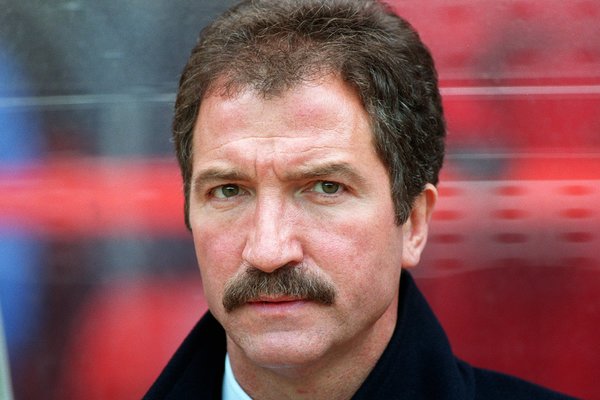
8. Graeme Souness

Like Hoddle, Souness' managerial career always rested far more on his high reputation as a player than any real achievements that he had as a manager. At Liverpool he only won an FA Cup after all four of his predecessors had won league titles, stretching back over three decades. Meanwhile, he managed to fall out with players, fans and directors before his eventual resignation in January 1994. After a brief spell in Turkey with Galatasary, he returned to England to manage Southampton for the 1996-97 season. Despite having Matt Le Tissier still at the peak of his form and good incoming players in Norwegians Claus Lundekvam and Egil Ostenstad, Souness' one season in the Saints job was not a successful one. An implausible 6-3 win against Manchester United may have excited fans and promised some future developments, but it was followed by a six match winless streak that included a 7-1 defeat to a mediocre Everton team who would be stuck towards the bottom of the table alongside Southampton all season. The absolute low point, however, came when Souness made himself and the club a laughing stock by signing useless Senegalese forward Ali Dia on the say so of a none too convincing fraudulent phone call claiming Dia was "George Weah's cousin" and then putting the amateur player into the team for a Premier League match. Southampton avoided relegation by one point on the last day of the season and Souness resigned shortly afterwards before pursuing unsuccessful stints in Europe with Torino and Benfica.

7. Jan Poortvliet

The current Dutchman in charge at Southampton has already impressed, but really he had very little to do to make himself the club's best Dutch manager with his competition being the uninspiring Poortvliet and his former right hand man Mark Wotte. When Poortvliet became Southampton's first non-British manager his appointment was met with a round of non-plussed questions of "who?" from the club's fans. The new boss had been a regular in the defence of the PSV Eindhoven team of the 70s and 80s and a member of the Netherlands squad that made the 1978 World Cup final, but his managerial career had made no impact internationally. In fact, when the announcement of his appointment was made in May 2008 it transpired that he was still under contract with his previous club, Helmond Sport in the Dutch second division. Helmond had not given him permission to talk to another club and now demanded compensation. After all that, Poortvliet would only last seven months in the job. Losing his first two league games, Poortvliet's Southampton, including already regular starters Adam Lallana, Morgan Schneiderlin and Jack Cork, would never rise above 16th in the Championship and would also only win six league games under his management. Poortvliet resigned in January 2009 to be replaced by youth team director Wotte. By then, though, the club were already going into administration and headed for relegation, giving the latter little opportunity to do much at all.

6. Nigel Pearson

Of the four former Southampton managers currently working in the Premier League (although Alan Pardew's precarious position may mean that number is three by the time you read this), Leicester's Nigel Pearson is the one that is performing most impressively so far this season. At Southampton, however, it was another matter. A highly rated coach who had worked as assistant manager at the likes of Newcastle and the England Under-21s, Southampton was Pearson's first proper managerial position and he arguably was not yet ready to make that step up. His predecessor George Burley had done a relatively solid job, getting the team to the Championship play-offs the previous year, but fans were not particularly put out when he opted to take up the job managing the Scottish national team in January 2008. After Pearson's three month spell, however, the fans would probably have welcomed anyone else. Pearson managed just three wins in charge of Saints, including the final game of the season where they came from behind to beat Sheffield United and narrowly secure the club's Championship place. Even so, their 20th position in the second tier was Southampton's lowest league position in 50 years and it set them on a path for worse the following year. Ironically it was Leicester that were relegated in place of Southampton that year and were therefore happy to provide a new job for the out of work coach. As Saints struggled, Pearson's two spells with Leicester have seen the Foxes rise back through the ranks to their current position as Premier League surprise package.

5. Dennis Wise & Dave Bassett

Back in the Championship and struggling, Southampton turned to a managerial structure that was hard to keep track of. Arguably the low point of these shifts in control happened in December 2005 when new Director of Football Woodward, assistant manager Dave Bassett and senior player Dennis Wise, all three with designs on a management job, shambolically attempted to manage the team between them for three hit and miss games. Wise, a product of Southampton's youth set-up, had left the club for the first time as an 18 year old after a falling out with McMenemy and had instead signed for Wimbledon, managed by Bassett, but now returned twenty years later. His previous role at Millwall had seen him take over as player-manager before a falling out with the new regime left him out of contract, signing a playing deal with Saints in June 2005. Bassett, meanwhile, was at the end of a lengthy up and down managerial career that had seen him take on a number of teams looking to fight for promotion or against relegation. He had arrived at Southampton as assistant to previous boss Harry Redknapp and now looked to boost the team up the Championship after Redknapp's disastrous spell. The new managerial team began struggling to a draw with Burnley before the teenage Theo Walcott scored his last goal for the club in a 1-0 win over Luton. Their final chance to prove themselves ended in an unimpressive loss against Norwich and the board decided it was time for a clearer, more permanent solution. Bassett and Wise, feeling the job had been promised to them permanently, quit their roles as assistant and player in anger, eventually teaming up again to manage Leeds.

4. Paul Sturrock

In 2003, guided by Gordon Strachan, Southampton had had their best season in recent memory, finishing in an impressive 8th place and reaching the final of the FA Cup for the first time since winning the tournament in 1976. The following year, however, Strachan resigned to take time out of the game for personal reasons and everything started to unravel for the club who, just five years later, would find themselves in administration. It all started with the appointment of Sturrock. As a player and manager with Dundee United Sturrock had built up a good reputation in Scotland before moving to the South coast to manage struggling Plymouth Argyle. Able to build his own squad and develop the team, Sturrock led Plymouth to two successive promotions up to the Championship before he was picked by Saints as Strachan's successor. Within weeks of his appointment in March 2004 he had committed the cardinal sin of defeat in the Hampshire derby to fierce rivals Portsmouth and never really won over the fans after that. Without a win in the final 5 games of the season, Saints still finished a relatively creditable 12th, but Sturrock's reputation and his relationship with the club were already in steady decline. Struggling to deal with the pressure of the step up to top flight management, there were rumours that Sturrock was suffering personal problems and had little connection with the club's senior players who pushed for a change in management. Whatever the truth of the matter, his 13 games in charge were a sharp come down in quality from the Strachan era and Sturrock was abruptly fired after just two games of the 2004-05 season. Things only went from bad to worse after that, though, as we shall see.

3. Stuart Gray

On Hoddle's sudden decision to up ship and take the Tottenham job, Saints decided not to appoint a permanent replacement and instead give the job to reserve team manager Stuart Gray, a decent coach whose playing career with Saints had been cut short by injury after just 12 games. As a result he actually managed the club for more games than he played for them, although as the former statistic is all of 19 matches it's still not all that impressive. Gray was appointed caretaker manager on 30th March 2001 and promptly went on a 7 match winless streak before finally breaking his duck with a 2-1 win over Manchester United, which would have been an impressive shock had United not already wrapped up the league title and taken their foot off the gas somewhat. Despite smashing the club's transfer record to buy midfield utility player Rory Delap in the summer, the next season started on an even worse run of form, with Saints losing the first three league games without even scoring a goal. Discounting a couple of League Cup wins, Gray's whole record for the club was 11 defeats and just 4 wins in 17 games. With Southampton having just moved into an expensive new stadium and now facing a very real possibility of relegation, Gray was fired at the end of October and replaced with Gordon Strachan, under whom the team shot up the table to finish 11th. Gray is currently enjoying a relatively successful spell at Sheffield Wednesday.

2. Steve Wigley

If there's one trend that this list shows about the Rupert Lowe era it's that well regarded coaches with no experience at the top level were repeatedly pushed into the managerial post and were repeatedly found wanting. Wigley, who replaced Sturrock in August 2004, was perhaps the worst of the bunch. A player under Brian Clough at Nottingham Forest and later that club's academy director, he had been appointed to run the Southampton academy by Gray during his brief stint in charge and ended up long outstaying his boss. Under Strachan, Wigley had become a coach with the first team and had briefly served as caretaker manager before Sturrock's appointment. Nothing about those two previous games in charge suggested Wigley would be comfortable stepping up into the main job permanently, but that didn't deter Lowe from offering it to him after Sturrock's failure and many fans, for their part, were just relieved that a rumoured return for Glenn Hoddle did not materialise. Wigley lost his first two games in his new spell in charge. Indeed, he went ten league matches before winning a little fan sympathy when his first league victory came in November against Portsmouth. That proved to be the only league game Southampton won under Wigley. After two more defeats and a draw he was demoted back to taking responsibility for the youth players. Wigley and Southampton permanently parted company later that year and he has never had another full managerial post, continuing as a successful youth coach instead. For Saints, though, things were only about to get worse.

1. Harry Redknapp

It's not impossible to make the switch between the two South coast rivals and enjoy popularity with your new club (just look at Peter Crouch), but a man who described Portsmouth as his "spiritual home" would have had to be enormously brilliant as boss of Southampton to wash away that stain on his reputation in the eyes of the Saints fans. It's fair to say that Redknapp, who retains a surprisingly high reputation outside of Southampton (in spite of continued failure to impress with the enormous spending power of QPR), was not brilliant at Southampton, not by a long shot. Appointing the manager of the only team the previous boss could beat may not have seemed like a brilliant idea for Southampton, but after Sturrock and Wigley they probably just wanted someone with experience of a Premier League relegation battle. Redknapp, however, compounded the club's low position by failing to win any of his first seven games in charge. In fact, he only won 4 of 22 Premier League games, including a humiliating 4-1 defeat away to his former employers, despite bringing in five new players during the transfer window. Southampton could still have survived by winning the final game of the season, but Redknapp's team lost and he became the manager to get the team relegated after 27 years in the top flight and the next season did not begin any better. Even despite the emergence of Walcott from the club's academy, a handful of early wins led to draw after draw and a position in the lower half of the Championship. In 21 games in the Championship Redknapp only managed 5 wins and, when a vacancy came up at his preferred Portsmouth, he was only too happy to leave with Saints fans equally happy to see him go.

Contributor
Contributor

Loves ghost stories, mysteries and giant ape movies