One MIND-BLOWING Secret From Every WWE SummerSlam
18. 2008 | This Would Have RULED

As mentioned, the Undertaker was selectively great.
Pair him against the correct opponent, and he was capable of pure pro wrestling magic. He was such an attraction, and by the 2000s quite broken, that Vince often gave him a few months off by pairing him with someone like the Great Khali or Kane about 200 times. The Undertaker had some range on him - as in, he was once awarded ***** by Dave Meltzer, but also makes up about a third of WrestleCrap’s archives. Generationally great and generationally awful, sometimes in the same calendar year, the original plan for his SummerSlam 2008 involvement would surely have landed in the former category. At SummerSlam, per the July 1, 1998 issue of the Wrestling Observer Newsletter, the Undertaker was meant to go one on one with Umaga.
This would have ruled. Umaga was no Mick Foley, but he wasn’t too far off, which is a real compliment. Umaga at his most motivated was a physical freak of nature with an awe-inspiring ability to take one gigantic bump at the end of his matches to make a babyface look incredible. His ostensible death scene at the end of his Royal Rumble ‘07 match with John Cena was genuinely iconic. Umaga was too good to be anachronistic; as a cartoonish monster who was dynamic with unreal intensity, he was almost the perfect composite opponent for the Undertaker.
The match of course didn’t happen. WWE was too deep into its fixation with rematches - but the Hell In A Cell match with Edge was hardly a bad replacement.
17. 2009 | An All-Time Classic Went Down To The Wire

In 2009, one of the very best matches in SummerSlam history happened.
CM Punk Vs. Jeff Hardy was one of the best feuds in modern wrestling history. A deeply personal and even more believable saga plotted with shocking twists, the storyline, as heated as it gets in the post-kayfabe era, brought the very best out of antagonist and protagonist. Hardy was never more sympathetic, where Punk was never better when motivated to become a headliner and allowed to play with his most venomous and sanctimonious traits.
Wrestling fans have spent a stupid amount of time arguing over the merits of story versus action in recent years. The Tables, Ladders, and Chairs blow-off was so scary in its violent escalation that rarely have fans been treated to the perfect saga and the ideal ending.
What really put it all the way over is that there was immense gravity to it. It wasn’t rematched to death beyond one last Loser Leaves Town Cage match. Wrestling feuds rarely feel so high-stakes because the participants very swiftly end up doing something else. Not here: Punk won, Hardy lost, Hardy was gone.
The SummerSlam match almost didn’t happen. In every spring and summer issue of the Observer, there are reports of WWE essentially begging a want-away Hardy to stay. Every single week, the match was in the balance. There was no back-up plan, at least one reported by Dave, but the options were bleak.
It’s funny - or alternatively very grim - that WWE underwent a series of exhaustive talks with Hardy to make the big match happen, only for the Undertaker to easily beat Punk, who went on to work a TLC dark match against R-Truth, within 10 minutes.
16. 2010 | This Would Have SUCKED

Times were bleak in the late 2000s and early 2010s.
WWE’s in-house developmental model faltered as, in parallel, the company could barely bring itself to push dreaded independent talents with any real conviction. Who did they think they were, getting good and over. Pricks.
WWE’s insistence on holding credit over “their” guys, and its staggering incompetence, was a resistible blend that led to the crowning of Jack Swagger: World Heavyweight champion. God, that was awful. Swagger won the Money In The Bank ladder match at WrestleMania 26 and cashed in at the expense of Chris Jericho on the March 30, 2010 SmackDown. This was the era of Vince trying to make the belt make the man. It was a shortcut into a brick wall.
Swagger was a terrible World champion. The perennially dopey Swagger didn’t so much lack presence and focus as look to be trying to recite every digit of pi at all times. He wasn’t magnetic. He wasn’t charismatic. He wasn’t even that good. But he was tall and hadn’t previously worked for Ring Of Honor, which was of vital importance, apparently.
After just 78 days, WWE realised that Swagger was a bust. He dropped the title to transitional champion Rey Mysterio, who lost it to Kane a month later. This was not the original plan.
According to the May 17, 2010 edition of the Wrestling Observer Newsletter, WWE had pencilled in Jack Swagger Vs. The Undertaker for SummerSlam: a match between a man whose blank expressions verged on the eerie, and the Undertaker.
15. 2011 | End Of An Era

SummerSlam 2011 was a strange show; by the time it was promoted, WWE was in danger of ruining the Summer of Punk. Brought back within a fortnight of Money In The Bank. CM Punk going against John Cena so soon was a telltale sign that WWE didn’t have the creativity or the willingness to do anything bold. Time for a rematch.
WWE invited a diminished return, and that’s what WWE got. WWE also booked Alberto Del Rio to cash in on Punk, because WWE wanted to use an organically over babyface to heat up their failure of a heel project. Underneath, the show was saved by Randy Orton Vs. Christian’s No Holds Barred rubber match, because elsewhere, it broadly sucked. At best, Wade Barrett Vs. Daniel Bryan was decent, but the result made no sense. The worst people on Twitter will tell you that Mark Henry Vs. Sheamus was good, but it wasn’t. The show was badly lacking in star power and original matches. If a report from Gerwick was correct, you almost got one of the two. (In 2011 WWE, you never got the lot).
The Undertaker Vs. Triple H was discussed in the months before the show, but never came to pass. It wasn’t the correct site for the rematch or the wider four-year story. That was WrestleMania. A desperate WWE came to that realisation eventually.
At the time, Triple H took himself out of the ring to concentrate on his transition into a corporate role. He was just too busy. Until he had to beat Punk with no sign of a rematch in sight in September, despite WWE being so obsessed with them that the two biggest matches at SummerSlam were return bouts.
14. 2012 | A Hardcore Rumour
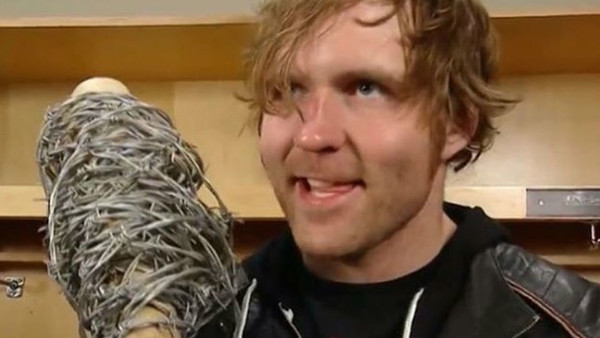
This was an incredible idea conceived much too late.
At WrestleMania weekend in 2012, Mick Foley was confronted by a pre-Shield Dean Ambrose. The scene - captured by a phone - was very well-executed in that it was incredibly awkward and realistic in a way that never translates on TV. Foley seemed nonplussed and very wary as Ambrose, pressing the issue, claimed that Foley had ruined a generation of wrestlers. Ambrose and his peers were going to destroy themselves in the pursuit of living up to Foley’s legend. Ambrose, he implied with a sinister intimacy, was going to make his name at Foley’s expense instead.
The idea was inspired. Mick Foley was the greatest ever at elevating an opponent, depicting them as a true main event killer. Triple H, Randy Orton and Edge all looked like the real deal when Foley took a beating from them. The Undertaker looked like a great wrestler for the first time through Foley’s dynamic, unhinged commitment.
Debuting Ambrose against Foley, then, was an almost guaranteed means of positioning him as an immediate difference-maker. The match could have been incredible. At this point, looking back upon Foley’s output and Jon Moxley’s body of work in AEW, it is almost the impossible inter-generational hardcore dream match.
Sadly, it was also impossible in 2012; Mick Foley was a complete physical wreck, so much so that he has described his day-to-day existence as being submerged underwater. The match mooted for SummerSlam was cancelled forever.
It worked out for Ambrose. His debut and roll-out as part of the Shield was legendary. It’s incredible to think that WWE in 2012, of all years, devised two awesome ideas for one brand-new talent.
13. 2013 | You’ve Done It Now

WWE phased down the Undertaker at his request in the 2010s. He was broken-down after a remarkable 23 years of service by 2013. To put into perspective how impressive that was, the WWF marketed ‘Taker’s longevity as a huge deal by promoting his ‘Decade of Destruction’ in the Attitude Era. Then, he casually repeated the feat. And then some.
Around this time, the Dead Man would disappear from TV every time he dragged himself through yet another incredible WrestleMania match. In 2013, WWE actually did some forward-thinking, in that ‘Taker was written off when he was brutalised by the Shield on SmackDown. Per the June 12, 2013 issue of the Figure Four Weekly newsletter, this angle was booked to set up the Shield Vs. the Brothers of Destruction at SummerSlam. That would have ruled. (Yes, Kane was involved, but he was only really bad in straight singles matches, and the Shield worked wonders with him in their TLC 2012 debut match). The Shield also needed the match. The group was losing momentum; in a bleak indictment of WWE’s raft of titles, the group were never less over than when they had picked up United States and Tag Team gold.
As it happens, only one Shield member ended up wrestling on a show that a banged-up ‘Taker could not make: Dean Ambrose, who lost via disqualification to Rob Van Dam in an awkward styles clash of a dark match.
Additionally, WWE discussed Mark Henry Vs. Big E in a potential big feller torch-pass. It didn’t happen. WWE wasn’t keen on actually putting new guys all the way over in 2013. Or 2014. Or 2015. Or 2016. Or…
12. 2014 | So That’s Why That Happened

WWE botched Brock Lesnar’s return.
His first match against John Cena at Extreme Rules 2012 was violent in such an unprecedented way - for WWE - that a lot of people simply ignored the terrible result. Cena won. That was bizarre. But the match was so great that, weirdly, it didn’t seem to matter. Then Triple H appeared.
WWE booked a dire trilogy. The methodical, boring matches did little for Lesnar because the idea was for Triple H to generate sympathy through a teased retirement at SummerSlam 2012. This failed dismally, since the match was so badly lacking in emotion. Lesnar won the Steel Cage rubber at Extreme Rules 2013 that nobody remembers because Triple H had to go over at WrestleMania 29. Lesnar needed a reset. WWE went through with that, and how, by having him end the Undertaker’s streak at WrestleMania 30. Vince McMahon seized this platform to put Lesnar all the way over as an invincible mega-heel when booking him to squash John Cena at SummerSlam 2014. This protracted massacre, in which Cena got nothing, was one of the most astonishing WWE matches ever.
It was a profoundly effective subversion of everything you thought you knew. Cena did not lose. That he got humiliated here was as bold as it gets. The match only begins to make a lick of sense when you learn that, before he went down due to injury, Daniel Bryan was first meant to go 16 minutes without being in the match for a moment.
Vince probably fell in love with the layout somewhere along the way, and Cena by his own admission never said no to anything.
11. 2015 | What A Match This Could Have Been

WWE does not tend to book party matches for the sake of it. Is it cynical to say that that would be too much fun?
WWE television is a platform for advancing stories, primarily. This is what WWE strives to do, and the promotion never tires of telling you that. Even if the stories aren’t advanced in any meaningful way - if a segment just reiterates that one member of a stable is suspicious of another for the umpteenth consecutive week - WWE would rather script this instead of some crazed encounter between babyface and heel teams, just to see what it would look like for two wrestlers who barely interact sharing the same ring. This is more AEW’s approach. There are advantages to both. WWE’s is functional and ultimately more effective, but it’s not exactly thrilling half the time, is it?
All of which is to state that one certain rumour doesn’t make a great deal of sense, but it could have ended up being terrific: Sting was meant to team with ex-Shield members Dean Ambrose and Roman Reigns to take on the Wyatt Family. WWE, infamously, could not book Sting to save their f*cking lives. Exposed in two long and not great singles matches, this alternate reality scenario would have enabled Sting to get his best stuff in at a key moment in a match built around it. Sting was also discussed, seemingly only in optimistic fan circles, to team with Stephen Amell to take on Stardust and the Miz.
This gossip gathered enough pace for PWInsider’s Mike Johnson to put out a rumour killer.
10. 2016 | Six Straight
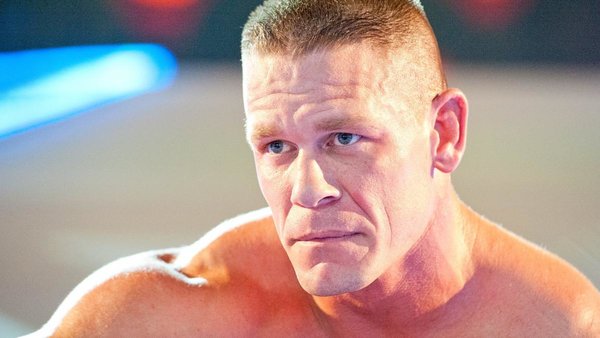
This is less a mind-blowing secret, more a matter of record, but still: it fits the brief because it’s a staggering statistic. At the 2016 edition of the show, John ‘Super’ Cena lost his sixth consecutive SummerSlam match against AJ Styles.
At SummerSlam 2015, Cena lost to Seth Rollins with a weird assist from Jon Stewart. At SummerSlam 2014, he was annihilated by Brock Lesnar. At SummerSlam 2013, he did another clean job for Daniel Bryan. At SummerSlam 2012, Cena lost a Triple Threat WWE title match, even if he didn’t take the fall; CM Punk dumped him out of the ring before pinning the Big Show. At SummerSlam 2011, in a cop-out of a finish but a job nonetheless, Cena, his foot under the rope undetected by special guest referee Triple H, lost to CM Punk. A terrible run for anybody, not least one of the most protected wrestlers in the history of the game. How did this happen?
Well, by 2015 and 2016, Cena was phasing himself out, and Vince McMahon had pinpointed Roman Reigns as his successor. This version of Cena could lose a few to build up some other guys; he was closer to the end of his run than the beginning. 2014 almost had to happen because Triple H did such a remarkable, nigh-on impossible job of making Brock Lesnar seem boring. 2013 was shocking, particularly since WWE wasn’t entirely convinced about Bryan. 2012 barely counted. Cena was “protected” in 2011, too.
A very strange streak, even if most of the results actually made sense in context.
9. 2017 | Tag Team Dream Match Becomes Scrapped Throwaway

What happened to WWE in the late 2010s really was a disgrace. Countless wrestlers, who later proved themselves demonstrably capable of building awesome legacies, were not even over on Vince McMahon’s main roster. The Revival were over and considered a modern great tag team in NXT. After a seminal AEW run, FTR are now considered one of the very best tag teams of all-time. Cash Wheeler and Dax Harwood are in many, many fan top 10s. Between those stints, they were shaving each other’s backs and scooching their burning anuses across Vince’s ring in woeful segments.
In any other promotion, FTR/the Revival Vs. the New Day - whose ability to get over under that version of Vince is grounds for a Hall of Fame induction alone - was and remains a dream match.
The mid-to-late 1980s was the Golden Era. Then came a decline, after which the misunderstood greatness of the New Generation unfolded. The Attitude Era reversed WWE’s commercial fortunes. After that, it gets a bit murky. Was Ruthless Aggression really a thing, or just something that Vince McMahon said for a few weeks? PG probably warrants the new era label, but that ‘Reality’ business of 2016? What’s that?
From 2017 onwards, Vince McMahon had brain worms. That’s the only explanation, and that’s the only appropriate name for the era. In 2026, AEW will likely book FTR Vs. The New Day, and everybody will rejoice. In 2017, per Dave Meltzer, it was going to be randomly tossed on the SummerSlam pre-show before an injury to Scott Dawson scuppered the plan.