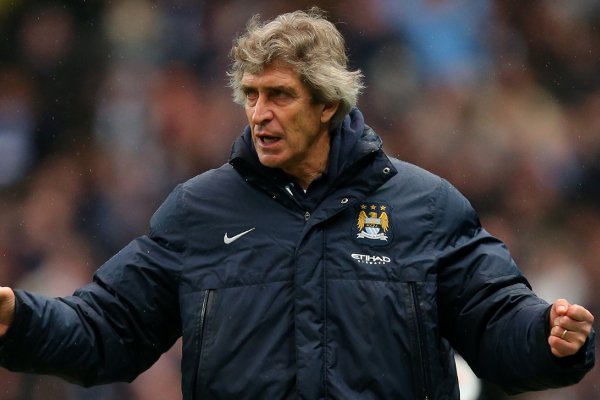
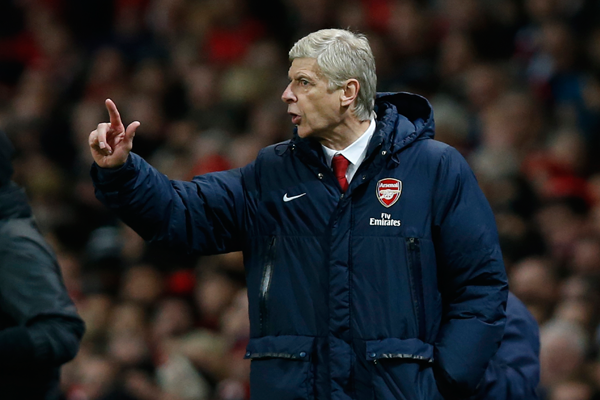
The Champions League made its long-awaited return this week but the Barclays Premier League teams have Everest-esque mountains to climb in the second legs if they are to progress. At the 90 minute stage in both ties, Man City and Arsenal both find themselves 2-0 down against Barcelona and Bayern Munich respectively. Optimism was rife amongst City fans before the game. With their free-flowing attacking home form they were relishing the chance to play the team Jose Mourinho labelled "the worst Barca team in years". Arsenal were quietly confident as well, after their fantastic league form this year and their new-found resilience, which was arguably born when they defeated Bayern 2-0 in the Allianz Arena in last year's Champions League. Unfortunately it was a familiar story for the English teams as they were simply outplayed and passed into submission by their opponents. Both Wenger and Pellegrini were left bemoaning refereeing decisions which they say contributed largely to their teams losses. Pellegrini's comments in particular smacked of anger and petulance in the heat of the moment. However on the face of it, it would be difficult to argue convincingly that either referee in Manchester or North London made errors. We will never know but if the results would have differed if Martin Demichelis and Wojciech Szczesny were not sent for early baths, but it would take a brave man to bet against two away wins. The two results and incidents in both games revive debates which have been given airtime in many a pub in recent years and will continue to do so over the next few. But what if anything, have we learnt from these two results? Click next to find out 5 things we now know and feel free to contribute your own in the comments section.
5. Rule Change Necessary?
In Fifa's laws of the game, Law 12 states that a player will be red carded where they "deny an obvious goal-scoring opportunity to an opponent moving towards the player's goal by an offence punishable by a free kick or a penalty kick." When deciding whether to issue a red card the referee must consider the direction of the play, the location of the foul, the proximity of the player to the ball, the probability of controlling the ball, the location and number of opponents and the opportunity for the attempt on goal. These are quite technical points which must be considered objectively under immense pressure. Taking a literal interpretation of the rule and applying it to both red cards the referees have probably made the correct calls, but that is not the issue. The issue is whether the rule itself needs to be changed, as at times it appears manifestly unfair and often goes some way to making games dull and less entertaining. How is the rule unfair then? Simply put, it is because giving a penalty should be punishment enough without the red card on top. There is little doubt that Arjen Robben and Lionel Messi were denied genuine goal scoring opportunities when they were fouled. The subsequent award of a penalty is a genuine goal scoring opportunity, probably a far easier one for players at this level (assuming that David Alaba's miss was a one off). Should the punishment not be left there? As it stands teams are left with the prospect of conceding a goal and playing the rest of the game a man down as well as coping with the three match suspension which the player will serve. This leads us nicely onto the next point. There is an argument to suggest that the dismissal of a player in this circumstance can suck the excitement from games. After Demichelis's dismissal, the game became repetitive and at times tedious to watch even for the most avid football hipster. Barcelona would patiently zip the ball around the edge of the City penalty area, trying to break down two rigid banks of four. In fairness many Barcelona games can end up like this when the opposition have 11 men but the question is, with 11-on-11 would City have been more adventurous? If so, this would have made for a far more exciting game. Similarly with Arsenal, once Szczesny was given his marching orders, the mission became one of damage limitation. There was an eerie German inevitability about the end result an deep down the Arsenal players probably knew it. The prospect of 2 / 3 of a game spent chasing the ball must be a daunting and highly unappealing one. Why not say that when a player is brought down in the box and a genuine goal scoring opportunity denied, a penalty is sufficient punishment. But if the foul is outside the box (we'll leave that debate for another day) and the victim is only awarded a free kick, then a red card would be suitable punishment then.
4. Possession Pays
Much is made of the England national team's lack of ability to retain possession. There is an all too familiar media campaign for change after every major tournament. We are told the problem needs to be addressed at grass roots level before we progress. Seemingly the FA have taken notice with the advent of St George's Park and the supposed focus on coaching technical ability rather than physical. In spite of this, the vast majority of the Premier League teams do not play the typical possession game, which we will no doubt be calling for after Brazil 2014. Swansea and Liverpool give it their best shots but often revert to type. The Premier League is fast paced, committed and at times frantic, which makes for mesmeric viewing. But is it holding the Champions League teams back? At the Etihad stadium Barcelona enjoyed 68% of the possession with Bayern having 79% in Arsenal's back yard. Of course, we can't forget both home teams were reduced to ten men, but there is a case to say that the possession patterns were established before the red cards. Toni Kroos made 152 passes with a 97% rate of accuracy. Xavi made 133 passes with a 96% rate of accuracy. Thiago Alcantara made 103 passes with a 94% rate of accuracy and Sergio Busquets made 101 passes with a 97% rate of accuracy. City and Arsenal's top passer was Yaya Toure with 59 passes and an 86% rate of accuracy. Kroos alone made 71% as many passes as the entire of the Arsenal team. The second half at the Emirates was nothing more than a relentless procession of possession. Kroos swept ball after ball out to Gotze and Robben on both flanks who vigilantly returned it to a teammate if a gap could not be exploited. Barcelona did the same, keeping their patience and avoiding tossing the ball into the box aimlessly and giving up possession. An inevitable consequence of having so little possession is that players will tire in the latter stages. Just ask Mesut Ozil, who looked tired and woefully unequipped to deal with Rafinha and Robben on Arsenal's left. With the teams tiring Barcelona and Bayern took advantage in the latter stages of the games with Dani Alves scoring on 90 minutes and Thomas Muller on 88 minutes. It just goes to show that patient possession does pay off.
3. Importance Of Full Backs
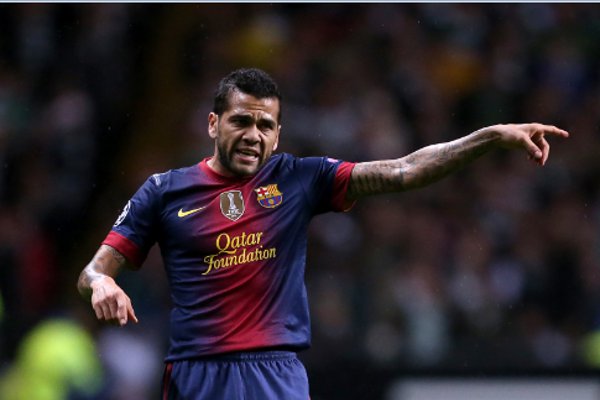
All five full backs for Barcelona and Bayern proved pivotal in their team victories. I say five because Philip Lahm had a 45 minute stint at right back before moving to centre midfield and allowing Brazilian Rafinha to take the reigns at full back. Again, it's perhaps indicative of the fact that both opponents were a man light but more often than not, Rafinha and Dani Alves found themselves camped out on the edge of their opponents 18 yard boxes. Alves scored the all important goal and provided a constant threat. Rafinha completed twice as many passes as every Arsenal player bar Jack Wilshire and put in 8 crosses in his impressive 45 minute appearance. Both full-backs ran tirelessly all game and Mesut Ozil was probably seeing Rahinha in his nightmares last night. For Bayern the overlapping Rafinha takes defenders away and allows Arjen Robben to cut inside onto his left foot and do what he does best. Dani Alves offers a potent attacking threat which was evidenced perfectly by his 90 minute goal after being set up by fellow countryman Neymar. Over on the left hand side, aside from his penalty miss, David Alaba put in five crosses compared to Bacary Sagna who put in just one for Arsenal. Jordi Alba's pace is immense and he can match anyone on his day and his link with fellow Spaniard Andres Iniesta is well-established. City have two superb full backs in Zabaleta and Clichy. In the Premier League Zabaleta has 5 assists this season and Clichy has performed well, but their effectiveness was stifled from the word go against Barcelona. Whether this was tactical or as a result of them being under the cosh for so long, City looked flat without them bombing forward. Jesus Navas was the only one who offered real width but he often chose to cut inside and lay the ball off as Zabaleta was nowhere to be seen. It seemed as if their attacking instincts were left at home. Arsenal may not be blessed with the same quality full backs as City are but their opponents on the night were, and it really told.
2. Arjen Robben Unplayable And Changed?
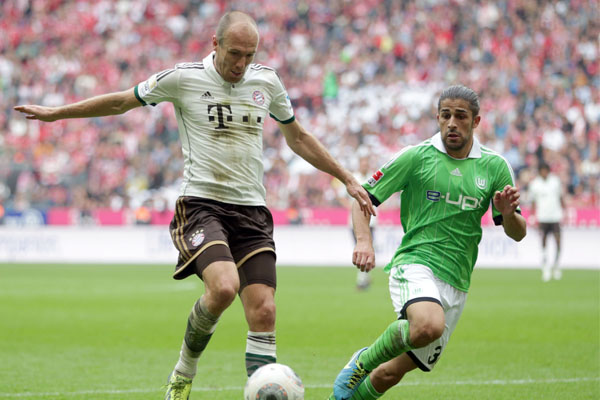
Most people will agree that Arjen Robben is probably playing the best football of his career at the moment. When Toni Kroos or Thiago received the ball last night it was clear that their first instinct was to find Robben. Admittedly he was up against a dishevelled Mesut Ozil (sorry Mesut!) and questionable Nacho Monreal but nobody could have handled him last night. The statistics show that Robben had more shots and completed more successful dribbles (7 and 3 respectively) than anyone on the pitch. Of course he was also involved in the games major turning point, making a trademark run and bringing the ball down expertly to win the penalty which saw Szczesny sent off. Robben strikes fears into defenders when he bears down on them, they do not know whether to stay tight to him or stand off and show him on the outside. What he does with the ball is no surprise, he squares up the full back and with quick feet cuts inside and shoots. He sets the ball wide of the keepers right-hand-post and more often than no the net bulges. At Chelsea and Real Madrid there was a feeling that his obvious talent was overshadowed by greed, poor decision making and a reluctance or inability to work as a team. He may well still be a touch greedy but probably with good cause these days. However it's clear Robben has learnt that he must make better decisions and crucially that he must put in a shift and contribute to the defensive shape of the team. His winner in the Champions League final last year was probably the crowning moment of his career, especially after what had happened the year before. But on current evidence he may well surpass the highs of last season.
1. It's Not Over Yet....
Most bookies will give very reasonable prices on City or Arsenal going through and with good reason. Barcelona have won 11 out of 12 league games this season at the Camp Nou including an ominous 6-0 victory in their last game against Rayo Vallecano. In the Champions League Barcelona have won 3 out of 3 at home and scored 13 goals in the process. Bayern have won 11 out of 11 in the Bundesliga at the Allianz Arena, scoring 9 goals in the last 2 games and only conceding 5 in total. But enough with the doom and gloom, there are reasons why these ties are not over. Firstly, Barcelona did lose 2-3 to Valencia at the Camp Nou as recently as 1st February 2014. That game in particular showed that they do have defensive frailties which a team of City's quality could exploit. Gerard Pique has his critics for his positional sense and Javier Mascherano would probably still not call himself a natural centre back. Barcelona have only kept clean sheets in 50% of their La Liga games at home. This is against teams which Real Madrid aside, City would expect to beat themselves. Lastly, City may well have Sergio Aguero back for the second leg, and what a boost that would be. The obvious starting point for any Arsenal optimism is that they beat Bayern 2-0 at the Allianz arena in last year's competition. Most agree that Arsenal are performing better this season so the feat is of course possible. Furthermore, Manchester City went to Bayern and beat them 3-2 in December last year. It has not exactly gone to plan for Bayern in their last two home games against English opposition. Additionally Wenger may chose to restore top scorer Olivier Giroud to the team after a well earned rest, his physical presence and link up play could prove crucial against the shaky-looking Boateng. If fans are not convinced by these points then they can clutch at the straw of old cliché that 'anything can happen in football'.