8 Wrestlers That Visibly Hated Working For TNA
The ex-TNA, WWE and AEW wrestlers that had six sides to every story, none of them good

Remember Generation Me?
The TNA upstarts that would come to be known as Max Buck and Jeremy Buck were young, but making waves in ROH and PWG when they signed for the ostensible North American number two promotion in 2010. Almost immediately, they realised that the exposure to television cameras was going to be offset by exposure to some rotten booking.
Taking the "new Hardy Boyz" scuttlebutt to the literal extreme, the two were told to act like Matt and Jeff as if comparisons weren't already going to be made, and ended up sidelined anyway thanks to the ludicrous influx of crony hires by the Hulk Hogan/Eric Bischoff regime that jumped on right around the same time. A natural feud with the Motor City Machine Guns materialised, though mostly just amounted to an endless series of matches, and eventually, singles and multi-mans that featured The Bucks taking on each other. They concluded their business with the company a year and a half later, with experiences so shoddy that they were at a point where they genuinely considered jacking the game in altogether.
All of this, but you wouldn't know it when the red light was on. Nick and Matt might have their own takes on their own performances (and likely be two of their harshest critics), but they smiled and worked through the lousy booking and only-okay matches that diffused the buzz around the one of the most gifted acts in the world.
Some? Same experiences, different energy...
8. Austin Aries

There's a garbled Hulk Hogan tweet about working yourself into a shoot and back again or whatever it was, doled out the way he used to say things in the way he liked to say them. Basically, because he really had seen and done all there was to in pro wrestling, he positioned himself at the very top of it via his online messaging, even though the dated carny rhetoric was more out of style and subject to gags than he was.
Of course, it being wrestling, there have actually been events where the words "jabronie marks without a life that don't know it a work when you work a work and work yourself into a shoot,marks" somehow make all the sense in the world. They practically felt like part of a sacred text during October 2018 when Austin Aries lost to Johnny Impact in the main event of Bound For Glory then immediately got up and left, middle fingers raised.
En route to the match, the two had engaged in a work shoot war of words that ostensibly existed to build heat for the contest, but by the time the three count was registered, it actually served to extinguish Aries' attempt and making a point. 'A Double' really was livid with lot, furious with multiple issues, and never wrestled for the company again as of writing. After the dust settled and enough people realised it was a shoot though, the only damage done was to himself.
Just over 60 matches in the subsequent seven years as opposed to the approximate 60 a year he used to clock (all during his 40s, the modern wrestler prime) spoke volumes about the reputational harm and/or his disinterest in continuing life at the top level as 'The Greatest Man That Ever Lived'.
7. Sting

Sting is, was and always will be a wrestler known for his staunch professionalism; a beacon of light in an industry with its fair share of darkness and a performer that receives almost universal praise for being the perfect example of what it is to be an industry megastar. He was branded 'The Icon' back in WCW, but nobody has ever had need to push back on the lofty label. So much so that when he did lose his rag with TNA on camera - and in the main event of a pay-per-view no less - absolutely none of it was on him.
In what served to be the most embarrassing night in TNA's history - and think of the ground that covers - a worst case scenario for a mainstream wrestling programme played out. Former World Heavyweight Champion and number one contender Jeff Hardy's significant health and addiction problems came to the fore at Victory Road 2011 following an utterly inexcusable decision by management to push forward with his involvement as advertised.
Very understandably infuriated with all of it, Sting locked Jeff in a tight pinfall following a hasty on-screen rebooking effort by Eric Bischoff, got out of there, and backed the Impact Zone fans as they put a capper on the show with loud "bullsh*t" chants. In all of his appearances going back to 2003, He'd tried his best to legitimise a brand that, then now and forever was incapable of being legitimate, but it looked as though he'd finally accepted just how impossible that task was.
6. Hulk Hogan

Classic politics from one of the classic wrestling politicians.
In his tumultuous and carnivorously destructive time with TNA, Hulk Hogan had been wrestler, authority figure, heel, babyface and back again, with few benefitting from it all other than Hulk Hogan.
He did at least try to get Bully Ray over as a top heel and surprise leader of roughshod-running stable Aces & Eights towards the end, partly due to Ray's on-screen relationship with Brooke Hogan and what that might have done for her. In parallel though, Dixie Carter had upped her on-screen time significantly, turned heel, taken to negging company cornerstone AJ Styles and ultimately assumed an identical villainous authority figure role herself. With Hogan back as a babyface, TNA's next big idea appeared to be a war between the two.
Unfortunately for Carter and the company Hogan was as bored, brother, as he spoke of being during his iconic nWo reveal promo in 1996. Set to depart the company ahead of a red carpet return to WWE (and in good time before real life tarnished his name for good), Hogan's last moments couldn't have illustrated this disinterest any clearer. Carter issued Hogan with an ultimatum, so he wearily called her bluff and bailed. She then literally begged him to stay, and he just kept on walking. TNA needed him far more than he needed TNA, and he was only too content to have that highlighted on TV.
5. Nigel McGuinness
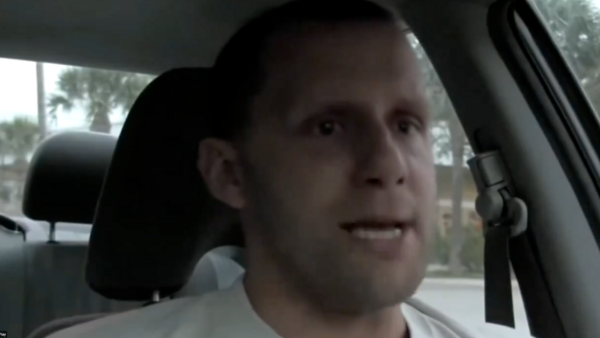
In this list on a technicality and not under his on-screen name of Desmond Wolfe, Nigel McGuinness was a model professional in unprofessional times when it came to his work for TNA, but just how much he didn't really want to seemingly settle for it was laid bare in the absorbing 2012 "Last Of McGuinness" documentary.
Fan-funded, self-made and with a level of vulnerability extremely rare for any wrestling output at the time, the film saw Nigel work a series of retirement tour shows while reconvening with colleagues and friends as well as reflecting on the ups and downs of a career he considered good but painfully incomplete. Over the 12 independent matches, the former ROH World Champion attempted to put a brave face on numerous goodbyes, but gradually unravelled in raw and unflinching fashion.
As best he tried, he simply couldn't bottle up the feeling of failure having never worked for WWE, particularly while contemporary Bryan Danielson was making it as World Champion there. He brushes past his TNA run entirely, neglecting the against-the-odds successes he found as Desmond Wolfe. There were reasons he left the company directly related to his health that he couldn't or wouldn't address until the time was right, but as somebody with total control of the edit, he had an opportunity to put over the brand and, deservedly, himself, as somebody who really had left a mark in the North American mainstream. Devastatingly for performer and promotion, either he simply didn't want to, or didn't believe it was really worth the mention.
4. Rowdy Roddy Piper
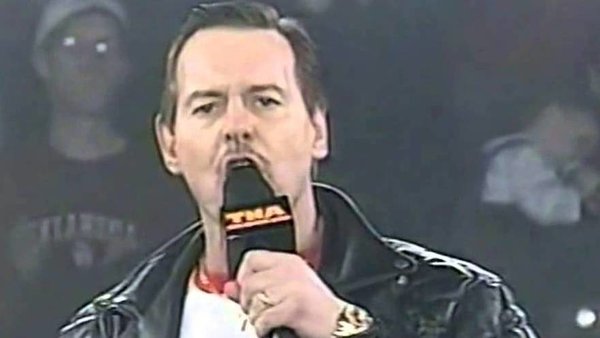
Or if he didn't have a visible problem with TNA, he certainly had a visible and painfully awkward problem with one of the more powerful people in the promotion.
Vince Russo was already as divisive a personality as he'd ever be in wrestling by 2002, and knowing that helped his on-screen persona even if he was one of the worst for misunderstanding what suited the work and what simply wouldn't scan as a shoot. The company's original weekly pay-per-view format was suited to his style though - crash TV by necessity, it had no choice but to deliver everything it possibly could whilst...promising everything it possibly could for the next week.
What a show like that needed was a talker like Roddy Piper - somebody who, even in his later days, could sell taking a dive in fight so effectively that he'd actually call it "taking a dive in a fight" rather than doing a job. There's somebody that could earn $10 one week and extract it the next...unless he was working for Vince Russo.
Debuting on December 4th 2002 less than six months after the launch of the promotion with apparently an awful lot to say, Piper instead plugged his book and website, called TNA 'the last place Russo hasn't killed', before doubling down on the darkness by noting that he'd kill the dreams of the younger wrestlers and asking, to gasps, "did you write in my cousin Owen's death?"
Piper wasn't long for the promotion, so not only was the line ill-judged but also literally bad for business. Dropped threads were all-too-common on a show that should have had none, but this was one people were happy to see the back of.
3. CM Punk

Though he'd do a far worse job of obscuring his displeasure while working for other organisations in the years that followed, CM Punk didn't have much of a poker face when it came to performing his (relatively limited) roles in the early days of TNA, and when push came to shove between Total Nonstop Action and his other base in Ring Of Honor, the choice was easy and obvious for the 'Second City Saint'.
After a run alongside Ace Steel in 2002, Punk's main stint in the weekly pay-per-view era came as a member of Raven's Nest/Flock-adjacent group The Gathering alongside Julio Dinero. Punk and Raven were in the process of setting ROH on fire at the time, but it wasn't the need to overlook that rivalry that caused problems. TNA sought to sever ties with ROH talent after the Rob Feinstein scandal, whilst also feeling that both Punk and Dinero hadn't connected as expected during their middling run. The 'Voice Of The Voiceless' remained loyal to ROH as it attempted to rebuild, refuting the claims but proving it with actions rather than words.
That's not to say the door was always closed - this is TNA after all. There were so many rumours about Punk signing anywhere and everywhere either side of his 2023 AEW exit and owners Anthem would have been only too happy to take one of the biggest stars and draws in the game to bolster their ranks ahead of an industry-altering business agreement with WWE.
A TNA return would have shocked the world, but Punk ultimately cut out the middle-man and returned to WWE for the real never-say-never outcome.
2. The Entire Main Event Scene On Night One

As one of the founders, creators and only full-time wrestlers when NWA-TNA launched in 2002, Jeff Jarrett had to be positioned as a top star even if fans had rejected him under two years earlier in the now-defunct World Championship Wrestling. It stood the chance of alienating audiences early, and the booking subsequently required a lightness of touch elsewhere on the show to give fans reason to keep paying a cover charge every seven days per the bold weekly pay-per-view concept.
At the desk, Mike Tenay and Don West were perfect voices of enthusiasm, even when diluted initially by dated edgelord Ed Ferrara. Out of necessity (the ring broke in a dark match), the maiden show starting with legends putting over the World's Heavyweight Title and a battle royal to crown a new champion later in the night was something; an attempt at rapidly building a house even if the foundations were made of sand.
Long story short - if everybody professes to love everything, maybe the fans will too, even including pushing Jeff Jarrett. The same Jeff Jarrett than then called it all the "biggest bunch of crap" and a "stupid battle royal". Followed by eventual champion and top babyface Ken Shamrock, who agrees, saying it "sucks". Followed by fellow top babyface Scott Hall, who comes through the crowd Nitro-style to also bury the idea.
TNA - "Thanks for your $10, it won't be worth it. Enjoy!"
If anything, it was a pitch-perfect sign of things to come....
1. The Whole Roster
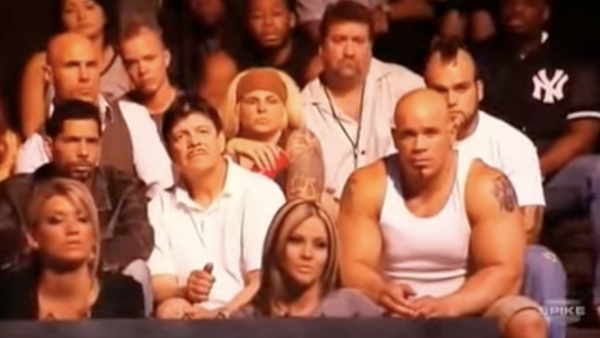
Well, wouldn't you visibly hate it if you were a wrestler, your boss was shoot bollocking you into total surrender to a flawed vision, having the bollocking (and your reactions to the bollocking) filmed for air, and then asking you to drop right back into your kayfabe storylines as of you hadn't just sat there through the shoot bollocking?
Dixie Carter put her roster an a rotten position during a 2009 segment foreshadowing (in every respect) the arrival of Hulk Hogan and Eric Bischoff. Hearing whispers that not everybody was on board, she made a managerial decision to deliver a "love it or leave it" speech Made In The USA Lex Luger would have been proud of, and much like the expensive bus push of 1993, it proved to be a costly mistake.
Implied threats of job losses, of the potential darkness without the possibility dawn, of all the things employees/independent contractors don't really want to hear ever, not least in a meeting about the bold exciting future of a workplace. This had it all, and subsequently had the opposite effect than intended for viewers too - what was supposed to inform part of a massive hype train for the ex-nWo'ers arrivals was in fact a far superior "lethal dose of poison" promo than Vince McMahon's for WWE nearly a decade earlier.
This was completely untenable. But you can't spell untenable without TNA.