Bret Hart Vs. Shawn Michaels Complete History | Wrestling Timelines
December 1, 1993 - Another Trial
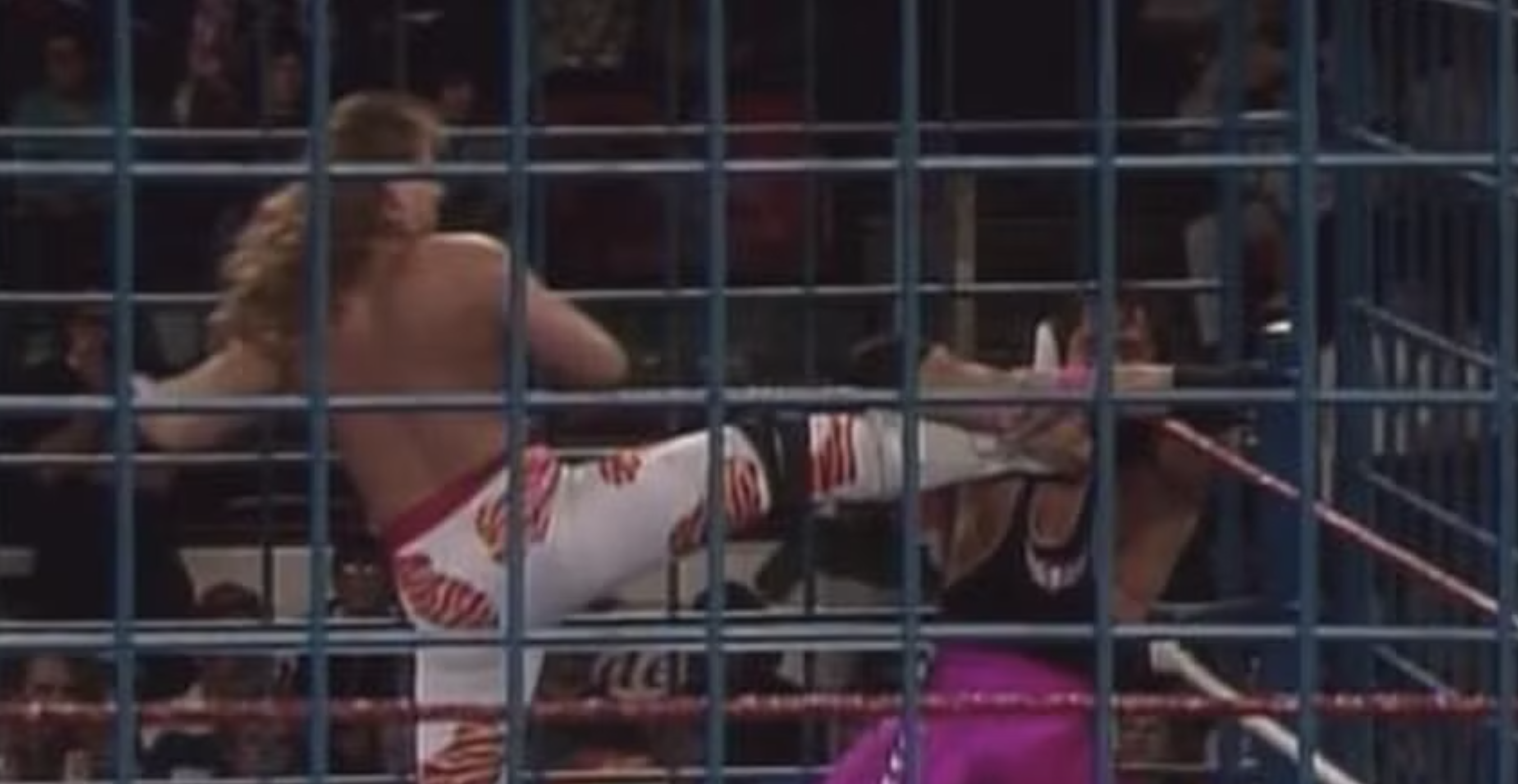
Bret defeats Shawn in an abbreviated Steel Cage match on Superstars. It’s best viewed as a trial for the Bret Vs. Owen SummerSlam 1994 main event - but it’s a tense mini-belter on its own terms.
Shawn flying into the cage, taking bumps with no compunction, is as satisfying as you’d expect. With the blood ban long in play, this is an early foray into the WWE cage match - in which suspense drives the action, not hatred. This is best expressed when Shawn makes it to the other side of the wall, but Bret drags him back into the battle by grabbing his opponent’s hair. Shawn, dangling, uses his body to awesome effect. He looks like he’s close to escaping, and to his doom, all at once. Bret wins when Shawn’s leg is caught in the blue bars. Bret will borrow it when it comes time to fight his brother again.
Another Bret Vs. Shawn finish will get a sequel, too…
March 20, 1994 - WrestleMania X
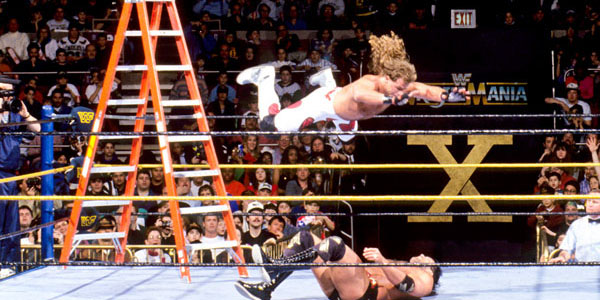
Bret gets the belt back in what is, to that point, the best show in WWF history: WrestleMania X.
Firstly, setting up an excellent if protracted feud, he loses to his brother Owen in the opener. The booking is bold, shocking, purposeful. The match is even better; an unvarnished technical stunner that mutates into a fight when Bret is gradually infuriated by his pesky younger sibling’s cheating. Bret builds this conflict beautifully. The artistry is unlike anything witnessed in a Federation ring. Bret’s early remonstrations with Owen allow him to earn the ass-kicking. Fair’s fair.
Shawn, meanwhile, steals the show against Razor Ramon when the ladder makes its full debut on pay-per-view. In the Observer, Meltzer describes Shawn’s performance as one of the very best individual showings in wrestling history. The ladder is used to brilliant effect throughout, and Shawn’s flying splash launched from atop it is an immortal visual.
Purists prefer the brother-versus-brother war, a match that decades later will continue to appear in best opener ever lists, but the Intercontinental title ladder match is the more spectacular and iconic attraction. It is awarded ***** by WON - a first for the WWF - while Bret Vs. Owen receives ****¾. Shawn, at WrestleMania, first stops the show.
It ends when Razor - in a sight familiar only to completionists who bought Smack ‘Em Whack ‘Em - sends Shawn onto the top rope, perineum-first. Shawn takes Bret’s idea for the finish.
Bret is curt, when describing his feelings towards Shawn in his ‘Hitman’ autobiography: “You thieving bastard”.
July 24, 1995 - A Dangerous Alliance
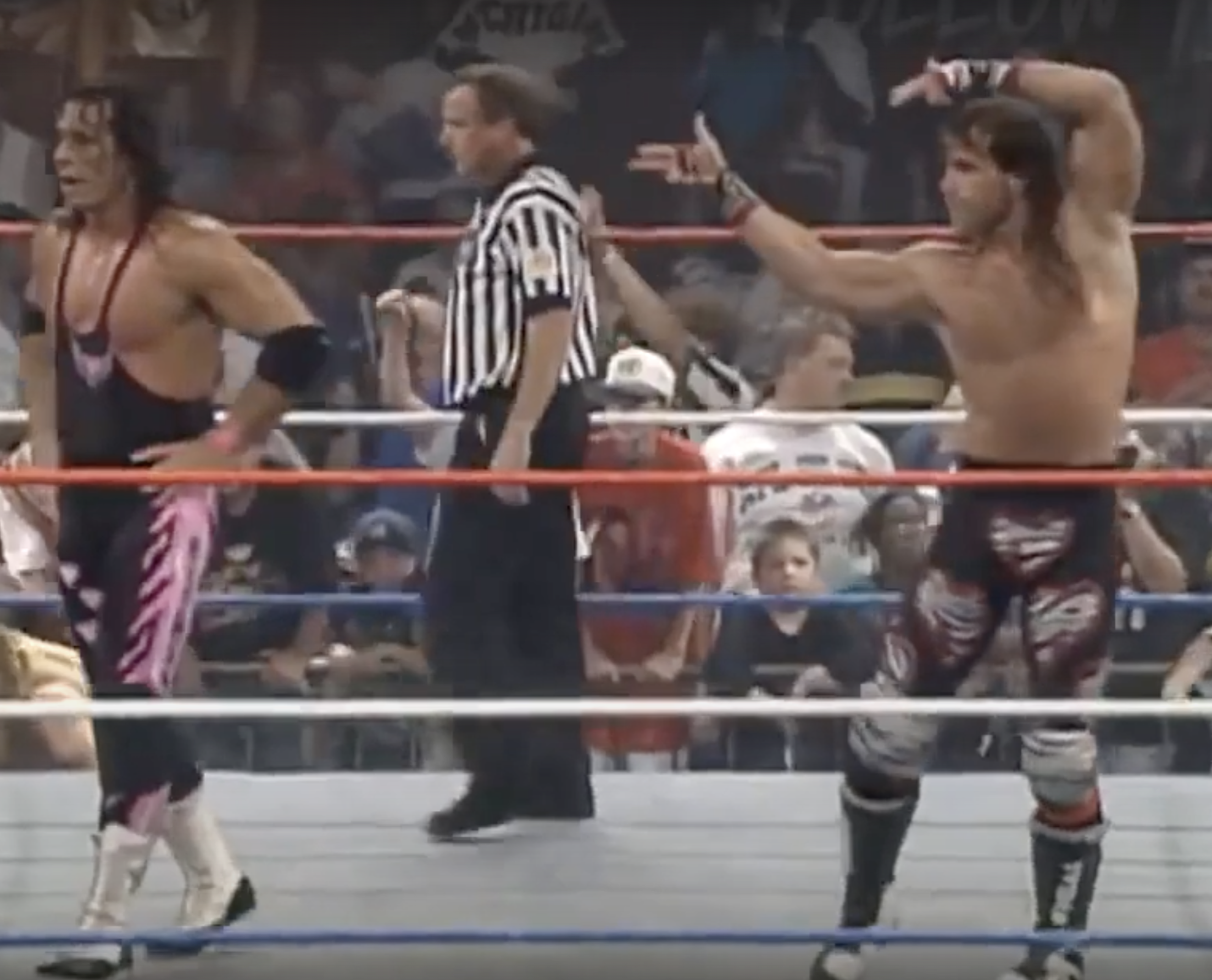
Bret and Shawn, in a dark match subsequently released on DVD, team up to fight Eli and Jacob Blu.
There is absolutely nothing to the story nor the action. This basically exists so that you can go home and tell your friends that, if you go to see WWF live in person, you see matches that won’t air on TV. You get to see unimaginable dream teams coming together for one night only. The babyfaces win, obviously. There’s nothing interesting about the match - but the post-match rewards the more forensic viewers.
Shawn and Bret share a hug that is far more awkward than celebratory. No eye contact is made; if anything, they take great care to avoid looking at one another. They part. Shawn points both fingers at Bret, to visually endorse him. Bret, at the exact same time, looks away and places his hands on his hips. You can almost see Shawn telling himself, “Well, I tried, who cares?”
So what’s happening?
The Kliq is what’s happening. Backstage, Shawn has buddied up with Razor Ramon, Diesel, and the 123 Kid - they’ll be joined by Hunter Hearst Helmsley - and they are, according to endless locker room testimonies, an insufferable, power-mad, mean-spirited group of saboteurs. They want the top spots. Vince is obsessed with them, Shawn in particular, and they often get what they want. What they want to do is extinguish the threat of anybody who might one day be good enough to challenge their supremacy. Many of these wrestlers are guys that Bret has developed a personal bond with and or professional respect for. The Kliq are not stupid enough to torment Bret directly - they know he’s a powerful asset capable of making them look good - but Bret is for the boys. He won’t even entertain the idea of a private locker room. He shouts up in meetings to defend and make conditions better for those who are rightly afraid for their jobs.
Bret is a good guy, but he’s not entirely altruistic. Shawn is getting the big babyface push. Bret hasn’t always held onto it - Vince couldn’t help himself but try out Lex Luger and Diesel - but it always comes back to him.
There’s a sense of professional jealousy very much in play now.
March 31, 1996 - Iron Man
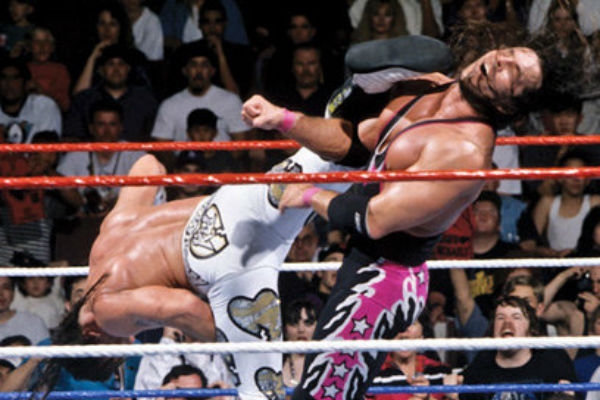
Bret, into overtime, drops the WWF Heavyweight title to Shawn Michaels at WrestleMania XII. It is the longest singles match in the history of the promotion under Vince, Jr., and the first held under Iron Man rules. The idea is that the man who scores the most falls in an hour wins. The execution of this idea is bizarre. There are no falls in regulation time. WWF fans love Bret, but an hour?
Even in an era that emphasises strong in-ring action, it’s a bit much. It’s still the WWF. The fans aren’t that into the craft; many actually leave the arena. American sports are high-scoring, end-to-end games; the WWF’s first foray into a pure sports feel is misguided in the extreme, echoing the failure to launch soccer stateside.
Some fans defend the Iron Man match. Some deem it a masterpiece. To others, it feels like a match you are supposed to like. To them, the Iron Man match is the first step towards becoming a more discerning wrestling fan. The match is at times so dull that you question it. Isn’t this meant to be great? It’s advertised as being great. Why is it boring?
It’s a match that the snobbier fan feels good about feeling unmoved by - almost a password into a secret club of aspiring know-it-alls.
One electrifying spot aside - in which ring announcer Tony Chimel eats an errant superkick when Bret, splayed on his lap, gets out of the way - the match is excruciatingly tedious. At least for the first 40 minutes. It more closely resembles the non-action in the commercial break of a TV offering, albeit with more rare, well-applied submission holds, than an epic technical dream match.
In wrestling, it’s often said that it’s better when reality bleeds into the narrative. Characters drawing on legitimate tension to fuel their invective with more bile, a wrestler taking on a persona that amplifies their actual personality traits: if they don’t buy the con, but they buy you and your story, you’re set. The issue with the Iron Man match is that it’s neither a fantastically-crafted work nor a match so frenzied that it feels, thrillingly, that it might fall apart. The tension is real, but there’s too much and too little of it, at the same time. The odd potato is thrown, but there’s not enough hatred to harness, informing a petty and standoffish affair. Weirdly, Bret rates it as his best ever match. It’s certainly an achievement, if not a spectacle.
The match reflects the state of the relationship, which is at this point awkward and suspicious.
Bret is happy to do the job - he’s set for a well-earned hiatus, imminent free agency, and a very lucrative bidding war - but he is displeased by the build. Shawn isn’t happy, either - the ‘Boyhood Dream’ arc is a bit cornball, and his onscreen relationship with elderly real-life trainer Jose Lothario hardly depicts him as a cool heartthrob - but he at least looks the rippled, bare-chested business in the training vignettes. Hart is heavily clothed trudging through the Canadian snow when he is shown building up his stamina. Bret thinks he’s being set up as the old, ailing guy who is on the way out.
Shawn wins in overtime with Sweet Chin Music. He is now equipped with one of the best wrestling moves ever.
“Tell him to get the f*ck out of the ring! This is my moment,” Shawn says to the ref, as an irate, exhausted Bret complies in disbelief. This is appalling; in an era where passing the torch is an eclipse-rare event, Shawn is almost profoundly ungrateful. The relationship, that barely exists, is rapidly breaking down.
Bret goes on hiatus. Shawn calls to thank him for the match, days later, but Bret reckons this was a Vince edict, not something Shawn did out of true respect, of his own volition, because it was the right thing to do.
May 19, 1996 - Disgust
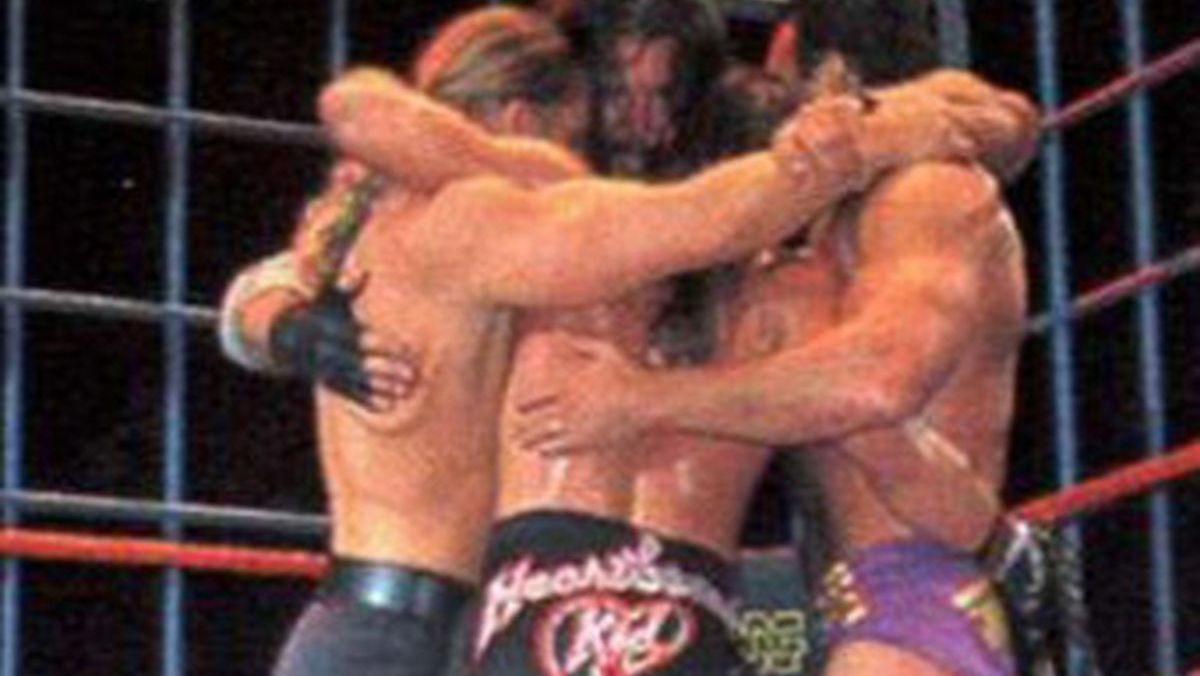
May 19 is the night of the infamous Curtain Call.
In the main event of a Madison Square Garden house show, Shawn Michaels (babyface) defeats Diesel (heel) in a Steel Cage match. After the bell rings, their real-life buddies Helmsley (heel) and Razor Ramon (babyface) enter the ring. All four men share an embrace - the Curtain Call - to wave goodbye to Diesel and Razor, who are leaving for World Championship Wrestling. While no grown adult believes wrestling is real, the WWF still presents the facade, and has yet to play with the idea that it is a work within the narrative.
Bret isn’t around, but he’s disgusted by it, and spots another problem. “Someone,” he will later, passive-aggressively write in ‘Hitman’, has encouraged young fans to enter the ring and mimic what he describes as Shawn’s “Chippendale dance” on the live event circuit. “It rankled many of us,” Bret says.
At this point, Shawn’s substance abuse issues have reached a new severity; the new WWF champion, a role Bret took with the utmost seriousness, is now being babysat and chauffeured around by referee Tim White. Shawn is unable to adequately take care of himself.
Bret: “I’d known [Shawn] as a person who respected the business, and the wrestlers and fans, upon whose shoulders we stood. But that person seemed to be gone”.
Bret is also wary of Shawn’s demands for his own dressing room, even going as far as to compare him to Hulk Hogan.
October 28, 1996 - New Deal
Bret is no longer a free agent. He resists overtures from a white-hot WCW and their astronomical offer of $3 million per year. Bret feels a sense of loyalty to Vince, for making him a star, and is wary of Hulk Hogan’s political manoeuvring. Bret, with his near-photographic memory, also recalls earlier negotiations with WCW some years prior. He knows that, while the explosion in popularity is real, WCW is institutionally dysfunctional.
Bret signs an unprecedented 20-year deal with a cold promotion that hasn’t enjoyed strong business for some many years. The first three years cover his time as an in-ring performer; the remaining 17 will see Bret, and his genius mind, used in a creative capacity. He is in effect going to become the next Pat Patterson after his time as one of the most well-paid stars in wrestling history.
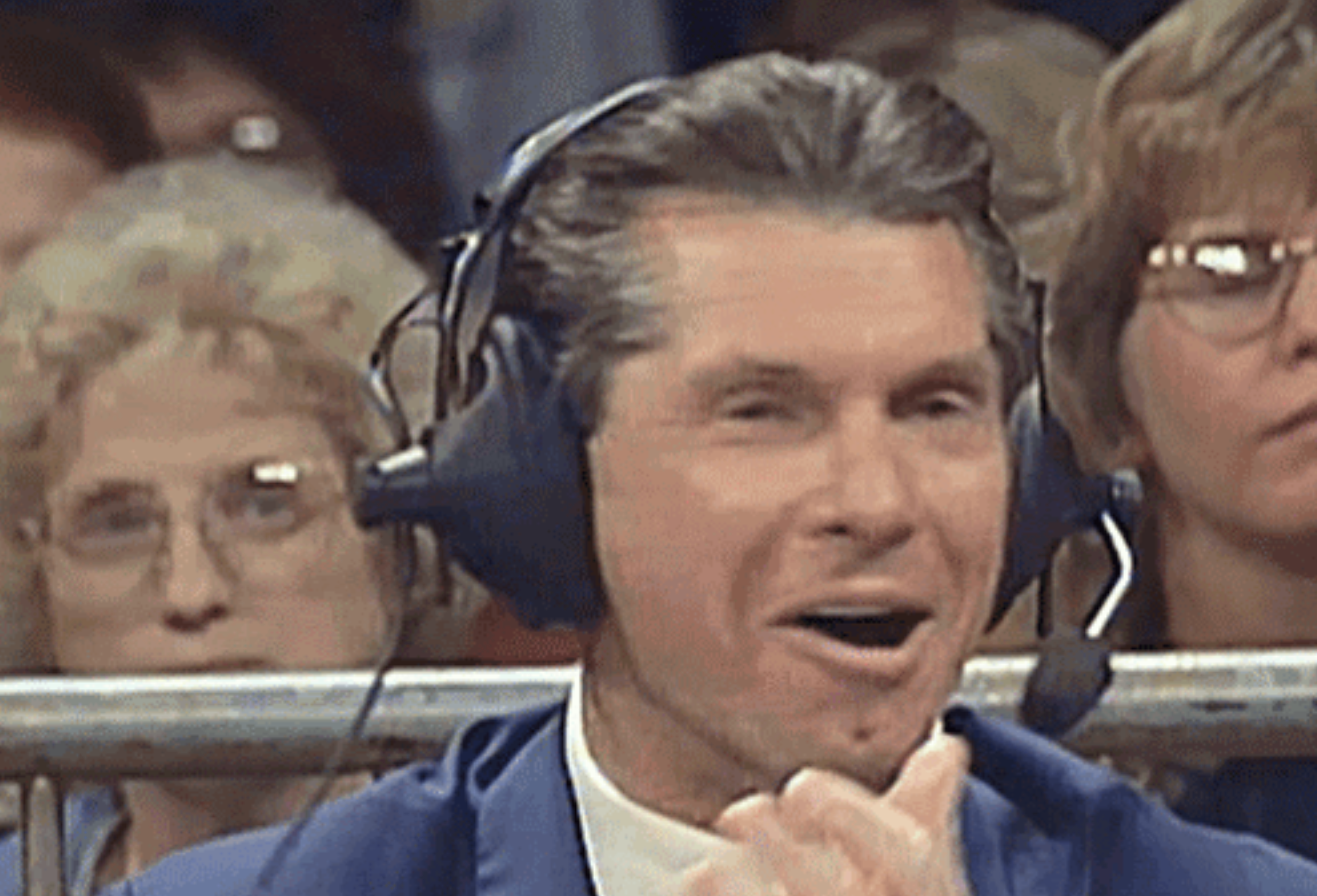
Bret’s promo announcing this on Raw is incredible. Vince, on commentary, is either a really poor actor, or is struck for the first time by the sheer financial commitment he’s just made. There’s something disingenuous about his celebratory response.
Vince will become the best actor on wrestling television within 18 months.
November 20, 1996 - Resentment Fosters
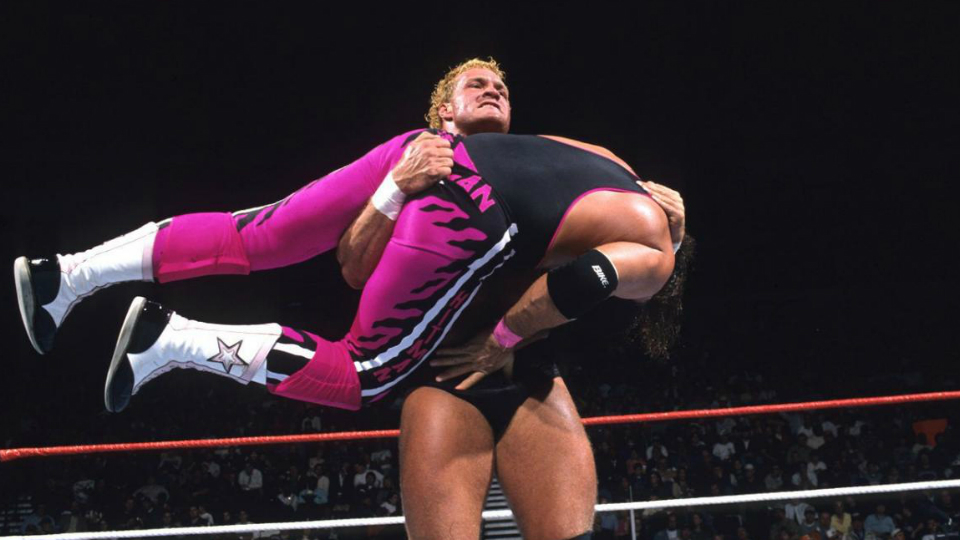
A major press conference is held to drum up publicity for the 1997 Royal Rumble PPV in San Antonio, Texas. Bret is saddened by it; he’d just lost to WWF Champion Sid at In Your House: It’s Time five days earlier. The match was a stopgap. Bret at least for one big show is reduced to challenger of the month, something for Sid to do before he drops the title back to Shawn in a hometown win calibrated to reheat him as the top babyface.
In the ring, Shawn was absolutely awesome during the first reign. His frenzied, meta war with Mankind in September ‘96 was a uniquely compelling triumph, one of the best WWF matches ever. At the box office, Shawn can do nothing to arrest the promotion’s commercial slump - a bleak fact that does nothing to break his spiralling addiction.
Bret is wondering whether coming back was worth it - but he’s going to get his win back at WrestleMania 13.
February 2, 1997 - Sabotage
It’s a marathon day for the WWF house show loop; the promotion is running a double shot in Montreal and a third show, later that very night, in Ottawa. Bret is required to work in each city, and he goes last against Steve Austin on the Montreal matinee. He makes it explicitly clear that he’ll get to Ottawa late. This is accepted by the road agent team, who tell Bret not to worry. Bret’s tenure has for a long while allowed him to arrive when he pleases, a point he’ll mention to Eric Bischoff as a perk in his demands.
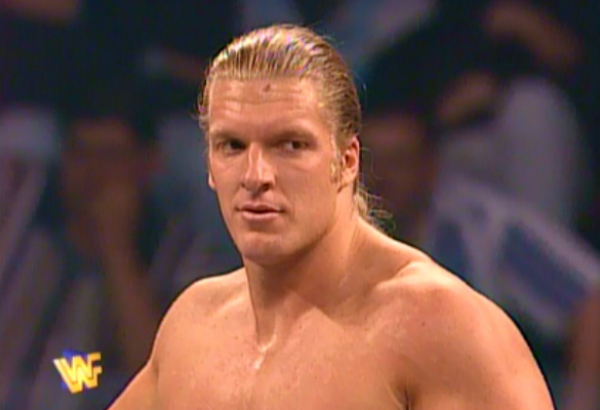
When he arrives, Austin pulls him aside. He tells Bret that Shawn and Hunter have been talking sh*t about him being late. Questioning Bret’s professionalism is, frankly, a joke. Bret is seething, understandably; Hunter isn’t over and has been in the WWF for a cup of coffee, and Shawn is becoming a professional nightmare. Bret very begrudgingly accepts Vince’s request to put Hunter over as a soft punishment in Ottawa. Hunter, who isn’t remotely great at this point, has the temerity to describe Bret’s in-ring work as lackadaisical after Bret does him a monumental, unearned favour in a Triple Threat match also involving Austin.
Imagine Hunter, in early 1997, saying that about Bret Hart. Scarcely believable at best, the remark underscores the extent to which Vince has fallen for Shawn.
In an era of rampant experimentation - Vince McMahon is doing everything to determine how he can defeat WCW - Triple Threats are being trialled in dark matches and on the house show loop. Bret just lost one to Sid and Shawn on January 31. The traditional craft and his top spot: both are ebbing away.
Later that night, Vince attempts to placate Bret. Doing a job for a failed project in Hunter Hearst Helmsley is hardly a good omen. Vince says that the original long-term idea - Bret was to get his win and title back from Shawn at WrestleMania 13 - is too predictable now. Instead, Bret and Shawn will wrestle a Hair Vs. Hair Ladder match. Bret will go over, Vince stresses, but Bret is convinced that Shawn has refused to lay down on his back for a three count to prove to the world that Bret is the superior wrestler.
Bret, the good guy in the tale, has a somewhat naive vision for pro wrestling. Post-Hogan and pre-Attitude, he sees the WWF as a meritocracy in which the best technicians and the nicest people succeed. It’s a nice idea. It also doesn’t draw.
Maddeningly, Shawn and Hunter’s competing vision, of an edgier product that they’re pitching constantly, is going to work.
February 13, 1997 - A Smile Lost
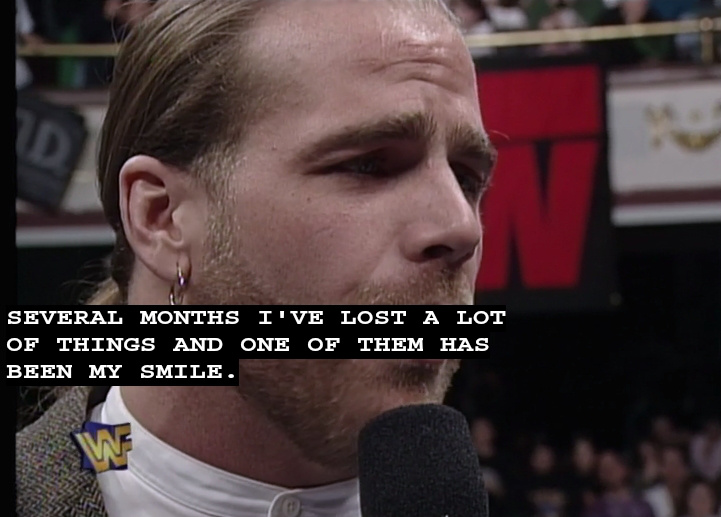
Shawn vacates the WWF title live on Raw, citing a knee injury and a “lost smile”. Viewed through a more modern and sympathetic lens, Shawn was addled and profoundly depressed. This doesn’t scan in 1997. The boys think he’s a crybaby who doesn’t want to drop the belt the right way.
Bret is adamant that the knee injury is a total fabrication, having worked with Shawn three days prior with no issues. Dirtsheet reporting indicates that, while the injury is real, the severity is something that wrestlers work through constantly. Again: in 2025, Shawn is probably awarded with warranted sympathy. In 1997, his previous conduct has done him no favours whatsoever.
Bret proves his value by putting Austin over, at WrestleMania 13, in possibly the best WWF match ever; Shawn doesn’t even go away for that long.
March 24, 1997 - Excellence Of Escalation
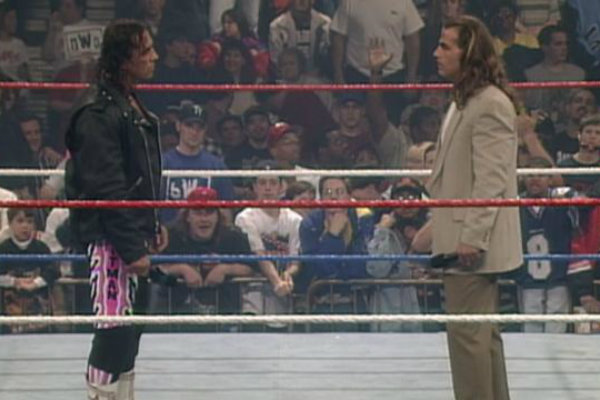
The slow-burn to the next match begins. Bret turns his back on the crowd, but only those based in the United States, as the WWF embarks on an experimental storyline. Vince hasn’t yet articulated that the audience is tired of “good guys versus bad guys”, but Bret’s new arc slowly pulls at the idea. Bret is a babyface in Canada and the rest of the world.
Shawn interrupts the promo. Suddenly, the cheesy babyface of 1996 feels far more realistic - possibly because he’s dancing around the idea that wrestling isn’t real, or because he believes every word he’s saying. “In your mind, ‘Markman’, you really think that all of this is yours”.
The thing is, though, is that it is all Bret’s. That’s what Vince promised him when he signed the 20-year deal. There were to be no more Diesels in his way: until Vince later pitches a heel turn with a stronger list of upcoming babyface rivals, Bret is sworn to be the top guy.
Shawn wonders aloud how Bret knows Shawn posed for Playgirl magazine. Shawn accuses Bret of enjoying the read a little too much - not the last use of tasteless homophobia in this programme - before Bret snaps, and wraps Shawn’s leg around the ring post with the figure-four.
This is all a lot hotter than the build to WrestleMania XII.
April 7, 1997 - Shoot Season
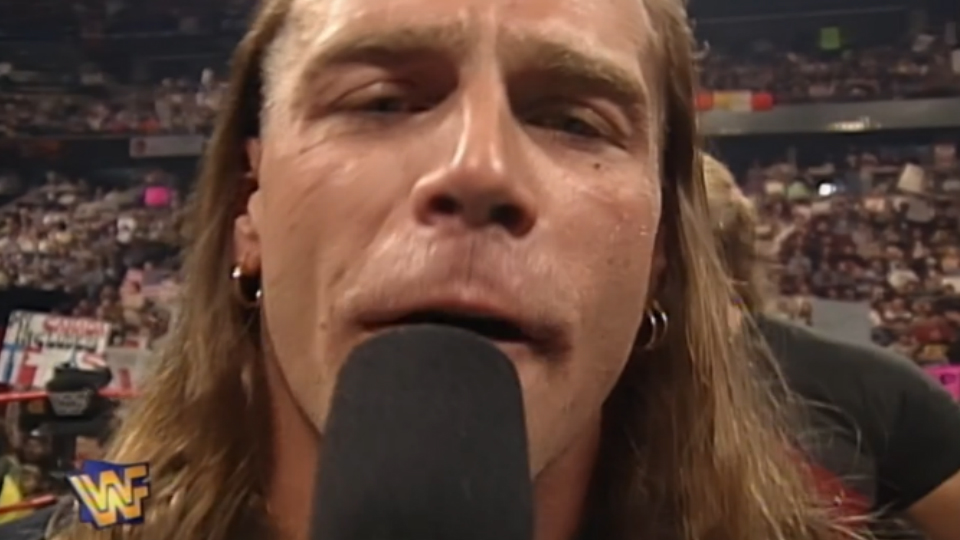
Shawn, when he’s meant to be recuperating from an injury so serious that it removed him from the biggest show of the year, instead cuts a shoot promo on Bret live on Raw.
We are rapidly embracing a new tenor, a new way of selling conflict, a new Attitude. Shawn is apoplectic. He accuses Bret of whining about and putting off putting Shawn over, where Shawn had played supporting cast member to Bret for years. Shawn says Bret is a money-desperate mercenary who only took time off, cynically, to deplete the company of star power and undermine Shawn’s top guy run. In the same breath, he buries Bret as a draw. Shawn’s ego is so out-of-control that he becomes delusional.
Even talking about the predetermined nature of the business is striking. For the WWF, it’s transgressive, borderline sacrilege.
From Bret’s perspective, this is an unsanctioned, uncalled-for shoot unrelated to anything involving his character. To get Shawn’s side of the story, it’s important to understand his own individual ambitions. He wants to be the tippy-top guy, but more than that, he wants wrestling to change and evolve with darker, edgier, cooler times. Why should he live, constantly, in Bret’s world? Why should everybody live in Bret’s world, for that matter?
It was Kevin Nash, who had an important programme of his own to deal with, who said to Bret in February 1996: “Motherf*cker, not everything is about you”.
If you’re Shawn Michaels, you don’t necessarily care that Bret Hart is a magician in the ring, or a good guy. If you’re Shawn, Bret is paid like Hulk Hogan compared to him, as entitled to the top spot as Hogan was, but never drew like Hogan. Shawn didn’t draw, either. There’s a toxic undercurrent of paranoia and low self-worth driving all of this from both sides.
It’s about to seep out and pollute everything - but not after…
April 21, 1997 - A Peace Offering
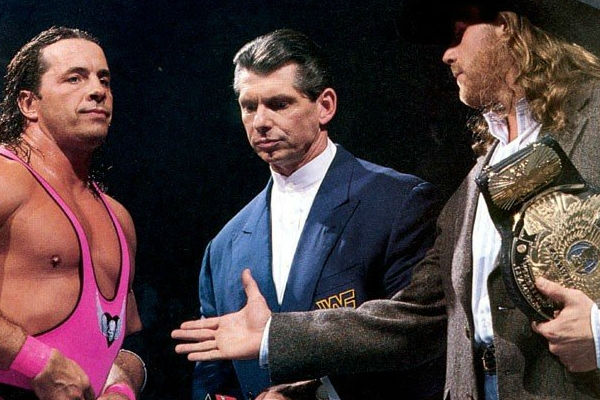
Bret requests a meeting with Shawn at the TV taping in Broome County.
Bret wants to thrash it out. Even though Shawn is still somewhat aggressive, telling Bret that morale was better during Bret’s hiatus, Bret remains calm and intent on putting this emerging feud behind them. Shawn provides a rationale behind the shoot promo, revealing that he was upset by Bret doubting the legitimacy of his knee injury. In a note of irony, Bret has just suffered a knee injury of his own. Bret is introspective. The night prior, he had just obscured his injury from the world in a 20 minute war with Austin at In Your House: Revenge of the Taker. Bret realises that Shawn is a worker, and a great one, and accepts that it’s difficult to know for sure.
They shake hands and agree to work together professionally at King of the Ring. That match doesn’t happen.
May 12, 1997 - A Misunderstanding
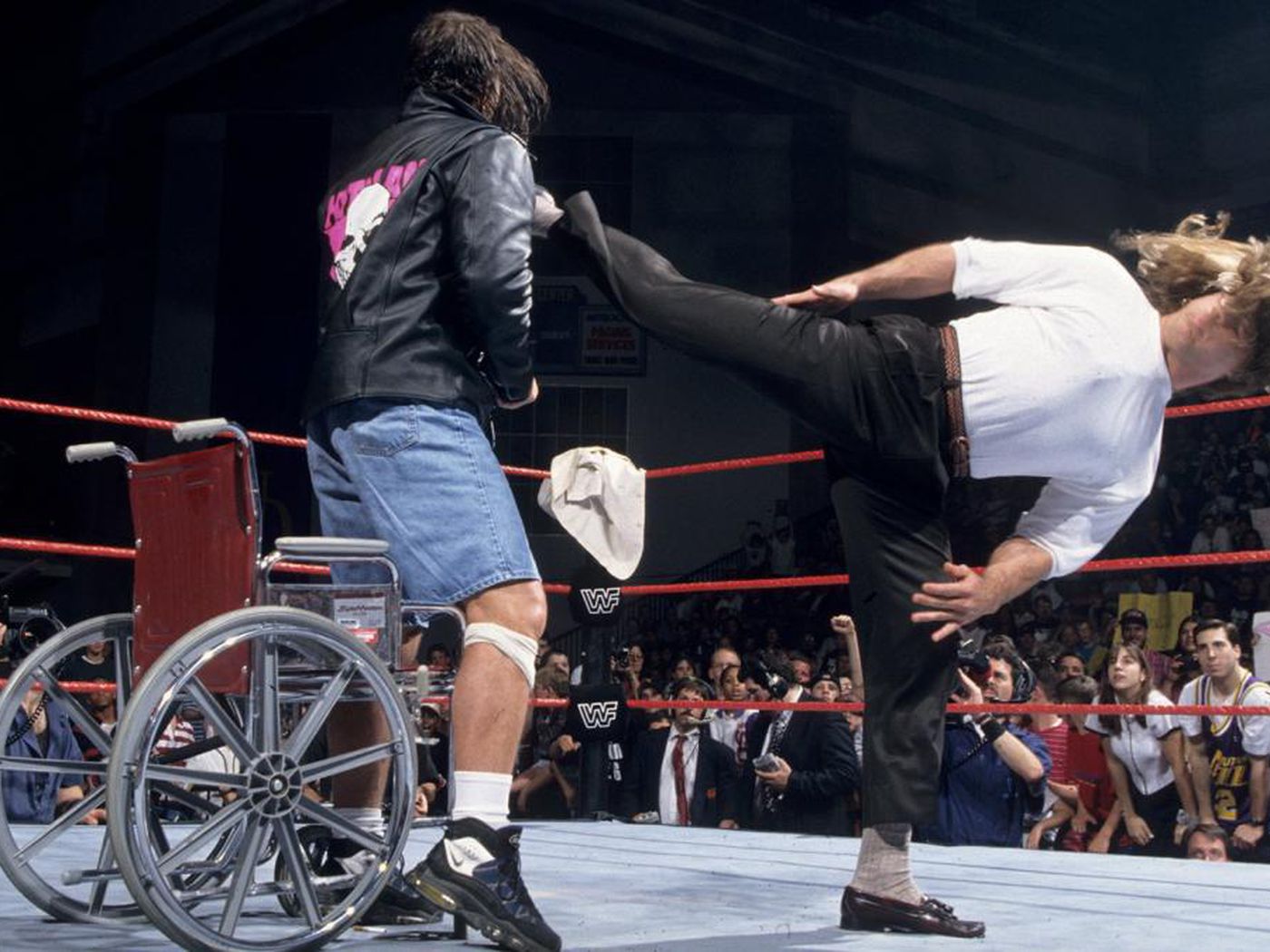
Bret is a full-blown heel and the leader of the expanded Hart Foundation stable. He’s still on TV, despite a slow and agonising recuperation from knee surgery. Bret suspects that Vince will prevent the troubled Jim Neidhart’s WWF comeback if he doesn’t agree to perform on TV in a wheelchair - after which, ever the dutiful pro, Bret finds himself in the weekly rotation.
With King of the Ring still the target, Bret calls Shawn out. The idea is for Bret to antagonise Shawn into super-kicking him out of the chair. It’s a great visual, but the fans only get to see it on replay the week after: Bret misses his cue, and Raw goes off the air with him mid-rant.
Shawn is furious. Bret maintains that this was not a deliberate act of sabotage, but a simple and, in his defence, rare botch. But think of this from Shawn’s (cynical) perspective: isn’t “I’m too over as a heel, and couldn’t hear the cue over my heat” exactly the sort of thing an irrational, self-serving mark for himself would say?
The heat in the building is intense - the WWF is on fire creatively - but it’s not close to a riot. It’s not something Bret hasn’t conjured before. And if Bret simply lacks the composure to do the job adequately and on time, doesn’t that strengthen Shawn’s case that he’s not the man?
May 19, 1997 - Sunny Days
Supporting his own case from the week prior, Bret doesn’t actually hear the infamous remark. He only learns the gravity of it after the fact.
On Raw, Shawn cuts a promo on Bret. The target is still King of the Ring. Shawn - so addled, according to Bret, that Hunter and his valet/partner Chyna need to carry him out of the building later - implies that Bret is having an extramarital affair with Sunny. “I know you’ve been having some Sunny days lately…”
The hypocrisy is as galling as the insult is transgressive. It’s not true, the accusation, but Bret is a wrestler on the road who sleeps around. The accusation is believable, which could be considered the same thing. Shawn will also remark that Stu Hart is dead, but is still walking around Calgary because his brain hasn’t figured it out yet. This is the sort of shocking, undeniably compelling line with which the rivalry will become entrenched in legend, but Bret, obviously, is no fan.
Bret is so furious, when his son Dallas asks if he’s really seeing Sunny behind his mother’s back, that he considers shooting on Shawn at King of the Ring. He decides against it. He knows it’s not the right thing to do, and besides, he can’t recover in time. This is a pity. The tension, the form both men are in, the recognition that they need to bring their best with Steve Austin on the rise: it would have been the first undeniably great singles match between the two.