How Good Was Roddy Piper Actually?
How good was Roddy Piper: do you know the answer to that question?

The experience of watching WWE Hall of Famer Roddy Piper does not necessarily align with the way that he is idolised. That’s if you’re a millennial-aged wrestling fan who has seen Royal Rumble 1992 and might just have pretended to watch WrestleMania 1.
The thing about the WWF Golden Age of the 1980s is that it looked more glossy and was thus more accessible as the box office magic started to wane. Wrestling was invented in 1984, everybody knows that - but it still looked a bit like the dreaded olden days until around 1988, didn’t it?
The rise of the Ultimate Warrior actually coincided with the onset of the decline. This era of the WWF peaked commercially (and you could argue critically) with WrestleMania 5. The Legion of Doom are more fondly remembered than Strike Force, but Hawk and Animal arrived in the summer of 1990.
A lot of kids brought up on the WWF didn’t know they were actually watching the beginning of the end.
Roddy Piper, then, was a strange guy to unpack for the young WWF fan raised on Coliseum video. A lot of people won’t admit this, but there weren’t many lines of static on those WrestleMania 2 VHS tapes. Piper’s segment with Morton Downey, Jr. at WrestleMania 5 was weird. Even more weird, to absolutely use a euphemism there, was Piper’s appearance at WrestleMania 6. Piper popped up as a manager and commentator on occasion. Young children raised on the bronzed and oiled late-Golden Age WWF could just about infer that he must have been a big deal, since he was very animated and the crowds seemed to love him, but they didn’t necessarily grasp how big a deal he was.
Piper’s legacy is strange. He is more revered than anybody in wrestler circles, whereas fans, if they are being truly honest, are mostly happy to accept this secondhand recommendation as gospel. By the time Piper was more visible in the more remembered (yet far less popular) year of 1992, he was a midcard act.
More adventurous fans might have sought out Piper’s most famous match for Jim Crockett Promotions, or checked out the Piper’s Pit segments that the talking heads on WWE documentaries rave about so fervently.
Piper’s brilliance extends well beyond that - but equally, his post-peak slump was far more stark than most are willing to admit.
So how good was Roddy Piper, actually…?
10. Presence/Look/Presentation

Roddy Piper did not boast what was an impressive or supposedly marketable physique by 1980s standards.
Vince McMahon, Jr. was the size-obsessed promoter, but it was his father who first rejected Piper. Vincent James thought that Piper was too skinny and weak-looking when, after hearing about a great new heel talker, he brought Piper in as a potential heel opponent for Bob Backlund. Piper’s July 30, 1979 MSG debut went badly, and the Backlund programme was dropped immediately. Vincent Kennedy was so dubious about Piper’s look that he was initially brought back to New York to play a manager who sometimes wrestled before he got too over not to main event.
Piper lacked definition in the 1980s (although he was weirdly ripped at King Of The Ring 1994). He wasn’t small, but then, nobody was back then. He was handsome, which helped. He was telegenic at the advent of the cable television wrestling boom.
When programmed opposite Hulk Hogan and Mr. T, Piper’s relative lack of size and muscle became a feature, not a bug. In an age where the muscle monster was a babyface idol, a totem of the strength of Reagan’s America, Piper was an ideal contrast. Of course he was going to run his mouth, poke you in the eye, and run away. He was a scrawny cheating coward punk. His size generated heat. Piper’s size almost did not matter at all because he was so absurdly overpowered in the charisma department.
Piper was also easy to identify via silhouette. His signature kilt was a fantastic touch because, in an age where people were more openly bigoted, it was confused, deliberately, for a skirt. Piper, more savvy than most, knew what he was doing. He made fans foam at the mouth. This guy thinks he’s so tough, but he’s wearing women’s clothing!
“You wear a skirt, where’s your pantyhose at?”
“Look in the top drawer of your wife’s bedroom, man”.
It worked to outrageous effect every time.
The blue trunks were on-the-nose for a Scotsman, but it was a broad old industry during Piper’s heyday. His bagpipe and drums-led ‘The Green Hills of Tyrol’ theme was magnificent, utterly unique, and it was, again, ideal. The xenophobic yanks did not want to hear that sh*t. It was much too foreign.
9.5/10
9. Promos

Much of Piper’s work was very, very much of its time, which will be addressed deeper into this article, but in terms of pure delivery, Piper was out-of-this-world incredible. Piper’s lines were unimaginably hard, too. Being one of the single best heels ever, this is no surprise, but his style worked far better when he was a bad guy. There was a warbling, shrieking quality to Piper’s voice that bordered on the unpleasant. He didn’t just say nasty things; his actual voice was nasty. A torrent of shrill filth tumbled out of Piper’s vile mouth at such a pace that, after every other line, he’d take a sharp intake of breath. It was as if there was so much rage and bile in his body that he had to empty his lungs just to let it all out. A chuckling sinister presence early, his promos would build with such ungodly maniac intensity that he’d need an oxygen tank by the time he was done. Piper was as quotable as any wrestler ever, too.
“You do not throw rocks at a man who’s got a machine gun”.
“Just when they think they’ve got the answers, I change the questions.”
“Hello, peasants!”
“The reason Ric Flair always has two women with him is so they have someone to talk to when he falls asleep.”
Piper wasn’t just the quickest; his best stuff made a lasting impression because few were better at conveying the gravity of an upcoming match than Piper. Some of his stuff was corny, but that’s wrestling.
The other side of Piper’s promo game is that, at some point in the 1990s, he became actively bad to a shocking extent. It was almost impossible because it’s one thing to decline physically - time comes for all men - but nobody in the history of wrestling has lost their tongue as badly as Piper did. A lot of what he said was utterly nonsensical, and his attempts to launch catchphrases in WCW were forced and cringeworthy. Piper was openly mocked for this on WWE TV by Santino Marella, who once said in an impersonation angle: “Just when they think they’ve got the answers, I babble incoherently like a lunatic person”. Getting out-promo’d by Santino Marella is not great at all, is it?
Even during these years of baffling, meandering nonsense, though, Piper still had it in him on occasion. His heartfelt, haunting work opposite Chris Jericho in 2009, on the road to WrestleMania 25, was drenched in pathos.
Piper could have lived until he was 110 years old, said the same odd sh*t that defined the last several years of his career, and he’d still get perfect marks for how great he was in his prime.
10/10
8. In-Ring Ability

If not the absolute best match in WWE history up to that point, Bret Hart Vs. Roddy Piper at WrestleMania 8 was certainly the most sophisticated and textured.
The WWF had already experimented with the all-babyface match - the famed Ax and Smash sequence at Royal Rumble 1989, Hulk Hogan Vs. Ultimate Warrior - but this was different. This was a remarkable subversion of the ultra-broad wrestling psychology that the WWF was known for, in that Piper, by that point established as a beloved old legend despite being just 38 years of age, was wrestling two opponents: Bret and Father Time. Piper, incredible at selling the rage of humiliation, spat at Bret after he had been outwrestled and dumped to the floor in an early sequence. As the match progressed, and Piper sensed but refused to accept his fate, he grabbed the ring bell and motioned to strike Bret with it. The fans very loudly implored him not to cheat. He didn’t, which was his undoing. Bret pinned him and regained the Intercontinental title. Piper was a man about it, and picked Bret up before wrapping the title around his waist.
Piper was a trailblazer. You can trace two future trends back to this genuine ‘WrestleMania Moment’. Firstly, while the bell shot was too far, Piper drew cheers despite using the dark arts throughout. You could argue that Piper was among the original cool heels that would dominate the mid-to-late 1990s. Also, this moral crisis and internal conflict basically wrote the playbook for the second coming of Shawn Michaels, and later the “cinema” trend beloved by the Bloodline.
Piper was great on occasion, but if you polled a demographic of fans on his top 10 matches - hardcore fans, not the ultra-informed territory historians - they’d struggle. A wrestler of Piper’s era wasn’t interested in building an impressive match catalogue designed for a compilation Blu-ray or an internet listicle. Piper was fiercely protective over kayfabe. Even on the shoot interview circuit, years after there was no such need to do it, Piper would refer to doing jobs as “taking dives”. He was so dedicated to gritty realism and the idea of “fights”, as he called them, that the matches were deliberately ugly and all too often devoid of dramatic structure. The usual Piper match was heavily influenced by boxing, and worked boxing matches are traditionally not very good at all. Piper prided himself on the messy match, since that’s what a fight is supposed to look like, but the looped brawling was often tedious. Loud and snug, but tedious. Piper got lost under the veil at times. The fans believed it, sure, but storytelling was not his best attribute.
When the rhythm was perfect, the tone gruesome, Piper’s fights were incredibly compelling - and his iconic Dog Collar war against Greg Valentine at Starrcade 1983 was a masterpiece. Piper swore bloody vengeance in the build, with his typically awesome promos, after Valentine had purportedly destroyed Piper’s ear in an angle. Every blow with the metal chain added a harrowing texture to the match. Those on the WCW side of the Monday Night War will tell you that Piper was not particularly ecstatic about nor great at selling deeper into his career - this is what instigated his backstage brawl with Kevin Nash at a Nitro event in June 1997 - but in 1983, Piper was peerless at selling damage to a specific body part. Selling equilibrium issues was far more creative and challenging than hobbling around on a bum knee.
His battle of the bastards with Ric Flair at Bash At The Beach 1997 was a glorious display of enchanting heel work. He had great chemistry with Mr. Perfect years earlier in the WWF.
Piper was a very witty wrestler. As much as he took inspiration from boxing, he was clever enough to borrow from its showmen. He was fantastic at slapping people daft after pretending to call a truce. At his best as a face, he made everybody go ballistic; at his best as a heel, he was the ultimate bastard.
Piper was one of the worst in the world in his often excruciating and very protracted post-prime. As good as he was at the old man magic with Hulk Hogan initially in WCW, his collection of stinkers - Vs. Jerry Lawler (King Of The Ring 1994), Vs. Hollywood Hogan (Halloween Havoc 1997), Vs. Scott Hall (SuperBrawl 1999) - are among the very worst matches of an era hardly notable for great action.
6/10
7. Time’s Test

Well.
Roddy Piper said a lot of wild sh*t, not much of which was big or clever. There was no artistic merit to some of it, but the wrestlers of that era cared more about drawing heat and selling tickets than creating art.
A lot of Piper’s bigot schtick was well-written. That’s the only nice thing one can say about it. He didn’t become the hottest heel of the 1980s because his stuff was bad and witless. It was cheap and horrifically racist, but he knew his way around a turn of phrase. Can a performer portraying a fictional wrestling heel say the same things that a screenwriter types when creating a cinematic villain?
That’s up to you to decide, but the heel part is absolutely imperative here. Piper was just as ugly when, as a babyface, he threw a barrage of gay slurs at Adrian Adonis ahead of their match at WrestleMania 3. There’s no defending nor supporting that now. 1987 Roddy Piper under no circumstances can be a babyface in 2026. You can’t watch that in the same way now. Or, you shouldn’t.
His best work requires you to apply much in the way of context; his worst stuff is interminable and honestly depressing. Very few wrestling legends emerge from the industry with their dignity intact. That’s just how the spotlight and the need for it works - but Piper spent nearly half of his career as a shadow of his former self.
As for his ring work, in this era of banger fatigue and overplayed emphasis on athleticism, Piper’s best stuff feels refreshing these days.
5/10
6. Cultural Significance

Roddy Piper, despite his almost unprecedented firebrand charisma, did not really establish himself in Hollywood like the Rock. He still holds the distinction of being the leading man in the best movie to star a pro wrestler: John Carpenter’s ‘They Live’. In that film, he famously improvised the line “I have come here to chew bubblegum and kick ass - and I’m all out of bubblegum”. This isn’t just one of the hardest, most iconic, and fondly remembered lines in action movie history; it’s incontrovertible proof that the art of the classic pro wrestling promo is as worthy as any line typed out by an acclaimed screenwriter. Piper, in a small but not insignificant way, shaped the American lexicon. As cool as ‘They Live’ is - they’ll probably play it on 1980s nostalgia nights in independent cinemas for another quarter of a century at least - if Piper was such a crossover star, he wouldn’t have returned to the WWF.
‘Hell Comes To Frogtown’ barely qualifies as “so bad it’s good”, and if you scan the rest of Piper’s filmography on Wikipedia, some of those movies are so low-budget that they don’t even have a page of their own.
Piper was fantastic in ‘It’s Always Sunny In Philadelphia’, on which he made two guest appearances as a gruff, despondent, past-it wrestler whose apparent love for the main cast absolutely terrifies them. The critical darling of a sitcom is known for its vast, extended cast of minor characters; Piper did very well to stand out.
Piper starred during a major fad in 1980s wrestling, and his Hollywood career amounted to a one hit wonder. By wrestling standards, though, Piper was more famous than most.
8/10
5. Rivalries

Piper’s super-intense feud with Jimmy Snuka was white-hot sell-out business. Its most iconic heat angle gets endlessly replayed on every WWE retrospective ever.
Piper Vs. Hogan was so captivating that it turned the WWF into an unstoppable national juggernaut and, over a decade later, a reprise of it at WCW Starrcade performed better, with a 14.6 increase in buys, than WWF WrestleMania 12.
Piper belongs to a very select club, having stolen the show at both WWF WrestleMania (1) and NWA/WCW Starrcade (1983). Piper’s Dog Collar match against Greg Valentine at the latter show was a sickening war. Everything that people often imagine 1980s wrestling to be, this actually was an very realistic portrayal of a bar fight taken too far, and Piper’s promo work in the build was absolutely sensational do-or-die conviction.
(Only two other wrestlers have achieved this feat, you could argue. Ricky Steamboat worked the best match at WrestleMania 3 and Starrcade 1984. Ric Flair worked the best match at WrestleMania 8 and several Starrcade shows.)
Piper’s feud with Bad News Brown was regrettable in the extreme. He traversed similarly uneasy terrain when feuding with Adrian Adonis, although the WrestleMania 3 match, bad finish aside, was a good bit of business.
Piper Vs. Flair was hypnotic from 1981 all that to 1997. Historians positively gush over Piper’s Portland series with Buddy Rose. Of significantly less money-drawing importance and emotional intensity, but loaded with entertainment value, was Piper’s longstanding spat with Bobby Heenan.
Piper’s epic saga with Hogan was as uneven as it gets, ranging from the most important rivalry in the history of U.S. wrestling to one of the very worst. In WCW, Piper’s attempts to depict himself as a badass madman, by fighting several no-marks in a row and training at Alcaraz, were goofy and pitiful.
For a man who could convincingly hate just about anybody, Piper’s form in rivalries was more uneven than you’d expect, tarnished by his signature weirdness.
8/10
4. Moments

Roddy Piper was so phenomenal at talking that the WWF got him to do it at every available opportunity. The legendary Piper’s Pit talk show was Roddy Piper’s vehicle to be Roddy Piper. He took it.
The infamous Jimmy Snuka angle was as effective as WWE has insisted it was ever since the promotion began to recap their own history. Even the beginning is great; Vince McMahon builds the suspense and the extent of the transgression by placing an advisory warning before airing it on Tuesday Night Titans. Piper is a complete arsehole, casually insulting the women of Fiji by comparing them to a pineapple, before offering Snuka some bananas and coconuts. Like the best heels, Piper is a pure hypocrite. He acts like Snuka is a savage, but it’s Piper who never lets him talk before sneakily cracking him in the face with a coconut - which Piper is clever enough to first drop onto the table to demonstrate how hard it is.
A pioneer, it’s very fitting that Piper was the first person to make a special entrance at WrestleMania. Backed by a pipe band, his sh*t-eating grin was majestic. He looked like the most cocky world-beater in the history of the medium.
While footage of the legendary troll-job does not exist, Piper was always fond of telling a certain story in which he incited a riot. After doing his usual bigot schtick when working in California, Piper apologised to the Hispanic fans and said that he would honour them by playing the Mexican national anthem on his bagpipes - before instead playing ‘La Cucaracha’.
Conversely, Piper’s worst stuff was the sh*ts. There are people who insist that the WWF wasn’t just finding form in 1997, but that it was significantly better than the height of WCW Nitro and the New World Order. Watching Piper test the mettle of some weird boxers and a Power Plant trainee when recruiting for his ‘Family’ faction, they make a great point.
8/10
3. Range
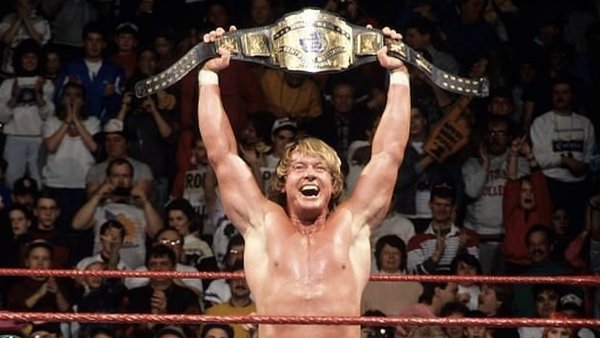
When CM Punk and MJF feuded in AEW across 2021 and 2022, both men cited Piper, their mutual idol, quite a lot. MJF said that he was as over in Long Island as Piper was in Portland.
Piper in Portland was a babyface over to a transcendent extent. He wasn’t just the top star in the territory; he was the most popular attraction in the Pacific Northwest in over a decade. Piper was most famous as a vile sh*t-talking heel with a brutal quick wit, but he had the fire and charisma and expert grasp of the struggle to star as a babyface. It was only his size and acting aspirations that meant it never happened for him in the WWF. He was so great as a babyface that he could have easily achieved something comparable to Macho Man Randy Savage in 1988, who was a phenomenal draw for Vince McMahon when he was allowed, albeit very briefly, to emerge from Hulk Hogan’s shadow.
Piper was a God in Portland. His matches with heel Buddy Rose were major attractions. Piper, an eye-poking rule-bender, was outstanding as a gutsy hero in that series. He literally did not know when he was beaten, holding onto the top rope when taking a bump just so that he could keep his balance and send Rose flying with a desperation kick. Piper was an animal in there with Rose, aiming knees at his temple like he didn’t know it was a work.
Piper could sell the catharsis of a richly-deserved ass-kicking equally as well; Bruno Sammartino had a whale of a time repeatedly drilling the back of Piper’s skull into the ring canvas. Piper’s eyes were as wild as his insults, too; he could make it seem like he was truly trying to break somebody’s fingers with a test of strength spot.
In a famous line of his, CM Punk once said he was the best in the world “even on commentary”. This was a source of great pride to him, and that’s probably because he spent his career trying to equal Piper’s achievements. Piper was also the best even on commentary; he popularised the heel colour role on national television when working for Georgia Championship Wrestling in 1981. His stint at the booth informed its success as the second highest rated TV show in the entire country.
“In that ring, on this mic, even on commentary”: the first bit wasn’t true in Piper’s case, but he could do everything a wrestler must do to get themselves and the product over, often to the best possible level. He could do it all.
10/10
2. Drawing Power

On November 26, 1984, Roddy Piper, who had proven his box office credentials during a legendary run in Portland, headlined Madison Square Garden. Piper had a tough job drawing a good crowd. His opponent was a substitute - the Tonga Kid deputised for Jimmy Snuka, who had entered rehabilitation treatment - and the undercard was weak. Piper was so white-hot as a heel that he sold it out.
When Snuka was available, and he toured with Piper in the summer of 1984, their headlining series drew big in most markets, and even competed with Hogan’s main events in the biggest cities.
Piper’s drawing record was phenomenal as it was, and he could have drawn yet more money. Instead, he made a trade-off. He did not want to lose cleanly to Hulk Hogan, ever. Piper was a very intelligent man with a lot of gumption. Piper had the leverage and power to avoid Hogan in a singles context, which he did, because he knew the formula. Piper knew (or thought) that he’d lose his heat when Hogan packed him up and moved onto the next opponent. Piper instead opted for longevity, drawing a lot of money over the medium-term - 1984 - 1987 - over the most amount of money possible. That’s probably why Hogan Vs. Piper never happened at WrestleMania 2.
Hogan’s disqualification win over Piper on MTV’s War To Settle The Score set what will remain the all-time highest rating - 9.1 - in the history of cable TV in the United States. That match, held on February 18, 1985, also drew a 24,000 sell-out to MSG. While Hulk Hogan, Mr. T, and a very fortuitous last-minute publicity blast drove the success of the first WrestleMania, the most important show in the history of the medium, it probably wasn’t as successful without Piper in the role of antagonist.
Piper smashed the WCW PPV buy record in 1996 when he headlined Starrcade with Hulk Hogan. The momentum generated by the New World Order helped - Ric Flair had nothing like that going into Bash At The Beach 1994 - but Piper did in fact smash it. Drawing 345,000 buys, Piper obliterated the previous record somehow set by Uncensored 1996 (250,000). That is a staggering 38% increase.
Piper was a record-breaking draw in at least three territories, and will forever hold the all-time cable TV record barring some unfathomable small screen comeback. He only loses half a point because there were a handful of stars bigger than he was, and he lacked the longevity of Hogan.
9.5/10
1. Conclusion

Roddy Piper is very difficult to unpack. Is there anybody in wrestling history with so many genius attributes whose record of output is actually, on balance, quite bad?
He’s one of the very best promos ever, if not the absolute pinnacle of the game, but stopped making any sense and was rendered entirely ineffective by 1997. Once one of the most revered and influential wrestlers ever, given some of the stuff he came out with in the 1980s, you can’t actually study his tapes these days. He can’t be influential anymore.
Again: Roddy Piper is very difficult to unpack. Anything less than a ‘10’ feels wrong, but you could make a very credible (albeit deeply unpopular) argument that he was a 3 for a very long and ultimately damning amount of time.
A 10 at his peak, a 3 past his prime, no legend was as bad for as long - but then no other wrestler was as charismatic, outside of Ric Flair and the Rock, at their very best. The bad stuff has to count, but ultimately, it’s Rowdy Roddy Piper. His work was transcendent. You can watch him run his mouth and build a match all these years later and feel the need to fire up the footage even if you know the match isn’t going to be great.
Piper, a mega-star everywhere he went, was a ticket-selling force of nature who made it feel real. He was so stunningly effective at his job that Vince McMahon ignored his size bias and mortgaged his very future as a promoter because he was confident that people would pay to watch Piper get what was coming to him. That’s how great Piper was as a heel.
8/10