The WCW Conspiracy Iceberg EXPLAINED!
18. Hulk Hogan’s Merchandise Fiddle

Former WWE and AEW World Champion Chris Jericho told a very funny and very Hulk Hogan story in both his first autobiography in 2007 and again, in 2020, on the Major Wrestling Figure podcast.
He said that he was buzzing when WCW first created an action figure for his character, as part of a two-wrestler set alongside then-rival Dean Malenko. His girlfriend at the time excitedly visited a nearby toy store to pick one up - but was confused to discover that the receipt instead listed that she had purchased the set with Hulk Hogan and Sting’s action figures. Jericho believed that Hulk Hogan had essentially stolen his merchandise royalties, alongside every other midcard wrestler, as part of his infamously generous company-killer of a WCW contract.
Eric Bischoff has disputed Jericho’s claims, reasoning that this would have been an error on the part of the retailer. If you scour Reddit, you’ll find the perspective of those with experience in the retail industry stateside. They will tell you that the store itself, and not the merchandise producer, is responsible for assigning the unique Store Keeping Unit (SKU) barcode.
Jericho has counter-argued that he once received a royalty cheque for the princely sum of zero dollars and zero cents, adamant that somewhere down the line, he got screwed out of money - but WCW could barely operate a wrestling promotion, much less coordinate a money laundering scheme with every toy store chain in the United States. This feels like another story attributed to Hogan driven purely by his reputation. Hogan cried wizzolf his entire life, so it’s not exactly unfair - but it’s probably not true, either.
17. Vince Russo Was A Mole

This is the oldest WCW conspiracy there is. It makes about as much sense as a typical WCW storyline, but to this day, whenever the topic of conspiracy theories crops up on Reddit - and it does so quite frequently - people are still very prepared to believe it. The gist is that Vince McMahon sent Vince Russo to WCW in October 1999 as a mole to kill it from within, using terrible storylines as the murder weapon.
Vince Russo was Vince McMahon’s lead writer throughout the first half of WWE’s most popular period. They enjoyed an incredibly successful collaborative partnership during the Attitude Era, with Russo as the ideas man and McMahon as the quality control filter. The skyscraper ratings and monster pay-per-view buy numbers were evidence of that; moreover, they were so in sync tonally, and Russo was so effective at pitching what McMahon wanted, that it’s a wonder McMahon took so long to abandon the WWF’s family-friendly facade. McMahon was born to promote sleaze, and Russo was born to consume and regurgitate it.
It therefore makes zero sense that McMahon would willingly part ways with Russo. The argument in favour of the theory is that McMahon never rated Russo that much, and had heard enough of his worst ideas to know that WCW would soon become a mess, were he to go there with full editorial control. That doesn’t make sense; Vince was practically defined by running ideas and wrestlers into the ground, and Russo was still effective in September 1999.
You could argue that McMahon, with pressure bearing down from the Parent Television Council, was willing to let Russo go; that way, his controversy bait was WCW’s problem. The timeline does not work, though; the media hit-pieces and Coca Cola’s subsequent sponsorship pull did not happen until December.
Ultimately, WCW did not need to be killed off by October 1999; the promotion was doing a fabulous job of that all by itself. Did McMahon even get briefed on the Nitro ratings at that point? That was probably a waste of time.
16. Bret Hart Was A Mole

Bret Hart and Vince McMahon were not involved in a bitter, acrimonious business dispute that altered the course of the industry forever: they were in cahoots. That’s actually why they used that word so often on Raw in 1998: quietly, all the while, the WWF was dropping teasers about a mega-event in the years to come. You see, Bret and Vince had concocted a masterplan, and would you put it past them?
We’re talking about the best promoter and the most intelligent wrestler of his generation. Bret and Vince knew that the WWF was in a precarious position financially in 1997. Bret’s 20-year contract was offered in haste. Vince couldn’t just let Bret go. There was a story to tell. People to con. Interest to build.
Bret and Shawn were very different personalities. It was very easy to buy the idea that they loathed one another; it was even easier to buy that Vince would exploit this “rivalry” in order to generate interest in WWF programming. The events of Survivor Series 1997 were set in motion with the willing participation of Vince, Bret, and Shawn. Hell, Bret might have developed the double-cross idea; he knew wrestling history inside and out, and isn’t it funny that he started talking about getting screwed all the way back in February?
Bret jumped to WCW, saving the WWF a fortune in the process. The idea, apparently, was for Bret to spend a few years down south - with the added benefit of draining WCW’s budget - only to make his grand return when his contract expired and feud with Vince’s heel character, which he would establish in the meantime. This programme would become the biggest sensation in pro wrestling - bigger than Sting, bigger than Hollywood Hogan, bigger than the New World Order - bigger than WCW itself, which would thus fall behind as the distant no. 2 outfit in the United States. The only thing that prevented the masterplan was the serious concussion that forced Bret into permanent retirement.
It’s a nice story, but if you believe it, you’ve been watching wrestling too long.
15. Ted DiBiase Was Signed To Play A Different Role

Ted DiBiase was not amazing in WCW, but he was brilliantly cast in a role that was brilliantly conceived.
Trillionaire Ted was his nickname, and he was revealed as the financial muscle behind the interloping New World Order faction. This was a masterstroke. It wasn’t make-or-break - when something is red-hot in wrestling, the details don’t tend to matter that much - but what a detail. There was a plot hole eating away at the angle from day one: who is paying Kevin Nash and Scott Hall?
The original idea, of course, was Vince McMahon, who had sent the Outsiders to WCW to destroy it from within. This explicit story beat was very quickly and publicly dropped upon the threat of legal action; at the Great American Bash 1996, Eric Bischoff asked the Outsiders if they were operating on behalf of the WWF, and they had to say “no”, which was unfortunate. But it was not an angle-killer; that’s because DiBiase, the former Million Dollar Man, was revealed as the benefactor before Bischoff wormed his way into the storyline. The DiBiase reveal was borderline genius; he was from “up north” and had long been established as a very rich dude. Some folks on Reddit however reckon he was meant to play another mysterious benefactor: the man pulling the strings behind Diamond Dallas Page’s dropped 1996 rags-to-riches arc.
There doesn’t appear to be too much truth to this theory because there was no need to cover anything up. It has been speculated that Page’s wife, Kimberly, was set to debut in a role abandoned when it became clear that the real money was in DDP as a babyface.
14. Kevin Nash Faked Heart Issues To Get Out Of Doing A Job

Kevin Nash was one of the smarter wrestlers of his day. Trace his path through the 1990s.
He went from abysmal, unfancied jobber to WWF champion in near record-setting time. He quite infamously did not draw in the role, but he was enormous and, super-rare for the era, very cool. He remained near the top of the card for the remainder of his run, which he leveraged to bag himself a massive downside guarantee in WCW. There, he was the chief beneficiary of the sea change put in motion by Eric Bischoff. He was allowed to be Kevin Nash onscreen and off, and played the game so smartly that, for a few months, he booked the show. It was terrible and he laughed it off live on air because he cared more about being cool than anything else. He was unflappable. Or was he?
Nash was scheduled to face the Giant at Starrcade 1997. Nash had proclaimed himself the one true giant of WCW, and the Giant stepped up to prove him wrong. The match was cancelled; when (over)-celebrating Christmas, Nash, drunk on anything nearby he could grab and having just ingested several pot brownies, suddenly felt very “f*cked up”, as he has mentioned before on several podcasts. The trauma of having experienced the grief of his father dying of a heart attack spooked him, and he admitted himself to hospital. After 24 hours of observation, it was revealed that his heart was fine.
Some people think that Nash faked a medical emergency to get out of a job, which might sound very Nash, but come on. He couldn’t fake chest pains and also do whatever he wanted at all times with a cocky shrug at the same time, could he? Those things can’t both be true. Also, the match was simply postponed until the next pay-per-view, and Nash won.
It’s an easy leap to make, but Nash wouldn’t have had to jump through those hoops himself.
13. Hulk Hogan Got REPLACED
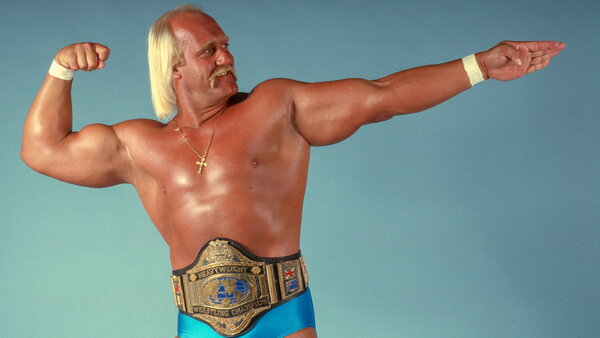
You all will have read or perhaps even spread the conspiracy theory that the original Ultimate Warrior, Jim Hellwig, was replaced by an imposter upon the character’s return to the WWF at WrestleMania 8.
This of course didn’t happen; this was a strange pre-internet global phenomenon driven entirely by the naivety of the young mind. Warrior’s physique had shrunk because he was no longer allowed to guzzle down anabolic steroids. He had also asked the barber to lop a bit too much off his barnet. It was almost endearing as a thought process. You may also have fallen for the “Warrior was replaced by the Texas Tornado” variant. But did you know that some people were convinced that Hulk Hogan was also replaced by an impostor?
This one didn’t make the rounds on every single playground the world over, but it was still a “thing”. Again, this theory was fuelled by the innocence of a child’s mind. Which is also a euphemism, because for the most curious minds of us all, who are able to process information at a staggering rate, kids can be real f*ckin’ dumb. WCW did not sign the real Hulk Hogan. They weren’t big enough to do that. They weren’t the recognised global leader in sports entertainment. This WCW Hogan ripoff was much skinnier, and in the biggest tell of all, he had brown eyebrows!
Hogan used to bleach his eyebrows in the early days of Hulkamania, and saved himself the bother by the early 1990s, well before he signed with Turner. But, again, kids are pretty daft.
12. Is That Why It Was Called ‘Nitro’?

To put the following theory into context, you need to get into Eric Bischoff’s head.
The man was fixated, to an obsessive degree, with overtaking the World Wrestling Federation. It was not enough for him to be competitive with the WWF and generate enough profits to appease Warner management. He reasoned that he could make the maximum money possible by embarrassing and supplanting the market leader, but it was more than that. Bischoff was an egomaniac. He didn’t want to beat the WWF purely to make his company money; he wanted it for himself. He wanted to be the main character - he didn’t put himself on television for nothing - and he couldn’t do that with Vince McMahon around.
Bischoff signed Hulk Hogan, banking almost everything on the Hulkster playing along. He read out the taped results of Monday Night Raw on air in a bid to stop people from changing the channel. He had Madusa throw the WWF Women’s Championship in the trash. And, very famously, he convinced Ted Turner to air a new primetime flagship show head-to-head against Raw on Monday nights.
Bischoff was so obsessed with the WWF that the promotion informed WCW’s most famous storyline, the New World Order - and generally, the entire outfit was based on doing what Vince didn’t. “Real” characters. High-flying cruiserweight wrestling. Crazed heavy heat angles. Any idea that Bischoff ever had was either a response to or a gap left open by the WWF - it makes sense, then, that the very name of the flagship TV show was no different. Was Monday Nitro, all along, a half-homophone of Monday Night Raw?
In naming the show Nitro, was Bischoff trying to put over that it was just like WWF wrestling, only more explosive and action-packed?
11. Our’s Is Bigger
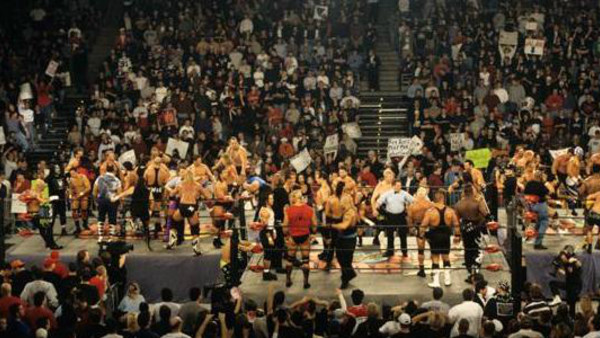
The WWE Royal Rumble, quite famously, is the most effective and successful gimmick match ever created. As an annual event spanning decades and decades, it has generated an absolutely eye-watering cumulated sum of money. That’s directly; indirectly, a great Rumble winner is very well-equipped to draw yet more money when they headline WrestleMania after the big show of faith in January. It’s thus nigh-on impossible to calculate precisely how lucrative the show actually is, but a reasonable estimate is: f*cking massively.
The match, a multi-seated storytelling vehicle, is also incredible when it peaks. That doesn’t happen too often these days. The format was already showing its age before the introduction of a second Rumble in 2018 diluted and exposed the attraction as a collection of very familiar tropes first devised in the 1980s and 1990s. But the Rumble will endure, probably for all of our lifetimes, because it’s essentially a Greatest Hits now: the Diesel run, the Iron Man stint, the novelty entrant, the surprise debut, entrants #1 and #2 sharing some sort of storyline connection…
The Rumble is so highly anticipated that it’s considered automatically great, even though it often isn’t. Every other attempt to tweak the traditional battle royal format simply can’t compare, which Eric Bischoff learned to his cost when, in 1995, WCW launched the World War 3 pay-per-view. The titular match wasn’t just better than the Royal Rumble - it was three times better! Or was that six times better?!
Because there were sixty guys in three rings. Scott Steiner can calculate that math, but most anybody else can figure out that this was Bischoff’s latest attempt to further position WCW above the WWF. It’s not exactly the moon landing of wrestling conspiracies, admittedly, but it did reek of a very suspect desperation.
It also flat-out reeked; this was the worst, mass-of-bodies-doing-nothing part of a battle royal performed three times simultaneously and thus even more difficult to keep track of.
10. Why WCW Signed The Ultimate Warrior

WCW was not floundering in 1998, but its most profitable year ever was a lagging indicator of 1997 and driven by the excellent albeit brief Goldberg push. The systemic reality is that the promotion, by the summer, was wading into deeper and deeper sh*t.
The New World Order was overstuffed, passe, and as much as the Wolfpac theme rocked, the civil war angle barely actually happened. Bret Hart was doing nothing. Hulk Hogan’s terrible adventures with the least athletic celebrity wrestler ever, Jay Leno, positioned WCW as the lame company - which was less than ideal, since the WWF had never felt cooler. The good times were coming to an end. WCW, for once, was not oblivious. The promotion sensed this, and made a call to arrest the slide.
In football, as in soccer, when a football team loses a lot and drops down the table, panic sets in - and when panic sets in, irrational decisions are made. It is felt that there isn’t enough time to craft a careful, long-term solution; instead, high-ranking club management will almost invariably turn to somebody who once experienced success, no matter how long ago, just in case it happens again. They are a “safe pair of hands”. Think of the Ultimate Warrior, then, as a face-painted, turbo-homophobic Sam Allardyce. The signing was abysmal on every conceivable level.
Warrior was a hopeless in-ring worker who walked apathetically into a toxic promotion with a fanbase that actually cared about match quality - and, as an early ‘90s relic, was not cool enough to get away with doing nothing. His first promo was such an overlong and meandering mess that those fans tired of him well before his first night was over. WCW, naturally, was too stupid to grasp that Warrior functioned best as a short burst of adrenaline. WCW also failed to recall that Warrior was far better as a squash match killer who just happened to talk gobbledygook, booking him instead in Papa Shango-style supernatural nonsense.
The real reason WCW signed the Warrior can be reduced to one word - desperation - but some cynics have theorised that Hulk Hogan simply wanted his win back from WrestleMania 6 in a feud that also enabled him to avoid Kevin Nash scooping his heat in the Black And White Vs. Wolfpac angle.
There is almost certainly something in that conspiracy theory.
9. A Former WCW Wrestler Is The Biological Father Of A United States Representative

‘Sweet’ Stan Lane enjoyed a significant stint in Jim Crockett Promotions: the precursor to WCW.
Lane bucked a trend almost as old as wrestling itself by replacing a member of a tag team - and actually succeeding. Dennis Condrey was great as the tough bastard heel craftsman; Lane, his replacement in the Midnight Express, was already a doubles specialist. Lane was equally great at a different dimension of the form, reshaping tag team wrestling with a stunning array of tandem moves elevated by his showboat personality. Ironically, Lane and Condrey would have made a great tag team themselves. (Lane was on the receiving end of this as one member of the Heavenly Bodies; he was replaced by Gigolo Jimmy Del Ray.)
Like many wrestlers of his day, Lane got around. Lane, in fact, was notorious for his prolific numbers and prowess; he was known for shagging in an industry rife with it. One now very famous United States politician believed for years that Lane was her biological father: Lauren Boebert, the U.S. representative for Colorado’s 4th congressional district.
Boebert’s mother, Shawna Bentz, demanded and received a paternity test, which, after several attempts to serve Lane, was eventually taken in 1990. While it was returned negative, ruling Lane out as the father, questions persisted. Firstly, the lab tech who drew the blood was later convicted of faking test results on behalf of another athlete. Secondly, a polaroid photograph is required as proof of testing, and this was missing from the paperwork. When this was requested by Bentz, a photograph was received - but it was not a polaroid, and where Lane was tested in the summer months, he was not wearing season-appropriate clothing.
For years dating back to around 2008, per the sleuthing of journalist David Bixenspan, a YouTube account associated with Bentz posted repeated comments on various videos insisting that Lane was the father of her child. This eventually snowballed in 2021 when a Twitter/X user, panda4bernie, posted an image of the 1990 court docket. With Boebert’s newfound fame, the case could no longer be ignored. Various media outlets jumped on it, and Lane provided another blood test in 2023. In June, the case was officially closed: Lane was not the father, putting an end to the conspiracy theory once and for all.