The WCW Conspiracy Iceberg EXPLAINED!
8. Steven Regal Was Ordered By Mysterious Forces To Make Goldberg Look Bad

On February 9, 1998, Goldberg defeated Steven Regal in a staggeringly awkward match - one of the most excruciating of all-time, in fact. It’s difficult to conceive of a more stark contrast in style, ability, and experience. Goldberg could mow people down, lift them up, and throw them down. That was literally it. He did not know his a*sehole from his collar-and-elbow. Regal meanwhile was a master scientist who specialised in intricate, holds-based fare - provided he was matched with somebody who he could twist into an agonising shape. Goldberg was not that man.
Regal might as well have been in there with a particularly obdurate boulder. Goldberg actually executed a neat leg clutch takedown at one point, but mostly, he was as lost as a three year-old attempting to navigate the London Underground. He literally stood still at various points, as Regal tried to go for his 54th hammerlock before simply giving up. Regal might have swatted Goldberg in the eye for real. He might have kicked him where he shouldn’t - or Goldberg might have moved his back at the wrong time. It was too much of a mess to work out. So what happened?
The more conspiratorial among you hold two theories.
Regal, a proud pro wrestler, wanted to make Goldberg look bad because he felt he didn’t deserve the spot. Goldberg himself reckons a sense of resentment fuelled Regal’s performance.
Alternatively, some contend that certain dark forces - i.e. major, threatened stars - had a word with Regal. Something had to have happened. Can you really believe that WCW management sent Goldberg into the ring under the belief that he could go hold-for-hold with Steven Regal in an intricate grappling match?
Yes, because WCW was institutionally stupid. It’s actually borderline miraculous that WCW got almost a full year out of Goldberg before botching his career entirely.
Regal maintains (and always has) that he was asked to do six competitive minutes with Goldberg, and as a pro, he did it, and that Goldberg simply froze. “I can’t hit myself. There’s only so much I can do.”
7. Hulk Hogan Sabotaged Kidman

By the late 1990s, hardcore fans were fed up with the ancient WCW headliners.
Hulk Hogan’s act only worked when he was really over, and in 1998 and beyond, his heel act had waned, and WCW fans never took to the red n’ yellow. Kevin Nash was visibly embarrassed by the idea of trying in such a failing laughing stock of a company. He wasn’t even trying to protect his aura or trying to look tough at the expense of another wrestler; he was simply too cool in his own mind to bother. Scott Hall was a mess. Randy Savage was an immobile muscle monster drained of his charisma. He performed, felt, and even looked like a member of the nWo B-team. Ric Flair’s act, no matter how familiar, was always popular - but he was the exception.
Even worse, WCW had morphed into a rinky-dink imitation of the WWE Attitude Era. The old wrestlers were even more boring, and there was less ring time than ever on Nitro - all of which ignited a fervent desire to see the cruiserweights propelled up the card. It was always a naive idea. That division was perfectly configured for the undercard. But times really were desperate, and it wasn’t unreasonable for paying fans to want to watch more of what they liked.
The WCW headliners were aware of the brewing sentiment, and naturally lashed out. Kevin Nash famously coined the line “vanilla midgets” in a bid to undermine the smaller, exciting wrestlers, and if one conspiracy theory is to be believed, Hulk Hogan went one step further. It is thought, in some circles, that he only agreed to work a meta programme with Billy Kidman in 2000 so that fans would realise that it would not work and shut them up for good. It didn’t work - the Slamboree match was just plain odd - and this was exactly the sort of thing that Hogan would do, wasn’t it? Also: the storyline only happened after Hogan had trashed Kidman on the radio countless times when asked about the cruisers and their brief TV time.
If you remember the match, though, Hogan did seem to try and make it work. It didn’t feel right or “credible”, but that was always going to be the case. Hogan took a hurricanrana, which looked shockingly good, and the man who specialised in making opponents look awful - see: his terrible non-attempt to go up for the Undertaker’s choke slam at WWE Judgment Day 2002 - was not up to his usual tricks.
6. The Real Reason Vader Got Fired

In his last years, Vader sat down with Hannibal for a shoot interview, during which he offered his take on his firing.
Vader was obviously bitter, which was well within his rights. Vader was a monster heel that defined the most over-used word in modern wrestling parlance: aura. The guy was terrifying, legitimate, and he was so good at crafting a dramatic and epic ass-kicking that he was one of very few big men with actual longevity going for him. Hulk Hogan dropped the leg on his WCW run in pathetically quick time. Hogan was booed at SuperBrawl 1995 for his transparent attempts to give Vader “something”, when he patently no-sold Vader’s best stuff and couldn’t even lose the first match clean to set up an incredible return bout. Vader reckons that he was perceived as such a threat to Hogan’s spot that a company-wide conspiracy did him in.
In the shoot with Hannibal, Vader talked about the time when Eric Bischoff threatened to fire him in the event that he didn’t complete a photo shoot. The photo shoot, per Vader, ran suspiciously long. Vader was late to a TV taping as a result. This enraged Paul Orndorff, working as an agent at the time. He confronted Vader and dressed him down for a lack of professionalism. A heated argument, and then an infamous backstage fight, erupted. Vader reckons that, since Orndorff had nerve damage in his arm, he thought he could kick his ass so brutally that he was likely to end up in jail for assault. Vader says he slapped Orndorff once and refused to retaliate afterwards accordingly. (Every other eyewitness who has spoken publicly about the incident disagrees, stating plainly that Orndorff simply kicked the sh*t out of him.)
Vader is inclined to believe that the photo shoot was a ruse, and that Orndorff was in on it, feigning anger in order to lull Vader into the assault that would act as pretext to fire him - and it all came from Hogan.
That’s probably a bit much.
5. Hulk Hogan Told Nick Patrick To F*ck On Sting

The quintessential WWE moment is either, depending on the era, Randy Savage reuniting with Miss Elizabeth, Steve Austin dousing the Corporation with beer, or Cody Rhodes finishing the story.
The quintessential AEW moment is probably Hangman Page retrieving the AEW World title from Jon Moxley’s briefcase, or Will Ospreay kicking out of Kenny Omega’s One-Winged Angel..
The quintessential WCW moment is the main event of Starrcade 1997. This is not a good thing, but it’s fitting. That is because, with the stakes never higher, WCW, instead of sticking the safest landing possible, instead contrived to ask the question that would haunt the promotion forevermore: are we self-destructive, or just stupid?
WCW had promoted Sting brilliantly throughout 1997 as the mysterious vigilante determined to save the promotion’s soul from the nWo and its self-serving, toxic figurehead Hollywood Hulk Hogan. Fans were captivated by Sting, whose total lack of in-ring captivity created an unreal level of anticipation that was never going to match the reality. Still, all WCW had to do was strap Sting up. He wasn’t in great shape and, despite the cool new paint, entered a feeble version of a standard early ‘90s Sting performance. He was always going to be rusty, at a minimum; this was the trade-off for the unprecedented promotional tactic.
New World Order referee Nick Patrick was meant to screw Sting with a fast count, before Bret Hart reversed the decision, in order to capitalise on the Montreal Screwjob. This didn’t happen. Nick counted the three in standard time. Confusion and deflation cloaked the MCI Center. A record 700,000 watched on pay-per-view, equally disappointed. WCW would never claim a number close to it again.
So was WCW self-destructive? The rumour and innuendo is that Hulk Hogan convinced Patrick not to execute the fast count in an act of political sabotage.
Or was WCW stupid enough to not effectively communicate the finish - to the biggest match of its existence - to the ref?
Nobody will ever know. That both possibilities are very plausible says it all.
4. Dusty Rhodes Booked WCW While Wrestling For The WWF
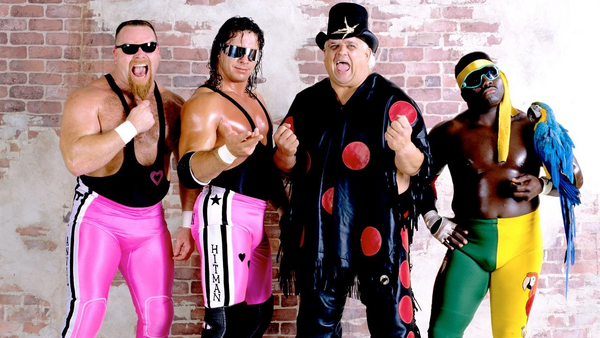
In the week of December 6-14, 1990, Dusty Rhodes was an independent contractor working for the WWF.
He was on the way out, finishing up his dates of a run that was more fun and memorable than it had any right being, given the sheer level of spite that drove his push and even his signing. He spent his last bookings doing jobs for Virgil and Ted DiBiase across the U.S. and Canada. In his excellent and ultra-exhaustive Between The Sheets podcast, though, journalist David Bixenspan reckons that wasn’t the only thing Rhodes was up to. Bix speculates that while contracted to the competition, Rhodes was actually shadow-booking WCW using Barry Windham as a puppet of sorts.
WCW was without a booker. At the TV tapings that week, per an old dirt sheet named ‘Mat Watching’, Windham suddenly and vocally took control of the match finishes, “among other duties”. Bix and Kris Zellner think this was a sign that Dusty was pulling the strings. After all, Windham was simply a talent who never harboured aspirations to book after the fact, and Rhodes very quickly joined WCW as a member of the booking committee on a formal basis. Windham himself confirmed on an old Kayfabe Commentaries shoot interview that he did in fact book the promotion between Ole Anderson and Dusty’s stints, but stopped short of confirming if he was simply following Dusty’s orders on the telephone.
There’s a visual clue to support this theory, in that Dusty had taken to wearing a sheriff’s hat on WWF programming - a secret hint that his Fed days were numbered, and that he was throwing his authority around elsewhere.
3. Rick Rude’s Real Cause Of Death

Wrestlers love to call the fans marks.
This attitude stems from the days of yore, in which the general idea was not to build a legacy and wrestle the match of the night, but to manipulate the public into thinking that wrestling was real or close to it. This mentality still prevails, in some circles, but the wrestler who carries this attitude in the 2020s is projecting for the most part. It’s always the wrestler who never made it who seems to loathe the fans the most. Funny that.
The irony is that many wrestlers are marks for the industry or themselves. They are the ones who almost invariably go too long to get more pops. They are the ones who hold on too long, destroying their bodies, limping out to bask in some bleak approximation of the limelight. They are the ones who are lost in the space between reality and kayfabe. Using a specific example, consider the conspiracy theory that arose from the tragic, premature death of Rick Rude.
Rude was perhaps the most aesthetically pleasing body guy of the 1980s, sporting an incredible physique not possible without the heavy use of anabolic steroids. The strain placed on his heart resulted in its failure, which, combined with an overdose of pain management combination, resulted in his death, at 40, on April 20, 1999.
Some within the industry dispute this, maintaining that a despondent Rude died by suicide. Rude, so the urban legend goes, killed himself after doctors advised him that he would need to amputate his penis after a botched attempt to increase his sexual performance. Ken Patera believes this to be true, saying as much in a shoot interview with Hannibal. The Honky Tonk Man and Greg Valentine also think the story is legitimate.
Firstly, Rude was very visibly suffering the symptoms that led to his death on TV in the weeks prior. He was puffy and bloated and obviously struggling. Secondly, this rumour never haunted a guy who played a clown or a grand sumo master or police officer, did it?
Rude played a sex-obsessed womaniser on TV. Of course some wrestlers believe that theory.
2. The Absolutely Insane Kevin Sullivan Theory

Across June 22 and June 24 2007, Chris Benoit killed his wife Nancy, son Daniel, and himself. It was the most shocking, grim wrestling news story ever. Endlessly discussed in the mainstream media, initially, the unconscionable act was pinned on his record-setting levels of anabolic steroids intake. Benoit was ravaged by CTE, profound grief, and was disposed to sadism and abuse in both the backstage arena and the family home. The word “cocktail” was later used to describe the factors that led to the unexplainable horror. What follows is absolutely ridiculous, but no less true, unfortunately.
In 2007, a lot of people could not comprehend Chris Benoit’s actions in part because he was an incredibly accomplished professional wrestler who worked stupidly hard to craft exciting, believable pro wrestling matches. If you trawl through contemporary posts on the message boards of the day, you’ll find this sentiment with a disturbing frequency. Chris couldn’t have done this; he was so passionate about wrestling that he was practically one of us. People did not want to believe it - where if a crap, lazy and over-pushed wrestler had annihilated his family, it might have been a different story.
It is this warped mentality, you suspect, that has fuelled a sick conspiracy theory. Benoit, it is posited, did not perpetrate the killings; the real murderer was Kevin Sullivan, whose marriage to Nancy ended when she cheated on him with Chris. It doesn’t take too much for certain people to “ask questions” - but when a bleak coincidence can double as a clue, this sort of thing can take on a deranged life of its own. Supposedly, Nancy was killed on the 10 year anniversary of the divorce confirmation. There exists a YouTube video, totalling 1.3 million views, discussing the conspiracy, which receives considerable support in the comments section. One theory puts forward the idea that Sullivan, flanked by accomplices, entered the Benoit residence and subdued Benoit through the use of chloroform before executing his family. This is preposterous. Trace elements of the substance would have been located at the scene. The theory was first floated by a former no-name wrestler, Johnny Lee Clary - a man with such little history in the business and thus no links to anyone in it that he does not have a single recorded bout on Cagematch. The best Wikipedia can come up with is that he was best known for almost holding a title governed by the NWA. Every single shred of evidence - timelines, DNA, everything - confirms Benoit as the killer.
“Wronged man waits a decade to enact bloody revenge” is a bad wrestling storyline - but then, some people believe in those, too.
1. The WCW Sale Conspiracy

In 2001, WCW was not a hot or popular product.
It had been stigmatised as wretched and immaterial laughing stock at best, a decaying, glorified corpse at worst. In the most tragicomic LOLWCW moment of them all, the promotion was actually good in March, the very last full month of its existence. The booking was relatively sensible. Young, exciting wrestlers were the focus. Vince Russo was gone forever; John Laurinaitis did a halfway acclaimed job during those death throes.
Prior to what was barely a renaissance, just a passable if pointless and brief phase, WCW was an abject wrestling product for years, plural. The storylines made no sense. The characters changed alignment so frequently that it was impossible to invest and believe in any of them. The main event crew was either past-it or utterly unmotivated. A thick coating of sleaze oozed over everything. It was noisy and vapid and charmless and rushed. WCW had no identity nor selling point; once considered the purer product with tremendous in-ring focus, the best wrestling was going on up north, with its excellent and star-laden main event, midcard, and tag team divisions. The Rock and Steve Austin were adjacent to household names; the former was even on the cusp of breaking into the actual mainstream. Fleeting glimpses of a futuristic new internet darling AJ Styles on WCW Thunder could not even hope to compete.
The thing about a stigma, though, is that it can be shaken. Wrestling fans are at once fickle and forgiving. It does not require much to spark their imagination. There’s a reason why the vignette was once such common practice; fans can and will run away with a fantasy booking story at the merest tease. Moreover, wrestling fans over the years - more in hope than expectation - have fallen for several false dawns. Wrestling fans, your writer included, bought the idea that CM Punk would bring about systemic change to, of all promotions, Vince McMahon’s WWE. Wrestling fans just three years later - after being told the exact opposite on television - believed that WrestleMania 30 and Daniel Bryan’s win was the moment that WWE would sprint into a great new workrate youth movement era. The Nexus inspired hope. Some even bought the December 2018 McMahon family apology. Even the promotion of Paul Heyman as Executive Director of Raw drew a lot of praise on his first episode of Raw. People thought he had turned it around - “it” being WWE in 2019!
All of which is to state that WCW might just have been salvageable. A break would almost certainly have made people miss it; an actual hard reset leading to an almost unprecedented real season premiere might have convinced fans to either believe in WCW again or, at least, driven them to check it out through a sense of curiosity. WCW still had names under contract that were fully established legends, legitimate stars, or very dependable workers: Sting, Booker T, Goldberg, Diamond Dallas Page, Ric Flair…
This almost happened in an alternate timeline very close to that which unfolded. Eric Bischoff had struck a deal with Fusient Media Ventures: a venture capital firm that was ready to commit to financing the deal and the rebooted promotion. They were a legitimate operation, having founded the Classic Sports Network in 1995 and sold it to ESPN in 1997 for $175m. WCW, as promised in an advertisement laid out in the penultimate issue of the official magazine, had set a name and date for the relaunch live on pay-per-view: The Big Bang, May 6th, 2001. The new WCW was said to be built around Goldberg, who had been pitched detailed creative plans at a high level. Joey Styles was in talks to become the lead announcer following the shuttering of ECW. He suggested Don Callis as his colour commentator; Bischoff was trying to recruit Jerry Lawler, who had fallen out with Vince McMahon and departed the WWF.
This was not a pipe dream dangled by some money mark. It was very, very close to happening. The negotiations between Turner and Fusient were somewhere between advanced and finalised at a reported cost of $50m minimum in January 2001. Instead, in March 2001, WCW was sold to the WWF for $4.3m. So what happened?
Jamie Kellner had succeeded Ted Turner on March 7, 2001, and unlike his predecessor, he was not a champion of pro wrestling. Contrary to an established narrative, though, he was not an enemy of pro wrestling intent on killing it off. He actually grew up as a fan. But he was a businessman, first and foremost, and he nixed the deal. While WCW ratings were pathetic compared to the WWF, Nitro and Thunder were still performing well relative to other programming on TNT and TBS. The issue, as was always the case historically, was advertisement revenue. The industry has always looked down upon the average pro wrestling fan, deeming them poor and uneducated. Why sell to those who can’t afford it?
Even when WCW was white-hot, certain dissenting voices within Warner were never as enthusiastic as the fanbase. This didn’t help, but when Kellner determined that the terms of the buyout were far more favourable to Fusient than Turner, everything collapsed. Basically, Fusient had attempted to acquire the time slots for a lengthy fixed term, not merely WCW’s IP. That way, if the new post-Warner WCW shows had underperformed and ended up being cancelled, Fusient had a lifeline in their ability to air their chosen replacement telecasts. This removed control from Turner. Zellner’s position was entirely reasonable. But there was actually more to it, if certain players are to be believed. Zellner is cast in the narrative as the villain that killed WCW - but was there another ‘Big Bad’?
Eric Bischoff has spoken in less than glowing terms about Brad Siegel, then President of Turner Entertainment. Bischoff had accused Siegel of “not really wanting to fix” WCW. This is how the sale was explored in the first place. Bischoff sensed that Turner never wanted WCW.
Bob Ryder was the man who revolutionised pro wrestling content, ushering in coverage in the digital age as the founder of 1Wrestling.com. He leveraged his standalone position in a brand new industry to get a gig with WCW, co-hosting its ‘Live’ programme with Jeremy Borash, before part-founding TNA. The four-part ‘Who Killed WCW?’ series on Vice featured a segment that covered Ryder’s lost, years-old theory. Shortly after the death of WCW, Ryder argued that Siegel conspired with the WWF to drive the price down because he was close friends with Sty Snyder: the man who served as the WWF’s President and Chief Operating Officer between June 2000 and November 2001. Snyder and Siegel were former colleagues at Turner. Contemporary reporting suggested that Siegel actually had the temerity to announce to his WWF colleagues, on the day the Fusient deal was announced, that it was not going to close, and that Eric Bischoff was not going to gain control over WCW. If you’re feeling conspiratorial, you might see why a high-powered media executive might say this - they are often brazen in the extreme - but how could he have known it?
Ryder claims that it was Siegel who gave Zellner the idea to remove the TV slot from the sale contract, which of course convinced Fusient to abandon the deal. This also created a workaround for Vince, whose initial attempt to buy WCW in late 2000 was thwarted. Viacom owned TNN, to which WWF had handed over the rights to Raw. Viacom stated that WWF-owned property airing on TNT and TBS would have violated the exclusivity agreement. Fuelling the conspiracy, Warner cancelling Nitro and Thunder enabled Vince to both buy the IP for next to nothing and, as was the original plan, reboot Nitro in Raw’s time slot.
Ryder also claimed that Jerry Jarrett was interested in purchasing WCW, and was deep into the paperwork phase, before he was mysteriously “stonewalled” by somebody not named Eric Bischoff. Jarrett was not the only prospective buyer; Ryder claimed on 1Wrestling back in 2001 that a consortium fronted by former WCW executive Jay Hassman tried to get to the table, multiple times, but were ignored. Ryder called for a criminal investigation into the buyout, arguing that the Fusient offer included a $5m deposit owed to Turner in the event that the deal would collapse at the latest stage - which was more than the overall fee paid by the WWF. Ryder insisted that Turner was only ever interested in selling WCW to the WWF for a shocking bargain price - and that Siegel “took steps to make sure [WCW] was of no value to anyone except the WWF”.
Snyder, meanwhile, is adamant that this conspiracy theory cannot possibly be true; the Federal Communications Commission would have detected this illegal transaction, which would have ruined his career and life. (Moreover, since the WWF was now a publicly traded entity, a class action shareholder lawsuit would have surely arisen). This conspiracy theory can’t possibly be true, can it?
In addition to the aforementioned counterarguments, it seems daft to suggest that Siegel would have risked his reputation purely to do an old work colleague a favour. Surely, if any of this were true, Siegel would have had to have been financially incentivised - which would have led to a very easily discovered accounting paper trail. The simplest explanation might just be correct:
Fusient was the only credible group that had proof of funds to enter serious negotiations.
Fusient sensed this, and attempted to procure the best, failsafe terms.
Those terms were deemed too much of a long-term risk by Warner.
The deal collapsed.
WCW was haemorrhaging money, justifying the cancellation of its programming, and with no television slots, it was considered worthless by every other party other than the WWF, which could both promote its wrestling brands with their own television distribution and release thousands of hours of archive content on the physical media market (and later digital).
The WWF swooped in.
WWE's purchase of WCW was finalised.
The end.