The Secret History Of WWE’s Ruthless Aggression Era | Wrestling Timelines
January 19, 2004 - The McMahon Four > SmackDown Six
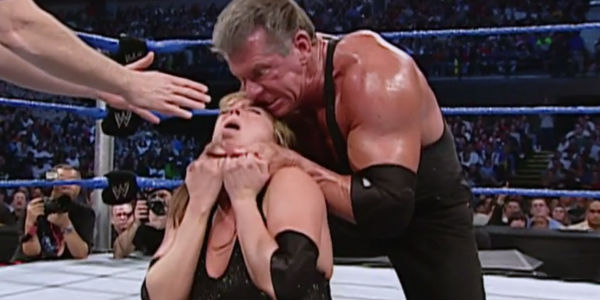
In 2000, an otherwise stellar year of programming, of all shows, WrestleMania stands as the aberration. The consensus is that it is a monumental disappointment. Even the worst iterations of the ‘Show of Shows’ boast one epic, memorable one-on-one contest. There is just one singles match on ‘Mania 2000 - Terri Runnels Vs. The Kat in a sub-three minute Catfight - and the event is headlined by Triple H Vs. The Rock Vs. The Big Show Vs. Mick Foley. Infamously, the show is sold on the concept of a ‘McMahon In Every Corner’. Vince had grown to loathe the manager trope elsewhere, rendering the ego and nepotism all the more galling.
If, in 1997, you were tired of “good guys versus bad guys”, necessitating a brand new era, in 2000, you were tired of the McMahon clan. In 2003, the first full calendar year of the Ruthless Aggression era, you were even more sick of the McMahons. A sample of you voted for their total overexposure on television as the ‘Most Disgusting Promotional Tactic’ of the year in this week’s edition of the Wrestling Observer Newsletter. They are everywhere. Vince and Stephanie are feuding with one another; Linda is a sexually abused pawn in the game between Eric Bischoff and Shane; Shane is also portraying the woefully unconvincing role of tough guy in a wretched programme with Kane.
The SmackDown Six is still in effect, sort of, and the midcard on the “blue brand” remains a consistently exciting stream of very strong in-ring action. The SmackDown Six or what is left of it does not define the show; neither does high-grade in-ring wrestling.
What many consider the best and most refreshing element of the entire Ruthless Aggression era does not last for a particularly long time.
June 27, 2004 - The Great American Bash 2004
In various retrospectives, WWE puts over the brand extension. As they would. The reality is very different.
Business wise, the 2000s is no boom period. During Triple H’s Reign of Terror, the average 18-49 demographic coverage rating tumbles to 2.21 in 2004 - the worst since 1997. This briefly rebounds to 2.41 in 2005, Batista’s breakout year, before dropping to 2.38 in 2006, the year of the D-Generation X reunion.
In terms of critical acclaim, WWE reaches a nadir not witnessed since 1995. The issue with presenting brand-exclusive pay-per-views is that this isn’t the Monday Night Wars. By 2004, many of the old headliners are either retired, or they are no longer stars.
Post-Attitude, Vince’s first idea, despite the ‘Ruthless Aggression’ rhetoric, is the short-term stopgap. Those that work only do so for a little while. Vince turns Hulk Hogan babyface after bringing back the nWo; this doesn’t work, but McMahon nonetheless has Kevin Nash headline three pay-per-views in 2003 (not including a further World title match against Triple H). Vince also brings in and robs what little exists of Goldberg’s motivation.
Vince has not replaced these stars; the Great American Bash is an über-bleak reflection of that.
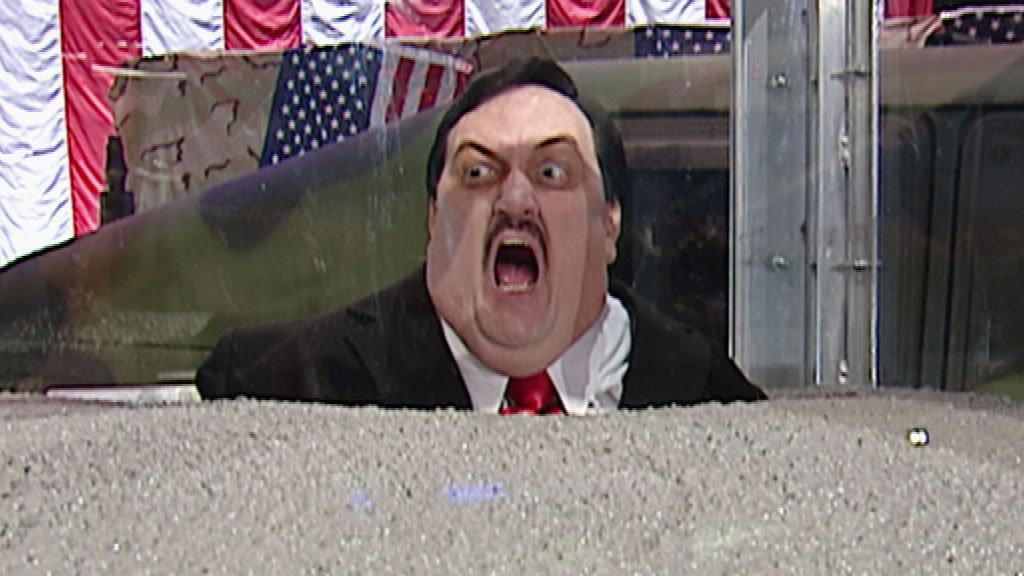
The show is headlined, infamously, by a handicap match between the Undertaker and the Dudley Boyz. This would be a grim indictment of WWE’s failure even if the Dudleyz are at their peak. They aren’t, and the match is premised on Paul Bearer’s encroaching death via concrete suffocation.
The undercard is almost as rotten. Not everybody who walked into OVW emerged from it as a star; the terrible ‘Mordecai’, a religious zealot character, fails to get over in a dismal outing against Hardcore Holly. In a somehow even worse match, fellow new heel Kenzo Suzuki flounders against Billy Gunn.
This is one of the worst shows ever held under the WWE banner - and, incredibly, things are arguably worse over on Raw…
September 12, 2004 - Reign Of Terror
‘Ruthless Aggression’ is a fan-coined term that WWE later co-opted when producing a documentary series for its Network. In reality, WWE itself stopped using the term after about a month at the time.
There are two major reasons behind this retroactive marketing.
Primarily, despite this not being remotely true, it suits WWE to hand-wave the Attitude Era as a successful, repugnant, yet necessary change. The likes of Paul Levesque will sheepishly talk around it these days as something the promotion had to do. Really, it was the fault of the youthful crowd for enjoying breasts so much. Also, the WWF had to up the ante in the war against WCW. Attitude was simply a moment in time, guys. That stuff wouldn’t fly today, and we know it!
(Despite, years later, WWE continuing to indulge in grabby, shocking storylines premised on sexual assault, racism, and the like.)
Also, this initiative allows WWE to put itself over as a star-making factory. We don’t need to rely on Steve Austin and the Rock: we create new top guys all the time. That’s why we are the market-leading no. 1. But how true is that?
Ruthless Aggression, to those who like to catalogue WWE’s history into “eras”, lasted between 2002 and 2008, at which point WWE reclassified itself, leading to the so-called ‘PG Era’. The idea behind the 2002 initiative, as discussed, was to aggressively promote new stars.
At Unforgiven, on September 12, 2004, this narrative is thwarted by a tedious main event between Triple H and Randy Orton. Triple H takes 25 agonising, heat-bereft minutes to erase the work WWE put into Orton’s main event breakthrough. Orton had dethroned World Heavyweight champion Chris Benoit at SummerSlam after he survived Cactus Jack in a classic, career-making war at Backlash. All this, just to lose to Triple H. This is a match of two halves. The first is boring, dominated by possibly the longest application of a figure-four leglock in recorded history. The second is a relentless wave of interference, which feels as much like an excuse for Triple H going over as it does a dramatic device. The crowd is dead, where they were electric early in the night.
Let’s take a deeper look at the wrestlers who headlined the most pay-per-views throughout this period.
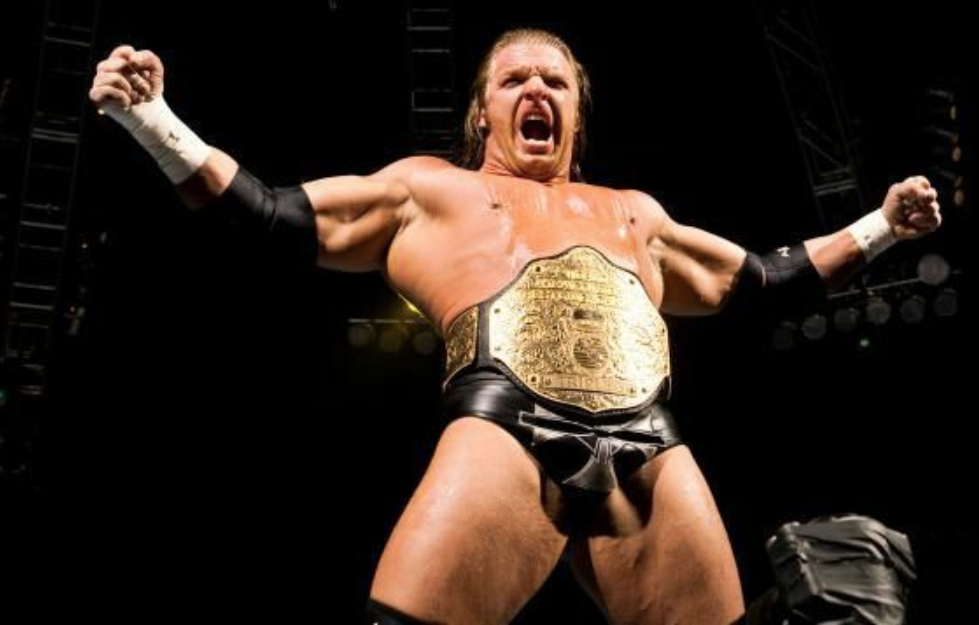
In 2002, honours are shared by Triple H and the Undertaker, which is understandable. They are the two most credible full-time star names, woeful performance levels aside, and these things take time. They are gatekeepers. In 2003, Triple H, deep into his excruciatingly dull ‘Reign of Terror’, tops the list with six; meanwhile, on TV, he has taken to destroying tag teams on his own for unfathomable reasons. The number alone doesn’t convey his relentless domination of key storylines; Triple H scores six during the early days of brand-exclusive pay-per-views. He defends or challenges for the World Heavyweight title in matches against young, hungry talents like Kevin Nash, Kane, and Goldberg. In 2004, you’d expect more movement. No: Triple H tops the list again, equal on six with Chris Benoit.
WWE does get there, after a few years. In 2005, Batista is the main man on PPV - but guess who he was programmed with most often. John Cena reigns supreme in 2006 (eight) and 2007 (nine), but Triple H eclipses him (and everybody else) in 2008 with seven. Vince McMahon does create new stars and elevate midcard acts into the main event bracket across the 2000s - but who headlines the total most pay-per-views that decade?
While he has a few more years on his apparent successors, the answer is Triple H, who debuted in 1995, with a staggering 51 PPV main events. In second place is the Undertaker, who debuted in 1990, with 35. John Cena takes third, with 32. In fourth is Shawn Michaels, who made his in-ring return when Ruthless Aggression was in play, with 23.
Bret Hart, Shawn Michaels and Diesel, obviously, did not headline the most Attitude Era main events. Hulk Hogan, Randy Savage, and the Ultimate Warrior did not main event throughout the New Generation.
This underscores the idea that Ruthless Aggression is a mere continuation of Attitude, as opposed to a distinctive period of WWE history in and of itself.
April 3, 2005 - WrestleMania 21
WrestleMania 21 is an extravagant, monumental success, nothing short of one of the greatest nights in the history of the promotion. Consider the sheer range of objectives successfully achieved. It is indescribable.
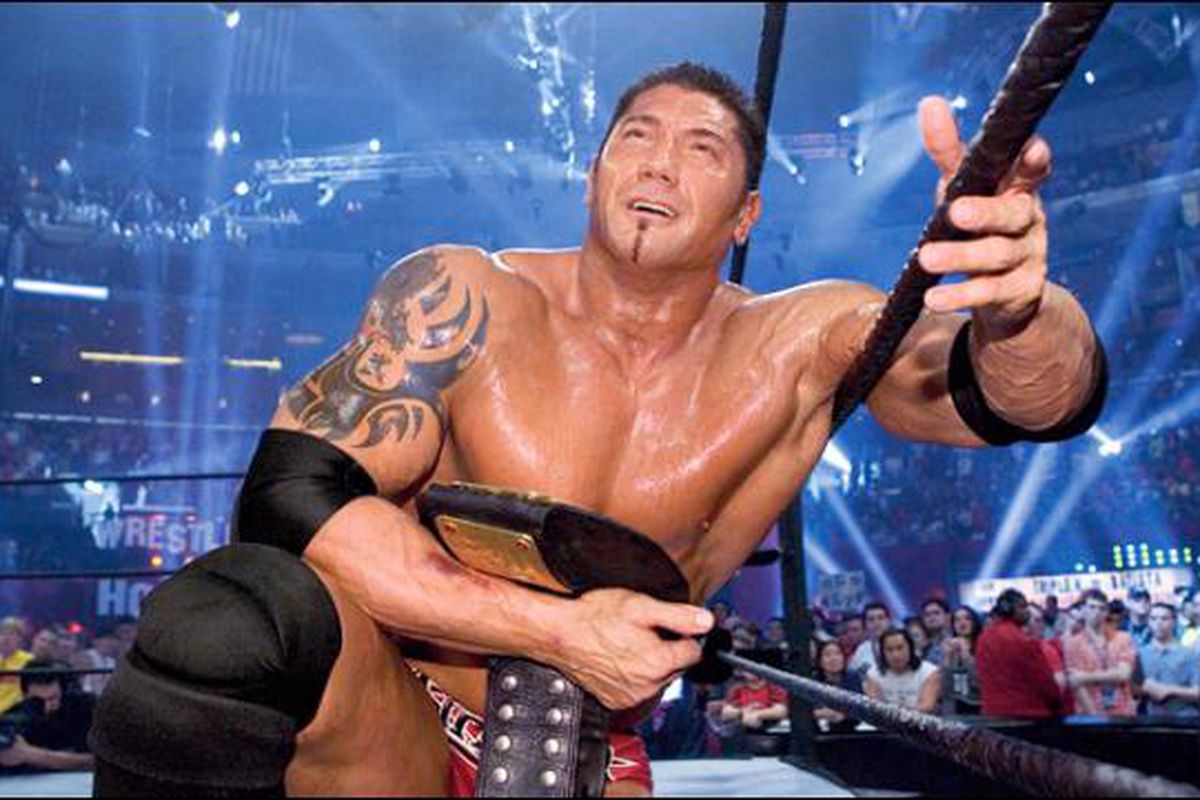
WWE successfully crowns not one but two megastar babyfaces in new WWE Champion John Cena and new World Heavyweight champion Batista. Neither match (against JBL and Triple H respectively) is artistically outstanding, but it doesn’t matter at all. They are successful. Cena and Batista are made.
WWE creates a brand new gimmick attraction, the Money In The Bank six-way Ladder match, which is a superb action spectacle and vehicle to create both a third main event superstar in Edge and an annual event so massive that it changes the Big Four into the Big Five, arguably replacing Survivor Series in importance.
The Undertaker’s WrestleMania Streak is first emphasised by WWE as a massive deal and hugely lucrative promotional tactic.
For the first and arguably only time in WWE, through a disciplined use of the brand extension, inter-promotional dream warfare is made real through Kurt Angle Vs. Shawn Michaels. You were fooled into thinking they could not interact, and when they do, it yields a hilarious yet heated rivalry and all-time classic match.
Wildly enthused by a sensational build and the (upheld) promise of creating new headliners, ‘Mania 21 sets a PPV buy record of 1,090,000.
This is definitive proof of concept for an actual new era. Ultimately, it’s an aberration. 2006 is one of the worst years in WWE history; while Cena and Batista both make it, there’s no wider surge in popularity. In that sense, it’s no WrestleMania 14.
But for those who fight for Ruthless Aggression, it’s a devastating body feint and uppercut knockout of an argument. The same applies for fans of Triple H. His excellently-crafted storyline with Batista, in which he subtly displays jealousy, cowardice, and outright terror in the face of the unstoppable badass monster he has created, is really that damn good.
April 11, 2005 - The Power Is Back…Sort Of
After several years on Spike, WWE Raw returns to its spiritual home of the USA Network. This return, announced in April and effective from October, is branded as ‘The Power Is Back’. Is it?
The terms of the deal reflect WWE’s lowly stature in the televised marketplace. We are now three years into the so-called Ruthless Aggression initiative; a fair time to determine the success of its objectives. John Cena and Batista have yet to be made, when WWE negotiates the media rights in a “bidding war” between Spike and USA, true - but the promotion has had ample time to prove to TV networks that they boast a product worth paying for.
If Ruthless Aggression is as successful as WWE retroactively markets it, why is the fee so poor?
WWE is paid $28M per year by USA Network after Spike voluntarily withdraws from the bidding process. USA has a free run at the property, and is savvy enough to pay the bare minimum accordingly. WWE receives the exact sum that was paid to them by Spike, despite their goal of earning $40M from the winning bidder. Moreover, WWE’s bargaining position is so poor that the USA network will receive every cent of advertising revenue as WWE must cover production costs. There are no other interested parties. Despite the framing of the deal, as a sentimental return to the site of Raw’s glory years, this is a marriage of convenience. WWE has no other option; the USA network wants Raw for optics purposes, as much as anything else, since Raw will propel them to the #1 slot on primetime despite not being financially lucrative in and of itself. (In 2005, the stigma of pro wrestling as a dumb show watched by low-income households persists within the advertising industry.)
WWE will remain profitable and secure - but “at least things aren’t as perilous as 1995” is hardly a glowing endorsement of the company’s popularity.
July 7, 2005 - The Muhammad Hassan Controversy
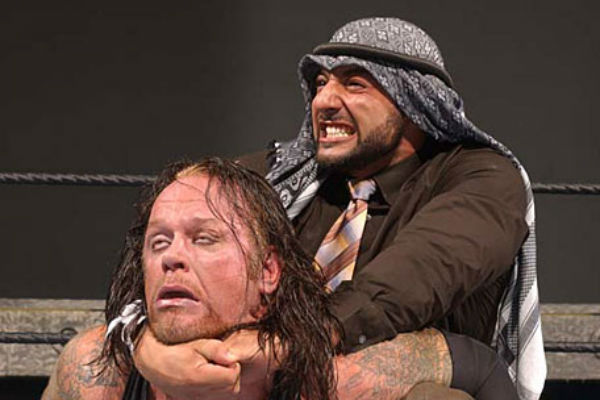
Revisiting the dartboard analogy, it’s almost a wonder that it took WWE three years to exploit terrorism in storylines.
They do so via the Muhammad Hassan character.
Under the bogus pretense of an exploration of radicalisation, Hassan is portrayed as the victim of prejudice. This pretense isn’t even maintained before the character is introduced; when building up his impending arrival, Sunday Night Heat host Ivory mentions that she’s glad her co-host Todd Grisham is driving, and not flying, to the next show - “if you catch my drift”.
The character eventually commits what is meant to mirror an atrocity. On the July 7 SmackDown - taped before but broadcast across the USA on the day of the London Underground bombings - the Hassan character dispatches a bunch of extras clad in all black to strangle the Undertaker with piano wire.
All that “edgy crap” WWE insists it put behind them after the Attitude Era is in full, profoundly unsettling and insensitive effect. 56 people died as the result of a terrorist attack that very day, and WWE knows it.
Amid intense scrutiny and backlash, the Hassan character is dropped at the demand of network UPN after he does a job to ‘Taker at the Great American Bash on July 24. He is not repackaged. WWE tells him this isn’t possible. Bradshaw, who was accused of bullying Hassan, was turned into a stockbroker after playing a cowboy a year prior.
Hassan, beyond three indie dates in 2018, never returns to wrestling full-time. He enters a depression spiral from which he will take years to recover.
January 8, 2006 - Edge Cashes In
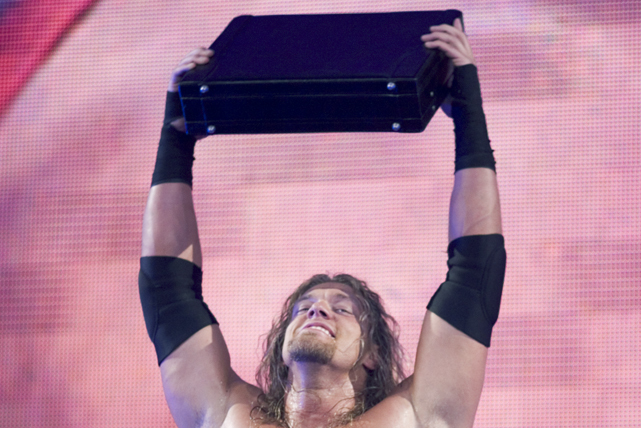
WWE creates another new, lasting headliner in Edge.
A super-charismatic midcard fixture throughout the Attitude Era, Edge’s singles career never took off as hoped in the babyface role. He was outstanding in the ring, but not the most fashionable member of the ‘SmackDown Six’. The mischievous wit of 2000 was lacking. He was generic, a bit of a starstruck devotee of Hulk Hogan at one point, and by 2004, his personality was mourned to such an extent that his home city fans jeered him at SummerSlam.
When he embarks on an extramarital affair, his fortunes change. There’s a hypocrisy to it, in that his lover Lita is received as a slut, where Edge himself is revered as an entertaining, horned-up sex machine who manages to pull your teenage crush.
Edge is sensational in the role, which is believable, and which matters more than anything. He really did cheat on his wife with Lita, who cheated on Matt Hardy, who was fired for how he addressed it but returns to capitalise on the story. Edge basically annihilates Matt en route to the main event, where he creates one of the most iconic and transformative moments in company history.
He holds the Money In The Bank briefcase, but nobody really knows how it works. He gets a World title match whenever he wants, that is clear, but the presumption is that he can select whichever pay-per-view he wishes to headline in advance.
This does not happen; stunningly, at New Year’s Revolution, the “cash-in” is pioneered. It feels like a proper, unfair heel transgression at a time when heat is a dated concept that wrestling must nonetheless persist with because it’s the only way to drive the medium in the United States. In an impromptu match, Edge quickly defeats a bloodied and thrashed John Cena, who had just survived an Elimination Chamber main event, to capture his maiden WWE/World title. Underscoring the success of the performer and character, he will win 10 more.
In a further masterstroke, Edge had lost in under eight minutes to Ric Flair (via disqualification) in the opener. Informing the shock of the swerve, by careful design, he felt nothing like a headliner. Edge does in fact display ruthless aggression, inside of the ring and out, to establish himself as a superstar. His escapist counter magician heel character, the Ultimate Opportunist, is instrumental in countless brilliant WWE main events.
While not perfect, 2005 was one of the best creative years in WWE history - but it’s an aberration.
January 9, 2006 - Live Sex Celebration
Throughout the Attitude Era, the WWF employed a deliberate tactic. A weekly occurrence by 1998, this ploy was as key as the star power of Stone Cold Steve Austin in deflecting attention away from WCW Monday Nitro.
Every week, the WWF would promise an event. Inspired by television fanatic Vince Russo, who if nothing else knows his way around a cliffhanger, this event is meant to change everything. Or, it is something you can scarcely believe is going to happen. What you are promised is either incredibly unlikely, a monumentally stupid thing to give away for free, or so wildly bombastic that it is actually impossible.
Steve Austin has just been fired, and he’s never coming back! Stick around, because in the main event, Austin is going to wrestle Mr. McMahon! If you watch Raw until the very end, you will see a man’s penis removed from his body via sword!
That second ploy, incidentally, is how the WWF broke WCW Nitro’s 83 week-long ratings winning streak. It didn’t happen, obviously.
The fans would fall for it time after time, but the lurid entertainment value of the Attitude Era was so entertaining that a massive, youthful fanbase did not care that they were the victim of a con every single Monday.
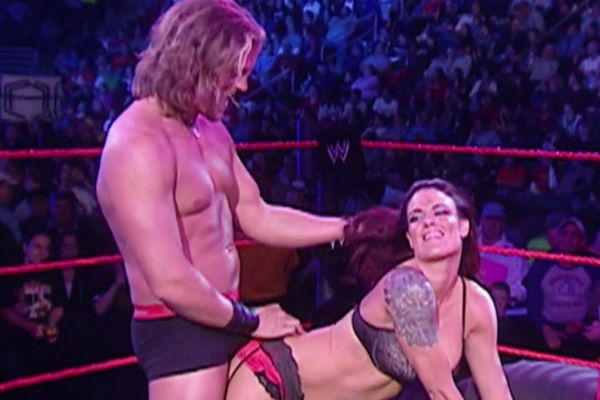
On January 9, 2006, recently-crowned WWE Champion Edge promises to celebrate his victory by having full, live, penetrative sex with his valet Lita (who, disgustingly, is coerced into performing in the angle despite clearly communicating that she is not comfortable with it). It’s a publicity stunt, yet another disgusting promotional tactic. It doesn’t happen because it was never going to be allowed to happen; the segment is interrupted by Edge’s storyline rival Ric Flair. Isn’t this familiar?
What is the Live Sex Celebration, if not the most Attitude Era-coded segment imaginable? 2005, 1999 - there is no difference.
April 20, 2006 - Palmer Canon Flies Home
It’s here that the term ‘Ruthless Aggression’, already virtually meaningless, becomes heavily ironic. A sick joke, even.
Again: the idea is to believe in yourself and demonstrate that you have what it takes to make it.
How is that remotely possible against such a toxic backdrop of locker room culture? The veterans on SmackDown play a dirty, sadistic game for their own twisted amusement. If a wrestler doesn’t adhere to the rules, they get tortured. The problem for the younger guys is that the rules change constantly. If a young greenhorn doesn’t seem to outwardly care, they get berated for not “respecting the business”; if they show ambition, they get punished for their arrogance, for not knowing their place.
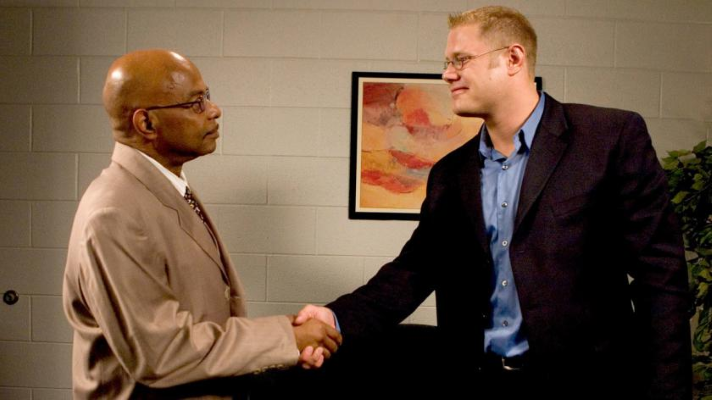
On April 20, 2006, Brian ‘Palmer Canon’ Mailhot - who portrays a slimy sanctimonious TV exec, essentially an update on Right To Censor - flies himself home. The unofficial line is that Canon can no longer bear the torment he endures from the locker room. As is often the case, this is attributed to John Bradshaw Layfield (Chris Benoit is also blamed). The darkest version of the rumour is that Canon was duct-taped in the shower. Nothing was going to happen to him, but he had to live with the threat for several hours.
Palmer Canon was unlikely to become a star in wrestling, to be clear. If he had the drive - the ruthless aggression - he might have attempted to rebuild his career on the independent circuit. This isn’t a case of a promising career laid to waste - but nor is it an isolated incident.
The man who portrayed Muhammad Hassan, Marc Capani, was also the victim of this vile hazing culture. He was “ribbed” into telling Eddie Guerrero that he shouldn’t use the camel clutch, since Hassan was getting the big push. Since Eddie’s father, Gory, invented it, you can imagine how this went down. The Miz, who overcame it but shouldn’t have had to endure it, was once banished from the locker room for inadvertently spilling food crumbs on Chris Benoit’s bag.
WWE is a mess generally. The culture is toxic, high pressure. Weeks before the Canon incident, Orton was suspended for 60 days. His lackadaisical, sexist, and obnoxious attitude was cited. He hardly showed ‘ruthless aggression’; he felt entitled to success and was frequently awarded it in spite of his awful attitude.
Again: WWE pushed who they wanted irrespective of how much they actually wanted it.
June 12, 2006 - The D-Generation X Reboot
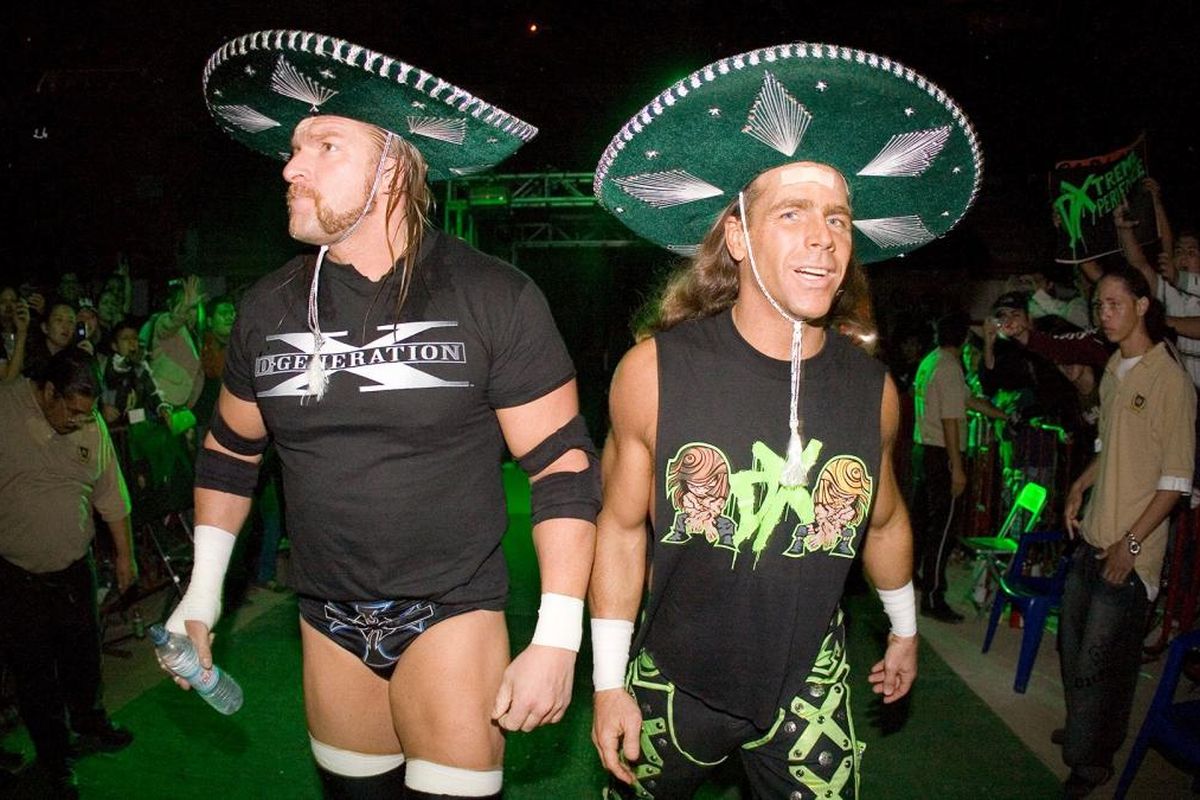
On June 12, 2006, D-Generation X reforms. They are no longer transgressive, genuinely loathsome heat merchants with a bold and disruptive vision of pro wrestling’s future. They are the establishment, and they use their sway to amuse themselves. At least somebody finds it funny.
Triple H and Shawn Michaels, just like they had between 2002 and 2004, dominate the top of the card. At least then, they were entangled in a long (and sometimes interminable) grudge programme. Tonally, at least, the story warranted the slot and the focus. In 2006, however, their act is woefully unfunny and lightweight. It feels like a thinly-veiled excuse for Triple H to make d*ck jokes and portray a cool guy babyface who is tougher and funnier than everybody else.
They feud with Vince McMahon, the excruciating premise of which is that DX imply that their boss is a homosexual on a weekly basis. Using a chicken as a marketing visual and “code”, Vince McMahon likes c*cks.
DX defeat McMahon underlings the Spirit Squad in the main event of Vengeance on June 25. They defeat Vince and Shane in the SummerSlam semi-main on August 20. They work in the midcard at Unforgiven, technically, but their match against Vince, Shane and the Big Show is the second-longest on the card (25:04), and is a heavily promoted Hell In A Cell match. They go over, and the big visual gag is DX smearing Vince’s head across Big Show’s bare ass. This is puerile - uncut, high-grade Vince McMahon indulgence.
DX actually do a job to the rave-reviewed Rated RKO tandem of Randy Orton and Edge, which is scuppered by injury.
Meanwhile, John Cena is still positioned as the top guy in a highly acclaimed series with Edge. There is a newness and sense of weight to WWE’s main event scene, at least on Monday Night Raw. There is also a sense of trivial nothingness polluting the product elsewhere…