WWE Trades Ruthless Aggression For PG | Wrestling Timelines
The WWE PG Era was trash. The WWE PG Era was treasure.
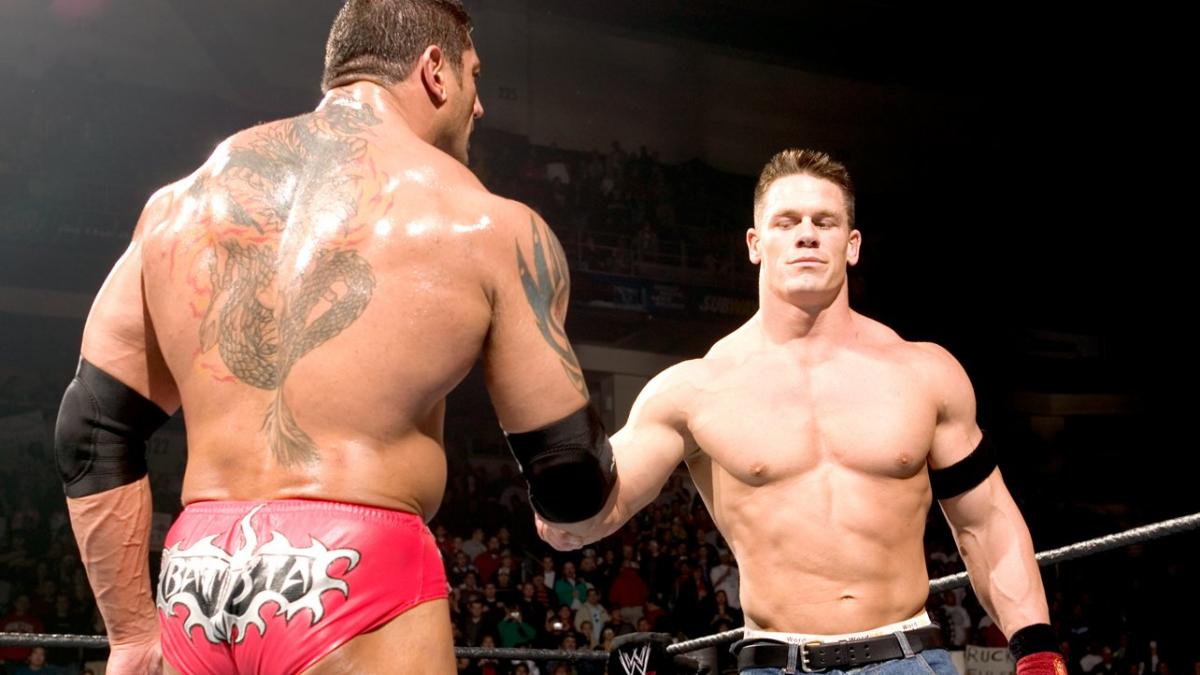
The 2000s was a turbulent time for WWE. It started wonderfully, if you only watched the TV product.
Stone Cold Steve Austin was written out of storylines in November 1999, but no matter; as early as January 2000, Triple H had evolved into a main event-level heel. The Rock replaced Austin as the top babyface, more than adequately, by setting a record of consecutive attendances in excess of 10,000 fans. Underneath, powered by Chris Kreski’s overlapping, brilliant creative direction, Kurt Angle, Edge and Cstohristian, the Hardy Boyz, and countless more acts connected with the people. 2000 was arguably the best year in WWE history; while it was not as fascinating nor as futuristic as 1997, the top-to-bottom match quality had never been better.
A greying cloud hovered overhead the entire time. In December 1999, the media went after the WWF. Wrestling was over, and outrage is timeless. Various hit-pieces were penned by various outlets, generating so much attention that Coca-Cola pulled its sponsorship. WWE’s TV carriers got spooked by the pressure applied by the Parents Television and Media Council; Vince McMahon, in turn, made halfhearted, on-off attempts to tone down the product. With the Rock and a returning Steve Austin drawing so much money, a lack of sponsors was not an issue. And then, in 2003, with the Attitude Era fad dead, the Rock and Austin left.
2001-2004 was a dismal four-year period defined by stale headliners and an inability, even unwillingness, to replace them. Despite a ‘Ruthless Aggression’ rebrand - that didn’t actually happen for very long, and was a fan-designated “era” that WWE itself only marketed retrospectively - the tone and format of WWE television remained largely unchanged. Triple H performing mock-necrophilia; Kane assaulting Lita; Kurt Angle assaulting Sharmell; just because they didn’t take place across 1997-2001, doesn’t mean they were not Attitude Era storylines.
Stars were made eventually, John Cena and Batista most notably, but business wasn’t great. In order to ensure maximum profits, WWE had to behave.
Or pretend to behave…
June 25, 2007 | Double-Murder Suicide
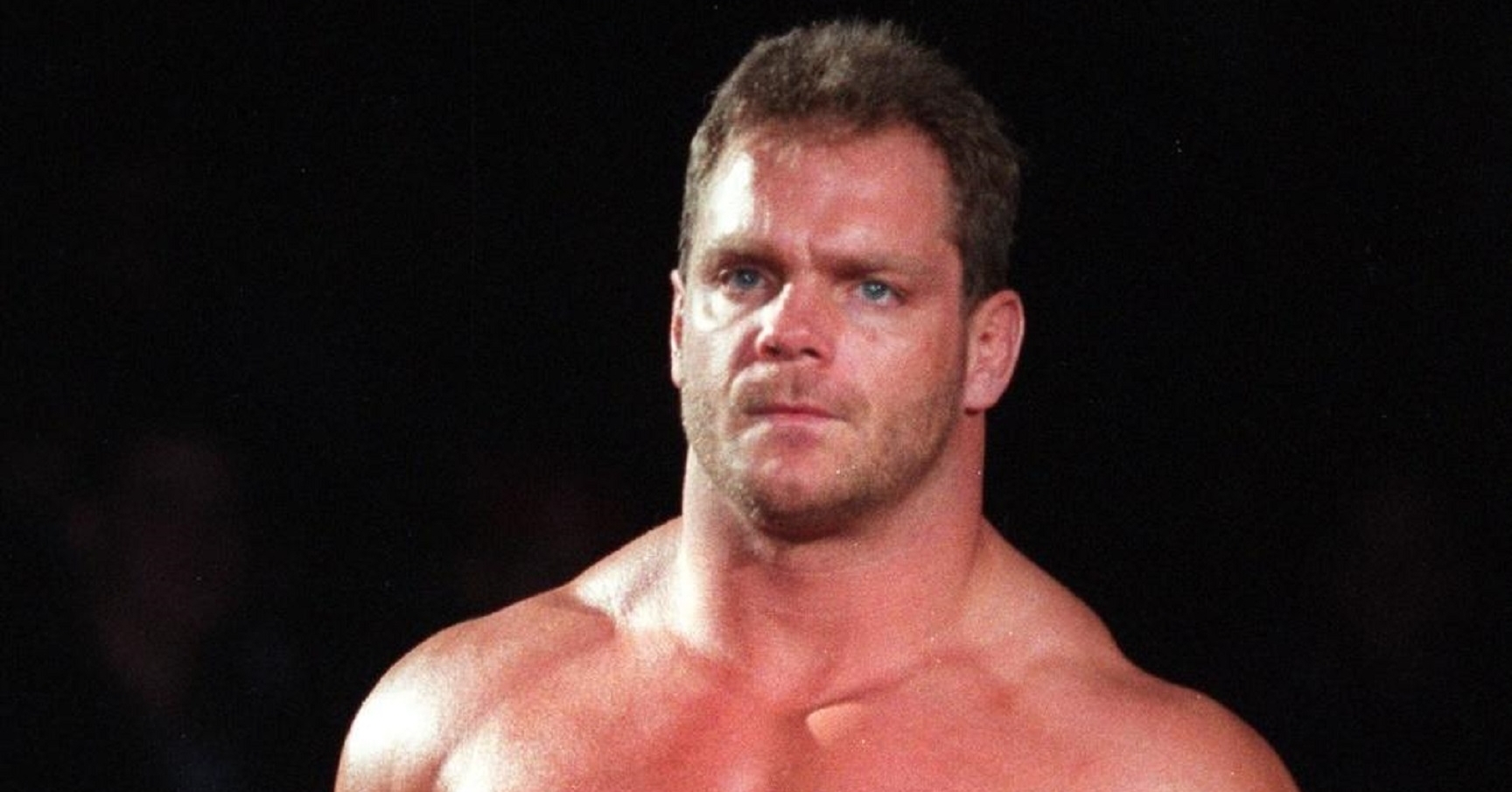
On June 25, 2007, upon a welfare check request made by WWE, police officers enter the Fayetteville, Georgia residence of Chris Benoit. The bodies of Chris, his wife Nancy, and son Daniel are found. Nancy and Daniel had been killed by Benoit, by asphyxiation and strangulation respectively. Benoit later hanged himself on his lat pulldown machine, dying by suicide.
The 2000s was plagued by a brutal wave of premature wrestling deaths. Several name stars died as a result of heart attacks or arteriosclerotic heart disease brought on by substance abuse issues against the hard-living backdrop of an unregulated pro wrestling industry. WWE had faced frequent if not hugely intense scrutiny. This was different.
One such wrestler was Eddie Guerrero, a heavy steroid user who passed away on November 13, 2005, from acute heart failure. Benoit was his closest friend, and was ravaged by grief. He was never the same man. This profound grief is cited as a symptom of Benoit’s mental decline. Benoit was also predisposed to bullying to a sadistic extent; while his name was rarely mentioned alongside the likes of Hardcore Holly, probably because Benoit was such a rave-reviewed fan favourite, Benoit enthusiastically participated in the backstage practice of “hazing”.
After an initial “roid rage” moral panic, it was later revealed that Benoit’s brain resembled that of an Alzheimer’s patient. He had chronic traumatic encephalopathy (CTE). Benoit mastered the craft across years and years of brutal, full-impact pro wrestling. His diving headbutt signature move was abandoned by its creator, Harley Race, because it was a dangerous betrayal of the “work”; Benoit executed it countless times. Benoit took the most vile unprotected chair shots ever, sometimes to the back of the head. The general practice of bumping is terrible for the head, and even the less deranged Benoit matches were defined by his all-out commitment to realism. The word “cocktail” is often used to describe Benoit’s unconscionable, evil final acts because there is no single motive that anybody will ever be able to rationalise.
WWE faces intense and prolonged media backlash over a period of several months, but even the most disturbing, shocking, and fascinating stories go away eventually; such is the nature of the rolling digital news cycle. The stigma does not follow. WWE, to the general public - and to the corporate institutions that shapes its finances - has become known as a lowbrow circus travelling from graveyard to graveyard. The perception of pro wrestling was always sleazy and fake.
Now, reeking of death, it is even harder to monetise.
February 7, 2008 | The Root Of It All
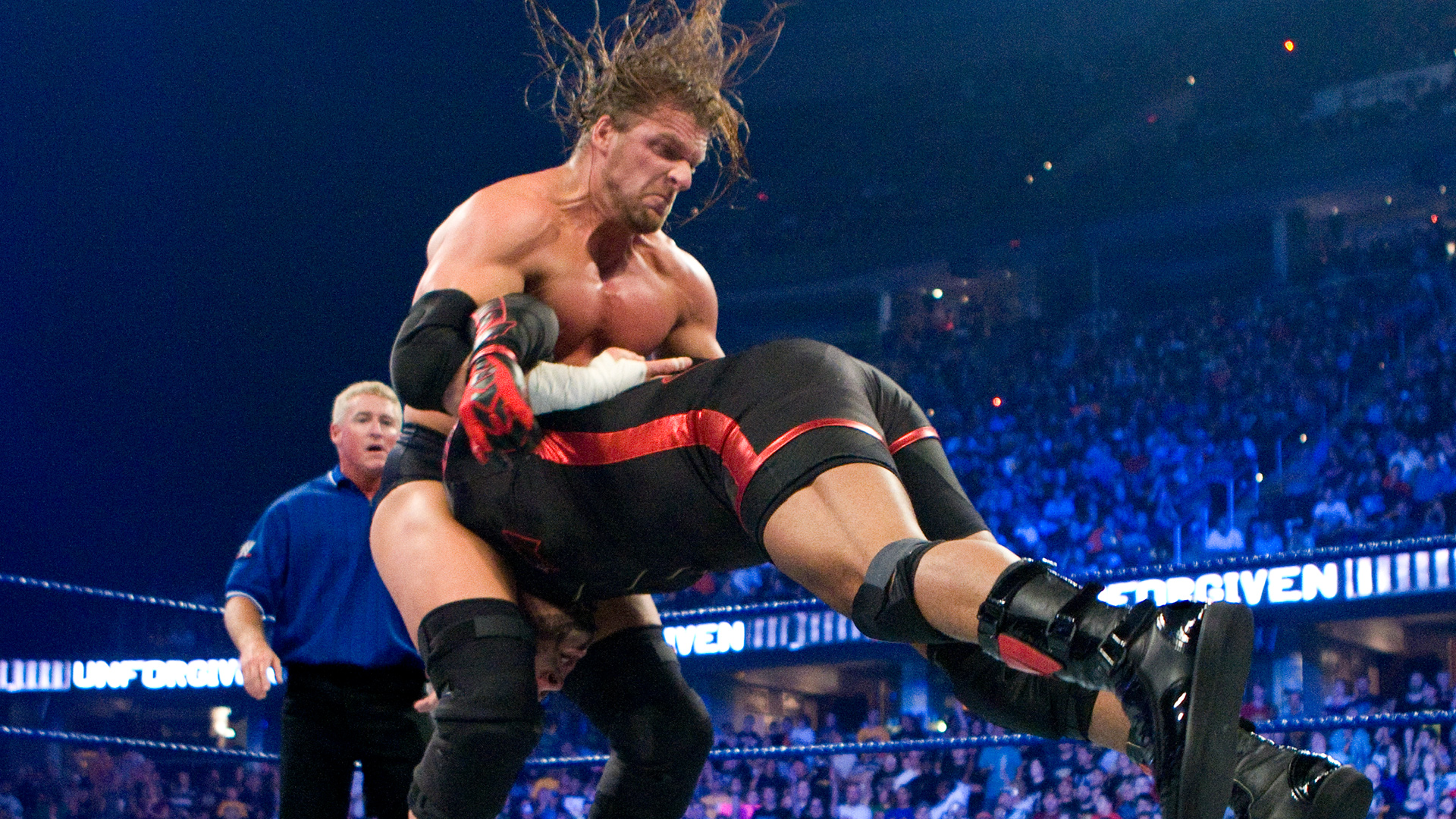
After failing to renew the deal on the cheap, the CW Network makes the decision to drop WWE SmackDown from its airwaves. This is embarrassing, and significantly affects WWE’s bottom line. While nowhere near close to fatal - SmackDown finds a new home on MyNetworkTV in October - it’s an echo of WCW’s demise. But really, it’s a tale as old as time.
SmackDown is among the highest-viewed shows on the station. In June 2008, it draws strongly with teenagers and young adult males - elusive demographics that every television executive dreams of capturing - and yet, it does not matter. This is something of an exaggeration, but to understand this disconnect, think of it like a maths question: what is 3 million multiplied by 0?
In television, an ad rate is the price charged by a network to advertisers for a commercial that airs during a broadcast. The cost increases substantially during the primetime hours in which SmackDown airs because more people are watching. The TV execs know that this is the best chance an advertiser has to publicise their product or service. Hence the premium. The idea is mutually beneficial.
The networks receive very good money from advertisers; advertisers seek to make it back from the people who purchase their goods. This symbiotic relationship is the lifeblood of TV (it is also the reason why, in 2026, the streaming era that did not initially rely on ads has effectively become another iteration of the cable TV model).
It doesn't matter if SmackDown on the CW Network draws, say, 3 million viewers. Ad execs believe that wrestling fans have 0 money. Blue-chip companies hold the opinion that wrestling fans are uneducated - how dumb must they be, if they believe in this fake crap?! - and thus poor. They can’t afford fancy things, so why waste money targeting them?
By June 2008, WWE earns a meagre $1,154,000 from TV rights fees - and this factors in Raw, SmackDown, and ECW. WWE makes more money doing house shows, which is why the calendar is so brutal. Vince knows that there is a safe containing a vast fortune that WWE is yet to crack, and sets about transforming his company in order to open it up.
February 13, 2008 | Mattel
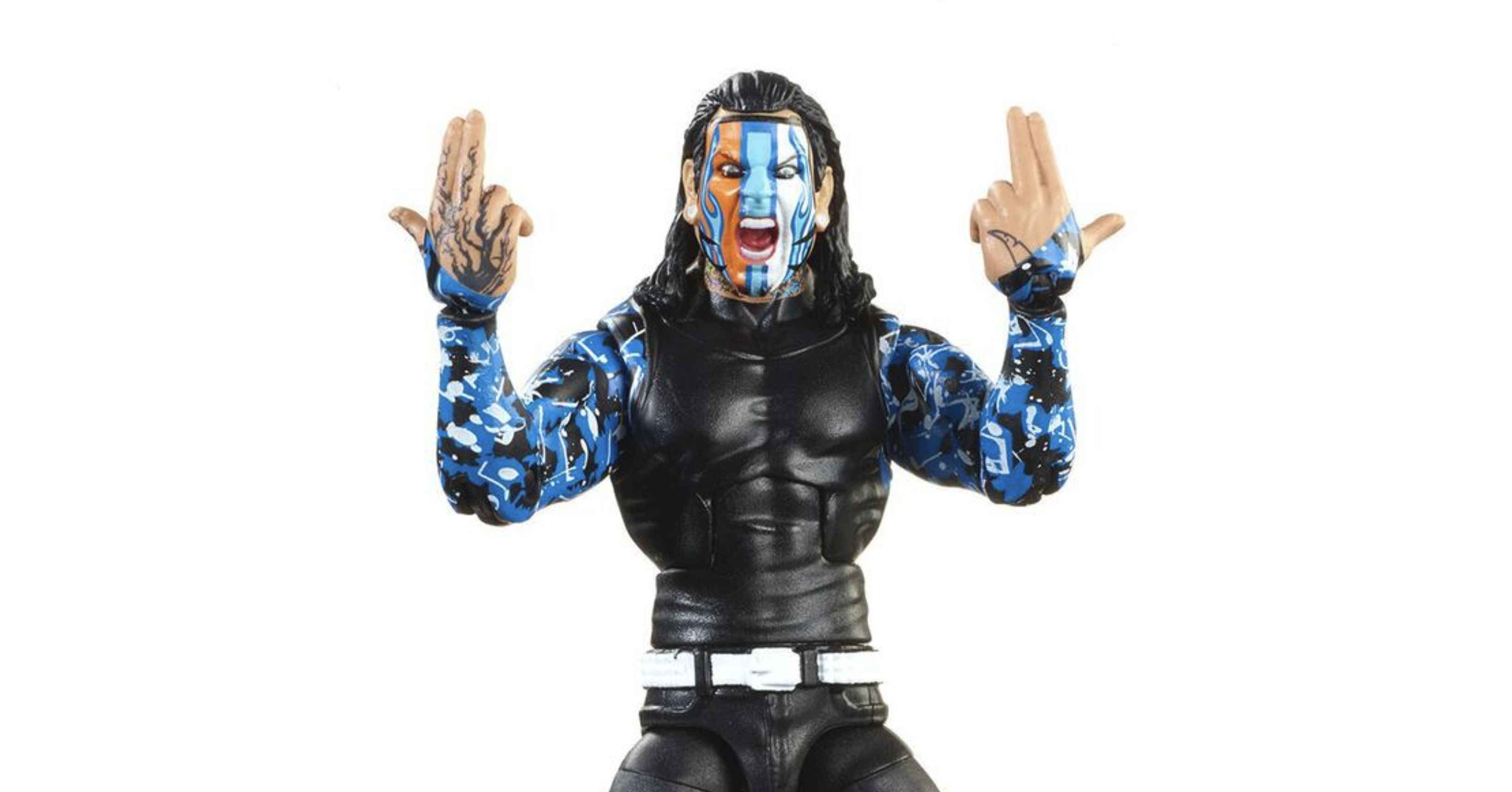
On February 18, 2008, WWE issues a press release confirming that the company has reached a deal with Mattel which, beginning in 2010, will produce action figures, accessories, playsets and more as part of a “comprehensive multi-year licensing agreement”. Mattel, which after the Lego Group is the second largest toy manufacturer worldwide, is awarded the WWE master toy license. This was previously owned by Jakks Pacific, which will now produce merchandise for Total Non-Stop Action (TNA). The Mattel deal is brokered by Donna Goldsmith, WWE’s Executive Vice President of Consumer Products.
This is a big deal. The exact definition of “big” is unknown, but it must be very, very lucrative, since WWE strikes the deal with Mattel under the promise that it will tone down programming and gear it towards a family audience ahead of the 2010 rollout.
In the meantime, astonishingly, WWE posts company-record profits for, of all years, 2007. The profit reaches $52,100,000. This number is bolstered by WWE’s heavy overseas touring, with many punters in under-served foreign markets paying a lot of money to watch WWE live for possibly the first time. This novelty is not a sustainable revenue stream long-term. As impressive as this is, WWE is a publicly-traded company. Even the best-ever number is not good enough. It can always be bigger. Much bigger.
WWE hopes to make more money than ever before, over the long-term, by attracting lucrative sponsors. It has finally dawned on the company that the generational box office pull of Steve Austin and the Rock belongs to a different paradigm, and that a shift is needed.
May 20, 2008 | Vince Speaks To Stockholders
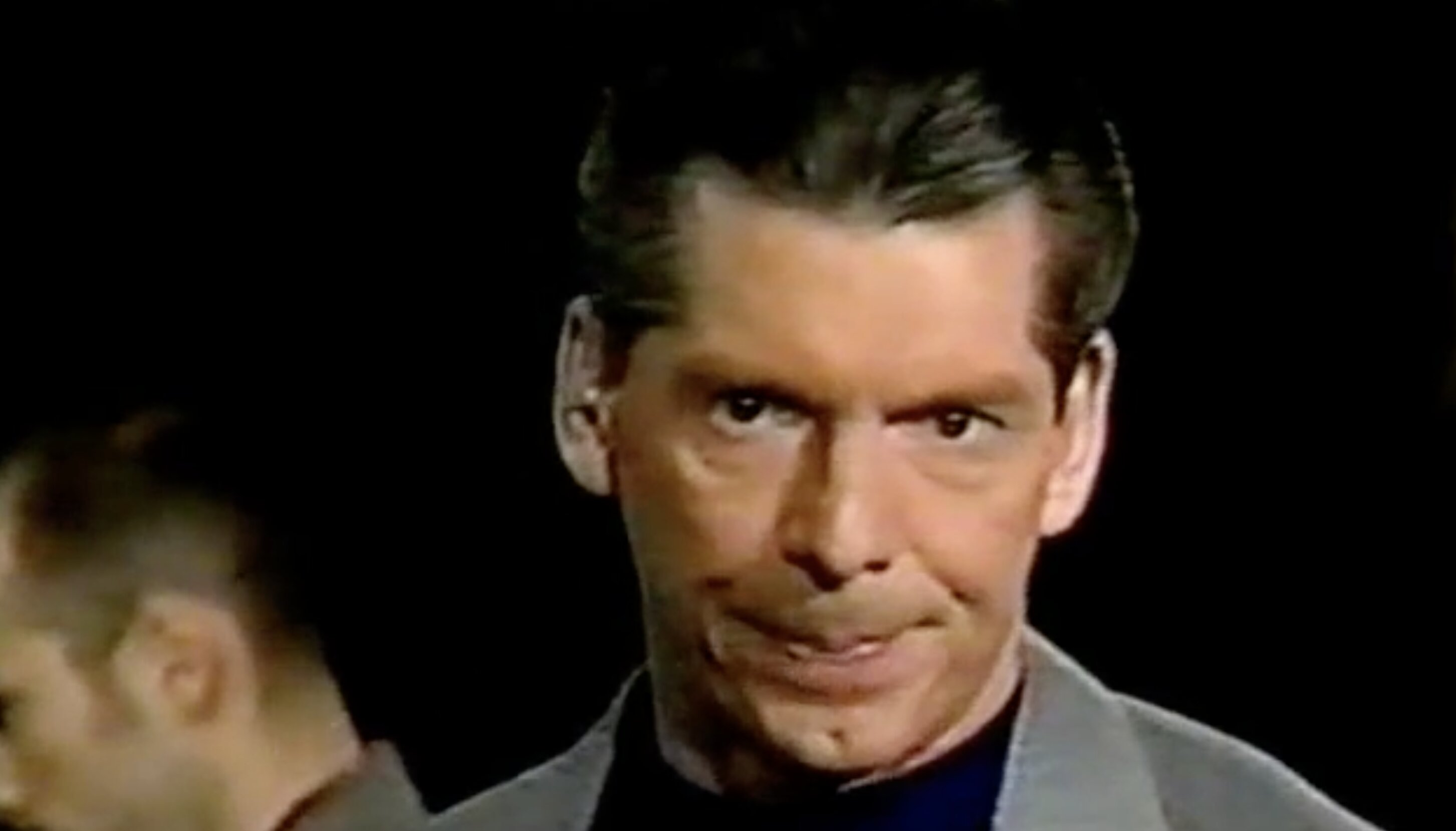
Something has to change, and Vince McMahon, the king of the empire, promises precisely that in a meeting with shareholders.
He speaks about the Benoit tragedy, surmising that nobody could have seen it coming. Deflecting responsibility, he says that the term for what Benoit did is “going postal” - a term coined following multiple massacres perpetrated by USPS workers since the 1980s. WWE should not have received criticism if the post office doesn’t, Vince reasons. He expresses his belief that the media has treated WWE unfairly, but concedes that his company must build a better relationship with the press. In typical McMahon fashion, the mask slips throughout. He says WWE does not need the written media because the promotion reaches its audience through television in one breath, but in another says that he needs to educate the media about a product they do not understand. McMahon also expresses his intent to cultivate corporate relationships in order to increase the value of the WWE brand.
Vince is a volatile man who once threatened to blow up an Accord live on WWE television when Honda pulled sponsorship from the first game of his doomed XFL national football league. This is not something he can possibly hope to do personally - he claims that he can’t be defensive anymore, when October 2010 happens - but WWE is a publicly-traded company with an intricate org chart staffed by legitimate professionals who know what they are doing. Some WWE fans over the years hope in vain that Vince will hand over the creative reins.
This does not happen, but he does cede responsibility where it matters.
June 2-9, 2008 | Million Dollar Mania
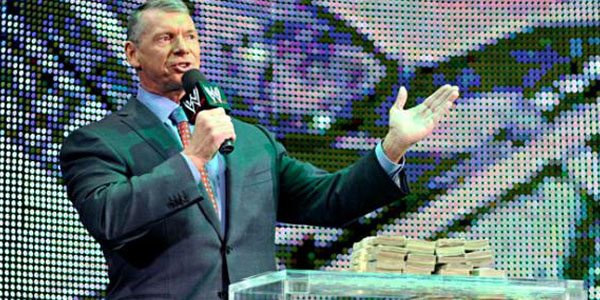
Vince McMahon, never known for his patience, decides to give away some of his personal fortune live on Monday Night Raw in on-air sweepstakes segments.
He’s grown sick and tired of the media coverage. Despite promising to play nice in the shareholder meeting, Vince immediately gets defensive on June 2 when cutting a rambling, quasi-insane promo during which he inadequately describes how all of this will work. Vince says that he’s tired of all these “elitists”. They don’t like wrestling, and they don’t like you. Vince apparently wants to unify his existing fanbase and create a siege mentality.
This seems like a stupid idea, since Vince by his own admission needs to monetise WWE through better outside sponsorship. The media don’t watch WWE, but even if they did, they aren’t about to pen glowing editorials because Vince is screaming at them. Million Dollar Mania reeks of desperation, and he’s only giving away one million dollars incrementally.
He gives away unsexy sums of money a bit at a time, but only when he, in a very suboptimal comparison to ‘The Simpsons’’ Montgomery Burns, takes far longer than anybody else on the planet to correctly use a telephone. It’s just as well the media aren’t watching, because on June 9, Vince gets ‘Rickrolled’, and as an out of touch geezer nearing traditional retirement age, he has no clue that he has been trolled by an internet craze inescapable to anybody who resides in the real world.
WWE was desperate before starting Million Dollar Mania. Within minutes, the promotion becomes even less cool in front of its fans, and no new fans are made because the ratings stunt does not work.
July 23, 2008 | It’s Official
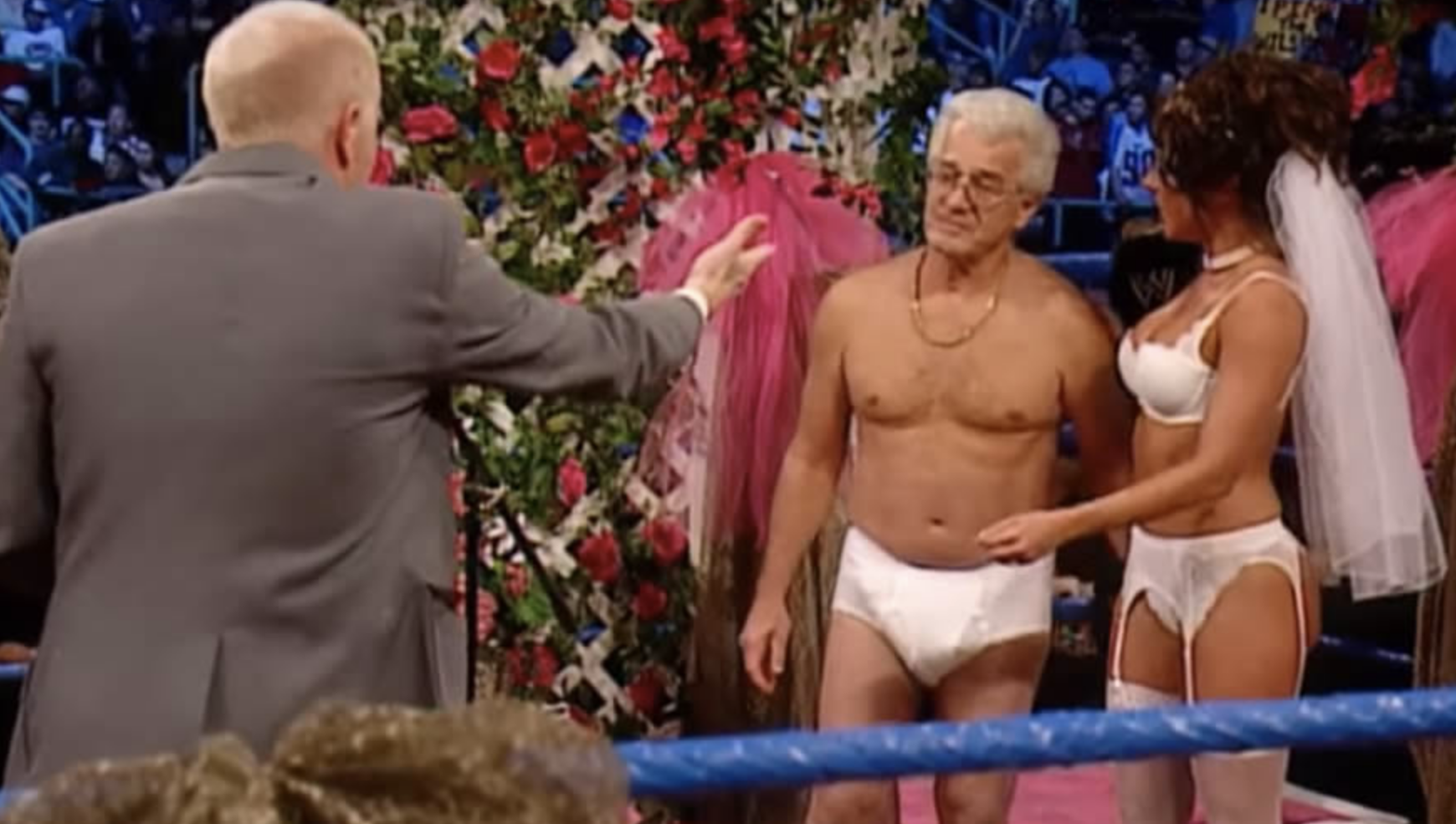
Vince makes official the changes he discussed back in May: WWE has now formally received a TV-PG rating. That’s their story.
WWE seems to spin this as a conscientious and necessary response to the Benoit tragedy, which of course is a significant factor, but the reality is that WWE is no longer able to monetise sleaze. Given that Vince felt born to promote low-brow trash in 1998, and performed his Mr. McMahon character with a passionate red-faced relish, the move is made under duress. It is not the result of introspection; it’s a market opportunity. Vince McMahon, who complained about this in a 2005 interview with the Wall Street Journal, is obsessed with the idea of attracting car manufacturers to air commercials during his programming.
This is not just because a car ad is amongst the most lucrative slots going; it would represent a symbolic win for a man who longs for acceptance as a legitimate businessman. He is perceived by Wall Street as a carny lunatic, a stigma he fiercely resents. In the coming years, this defensive mentality will manifest in a very desperate and laughable marketing campaign. Vince wants to clean up WWE’s image for monetary gain, but there’s a personal element in play also.
But he’s a businessman, first and foremost, and live event ticketing data indicates that kids are more interested in attending WWE shows than adults are by themselves. After a decade of marketing WWE towards grown-ups, the last several years of which have marked decline and stagnation in popularity, Vince realises that now is the time to go back to the 1980s. This is where it all begins again.
The kicker here is that the actual rating is meaningless. SmackDown - a show on which an elderly gentleman was once fornicated to death, on which Kurt Angle once sexually assaulted a woman - was PG-rated since its inception. There is no TV trade association equivalent to the Motion Picture Association of America; TV producers and the network sort this out themselves.
The “move” to “PG” is an exercise in optics announced in order to rehabilitate WWE’s public image in front of the corporate world and to bring the deal with Mattel over the line.
November 23, 2008 | WWE Teases Jeff Hardy Overdose
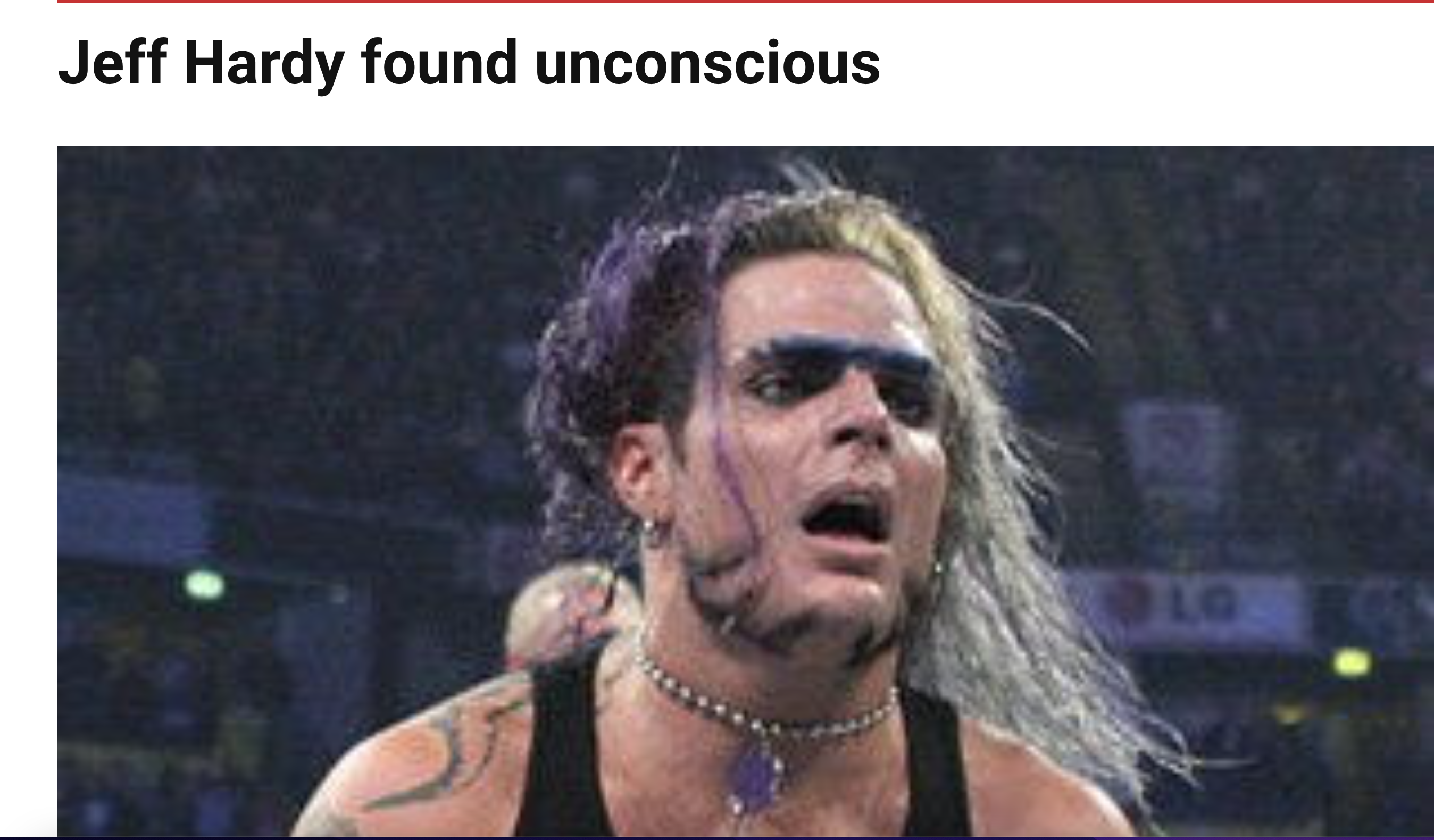
WWE wants to go PG. It is absolutely imperative that the company escapes its perception as the place where young men go to die. Vince McMahon is a deeply reactionary individual, though, defined by his inability to get with the times. This is a man who in 2007 was still presenting ghastly sub-Attitude Era controversy bait, six years after that audience withered away. It therefore makes a grim sort of sense that he would tease a Jeff Hardy drug overdose death mere months after launching an initiative designed to achieve the exact opposite.
What’s so appalling about this disgusting promotional tactic is that it’s a very convincing work. It’s an effective and ugly idea. Jeff Hardy is synonymous with substance abuse issues; the more ghoulish amongst you might feature him in a celebrity death pool. When WWE publishes an article entitled ‘Jeff Hardy found unconscious’, fans naturally fear the worst. The details of a gross work are outstanding. The copy is limited to just 45 words, as if it’s a developing story so important that it is immediately sent for publishing. The excerpt “found unconscious in a stairwell at his hotel” is horrifically well-observed, since the hotel is where so many young wrestlers perish. WWE stops short of writing “room”, as if that makes it any better.
This is revealed to be an angle that writes Hardy out of the Triple Threat match at Survivor Series against Triple H and Vladimir Kozlov. The idea is to delay the gratification of Hardy’s big moment - that, and encourage fans to find out if the guy is dead, live on pay-per-view!
WWE, obviously, will need to do a far more convincing job of pretending to be good in front of the teacher.
August 3, 2009 | SummerFest
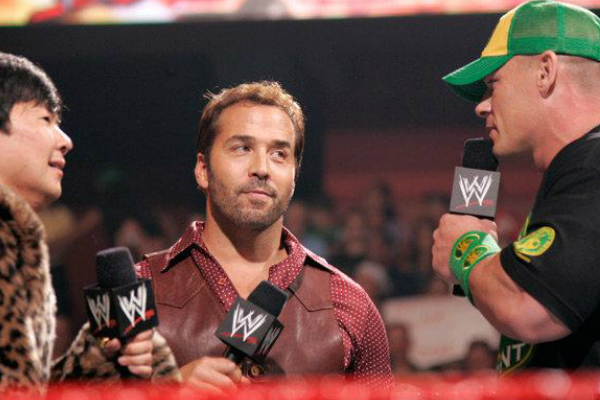
WWE has tried to make itself look good in front of prospective sponsors and TV networks by not doing beyond the pale stuff as a matter of course. This, evidently, is not enough, so Vince McMahon develops an idea; every week, a household name celebrity will ‘Guest Host’ episodes of WWE Monday Night Raw. WWE believes that, if celebrities willingly associate themselves with WWE, well, we can’t be that bad, can we? Nobody was queuing up to pretend to like WWE in the summer of 2007 because there is, in fact, such a thing as bad publicity.
Paul Heyman once nailed the essence of pro wrestling fandom more succinctly than anybody else: you either get it, or you don’t. You can’t convince non-fans to become fans; that simply isn’t how it works.
The Guest Host Era is a critically-savaged disaster. It does not work. Fans of the celebrities aren’t magically going to become WWE fans, particularly when the product is largely incredibly awful. Shaquille O’Neill hosts the July 27, 2009 edition of Raw. Fans of the NBA might have a look - this was a decent watch when Stone Cold was “in it”, let’s check it out - only to cringe their eyes shut when Michael Cole thinks that Shaq playing scrabble with Hornswoggle is the height of comedy. WWE as an institution treats the celebs like airport autograph hunters would. It is excruciating. The rest of Paul Heyman’s quote, which he uttered when promoting ECW, is “we worry about entertaining those who do”.
Those who do get pro wrestling are infuriated on August 3 when Jeremy Piven, a star of the HBO series ‘Entourage’, refers to SummerSlam as “the SummerFest”. It takes him what feels like minutes to arrive at this one line of dialogue, too. Nobody can know this for certain, but it feels rather a lot like Piven has turned up, taken half look at his script for a few moments, and not taken this fake wrestling crap remotely seriously.
Entourage fans won’t be converted. Existing wrestling fans are insulted. But the very idea that actual celebs with better things to do will accept a WWE paycheque, after the events of June 2007, is actually not insignificant progress that should not be overlooked. None of the famous faces are buried in the press for endorsing Vince McMahon’s death cult.
This, quietly, helps to soften WWE’s public image.
December 4, 2009 | Umaga Dies
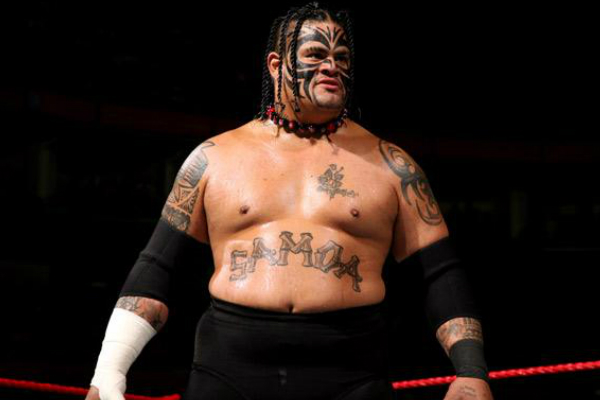
Edward Smith, who performed for WWE under the ring name ‘Umaga’ between 2001 and 2003 and 2005 to June 2009, passes away from a heart attack. According to toxicology reports, various drugs, including the infamous Soma, are found in his system. This is a sad and all too familiar wrestling death. He was 36 years old.
WWE’s method of escaping media scrutiny is to simply ignore the death and not draw attention to it. Not acknowledging it is deeply insensitive and outright disrespectful, but it works. As grim as this is, it helps that Umaga did not strangle a seven year-old boy to death, and thus, the media does not treat this as a juicy story. It’s a diminished return. While Umaga was actually scheduled to return to WWE “at or around Royal Rumble time”, per the December 4, 2009 issue of the Wrestling Observer Newsletter, he was not officially signed to a WWE contract at the time of his death, so there’s no ‘active WWE star dies on their watch’ angle to play up, either.
That Umaga was still obviously still struggling with addiction issues - unsurprising, given that he had refused to enter rehab less than half a year earlier - raises questions about WWE’s reported decision to bring him back. Those questions are all the more uncomfortable, given Dave Meltzer’s report that TNA interest spurred WWE into action. (Hulk Hogan was impressed by Umaga, who had appeared on the Hulkamania: Let The Battle Begin tour of Australia).
A bleak peace treaty exists between WWE and the press, driven by a lack of lurid, clickworthy detail. The rehabilitation project continues.