8 Ups & 7 Downs From John Cena's Entire WWE Career
After 23 years, you can't see him. But will you miss him?
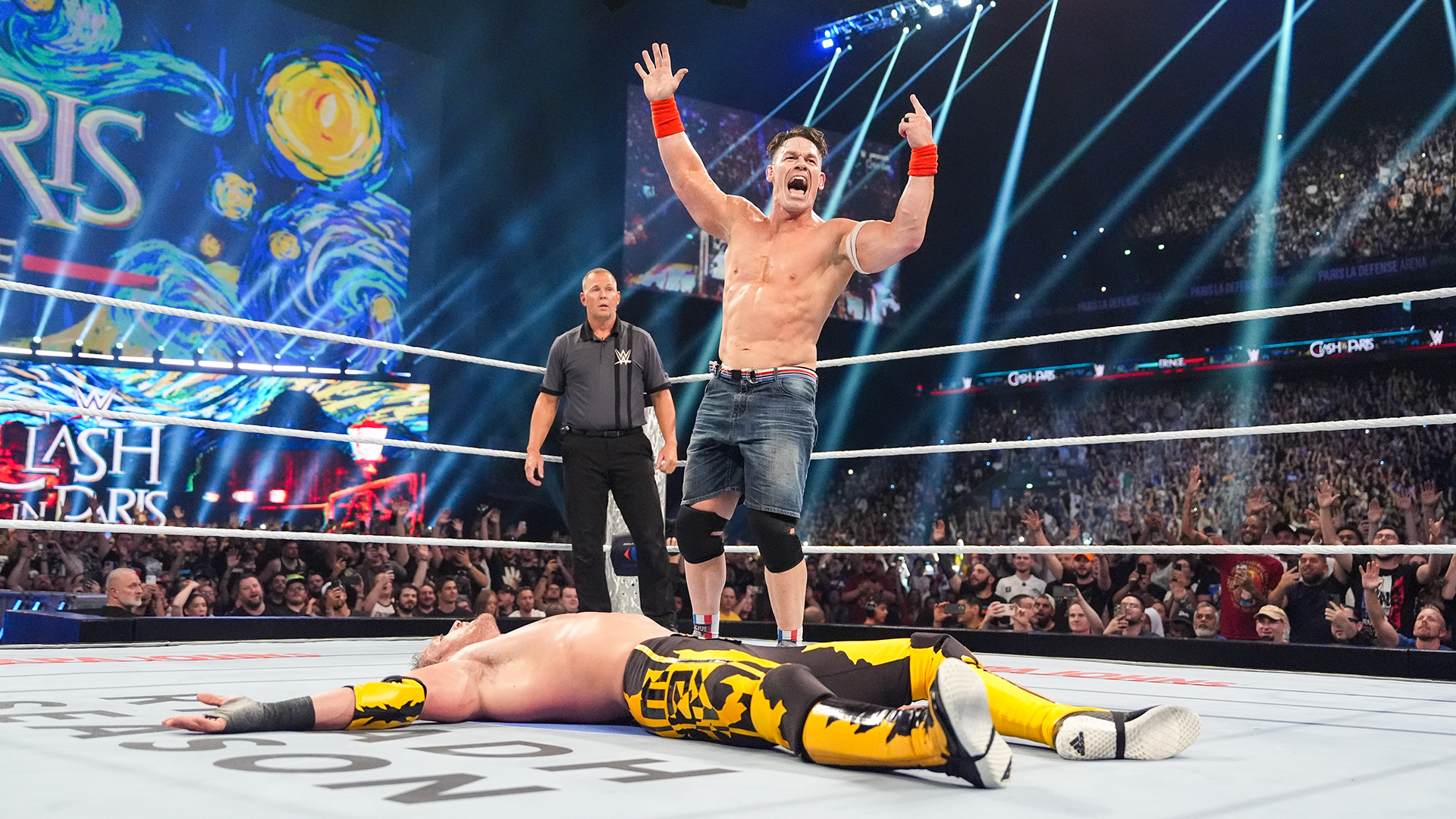
John Cena retiring from active competition right as a WWE creative boom came to an end might be the most fitting way for John Cena to call it a day.
'Big Match John' was atop the tree when the leaves were brown, decaying and dead, in that order. The tree was study, and he made it so, but that was about it. He was at times a wrestler that appeared to genuinely want to depart the industry better than he found it, but was often the man most closely associated with it's expedited descent into brainless slop, peddled mostly by an out-of-touch sociopathic autocrat.
For him to return to an objectively and subjectively hot WWE, watch the product cool and aid the decline just by existing as a regular character in it was remarkably on-brand. His Elimination Chamber heel turn was incredible, but the moment will be forever tarnished by the run that subsequently followed. Now a professional actor as he steps away from being a professional wrestler, Cena was unable to drop in to the role in any of the multiple incarnations an equally malfunctioning creative team offered out between the March PLE and his pre-SummerSlam return to the light.
More on that elsewhere in this list, but it's John Cena. There simply can't be highs without historic lows...
Downs…
7. Burying The Miz
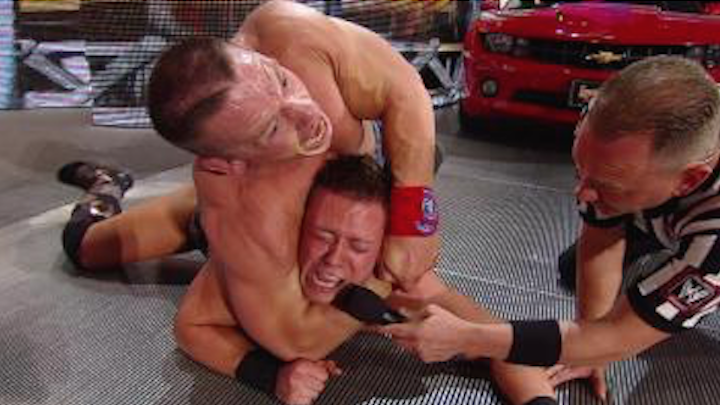
It's hard to know for certain if every single one of them was completely by design or simply just a case of convenience and the barren era requiring so many feuds to loop, but John Cena's constant victories - and the nature of them - over The Miz spoke to a rare but pointed insecurity 'The Champ' needn't have been worried about.
At certain points over his two decades with the company, Miz was very, very good. But on-screen at least, his character almost never posed a threat to John Cena. A WrestleMania build between the two of them was framed around The Rock, a second WrestleMania build was about being in wrestling couples, and even their original rivalry cast Miz as a total chancer claiming "victories" because Cena simply wasn't in the building to answer his challenges.
Yet, every time they came together, Cena came out on top in a way that cast him as the jock bully pissing about with a guy that was the most charismatic in the room just before he arrived. Where Miz did shine was on regular television, in public relations appearances for the company and other settings where it was previously thought nobody but Cena would do. Was this at the root of the pattern of behaviour? Did 'Big Match John' even realise there was a pattern?
He wasn't bad with the one-offs too...
6. Burying Baron Corbin
WWE was the best and worst of every world if you were a midcarder between approximately 2002 and 2022. You could be buried below the surface of the earth one week, but fortuitously recovered the next pending the whims of Vince McMahon. Not that this schizophrenic landscape made things any easier for those on the wrong end of the bad booking.
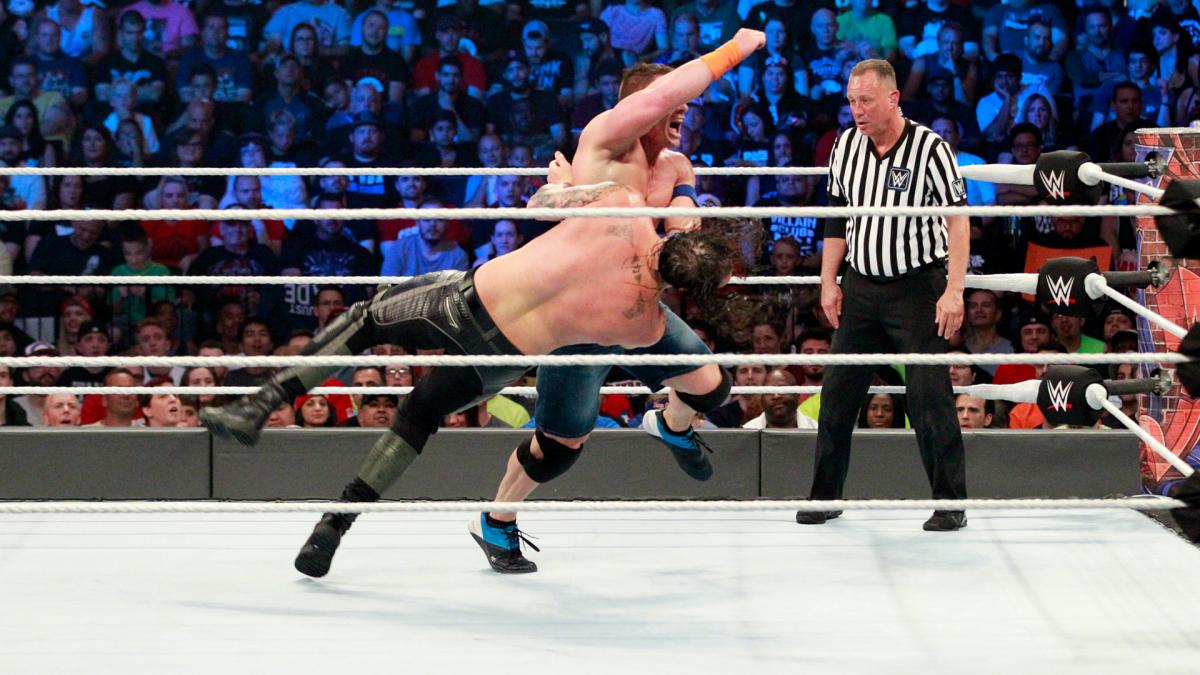
Such was the case for Baron Corbin during his perplexing summer of 2017. Having secured the briefcase, the 'Lone Wolf' was considered a lock to win the big one when the time came. Jinder Mahal was the new rock bottom precedent for experimentation, and Corbin comfortably cleared him in just about every category. All looked rosy until August, when he hastily cashed in and lost on a random episode of SmackDown to tee up little more than a SummerSlam opener with Cena. Alongside a lot of scuttlebutt that 'Big Match John' simply didn't see Big Baron as the guy, a story emerged that Corbin had been an outspoken critic of WWE's in-house doctor Joseph Maroon's words on CTE during a talent meeting. He was allegedly to be punished on screen for his supposed misdemeanours off it, and this amounted to Cena humiliating him at the 'Biggest Party Of The Summer' in a Bugs Bunny/Elmer Fudd-coded opener.
Cena often got the tag of "good soldier" for his unprecedented ability to follow McMahon's instructions and orders without even a whisper of a complaint, but just how good is "good" when the outcomes are as bad as this?
5. Burying The Nexus
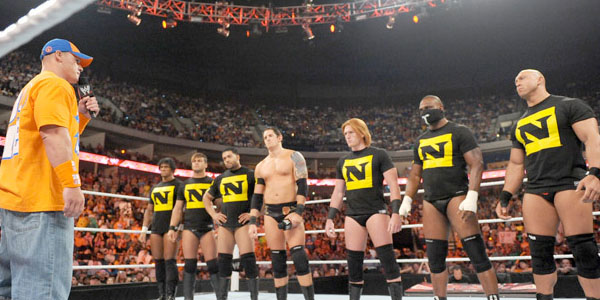
To assume every member of The Nexus could or would have made it as stars in WWE is naive in the extreme, but the best chance all of them had was during the unexpectedly hot summer of 2010 when - for a split second - several new talents were getting the better of over-familiar established faces.
Enter the most over-familiar established face WWE had to offer, and the first wrestler Nexus were booked to destroy in order to make their point.
Per Chris Jericho and Edge's testimonials from the time, John Cena insisted on going over them in fairly humiliating fashion in the first major match at SummerSlam (or at very least didn't push back at the suggestion), and their descent back to the midcard was expedited just like countless others before them.
Within months of forming they were a doomed gang of losers. Within a year they no longer even existed. The loss to Cena's Team WWE at the 'Biggest Party Of The Summer' was the beginning of the end, and the repeated wallopings they took from the cartoonishly indestructible Cena in the aftermath of the first loss confirmed the inevitable. This was, by the end, the opposite of a pro wrestling work. The true magic to The Nexus was hiding how much they were mostly goons. For whatever reason, Cena seemed intent on pulling back the curtain and making sure everybody could see not just how the trick was played, but why magic itself cannot be real.
4. The John Laurinaitis Match
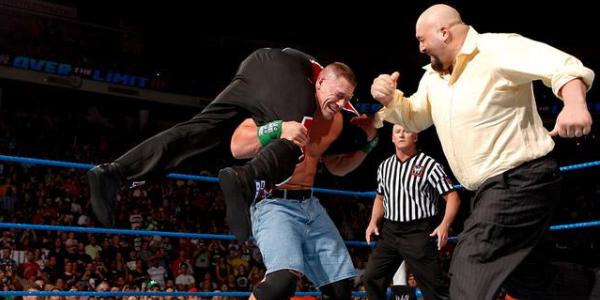
All of WWE's ugliest attributes boiled down to one ugly match ("match" is generous...), the Over The Limit 2012 contest between John Cena and John Laurinaitis was evidently an exhibition for the entertainment of one man rather than even one fan.
Laurinaitis was confirmation when none was needed that the authority figure character was the worst in all of wrestling. A lousy heel with some cheap heat shtick that worked all of one time (CM Punk name-checking him as an office Big Bad in 2011 was a transgression that should have ended there), 'Big Johnny' had dominion over Raw and SmackDown and it was down to John Cena to take care of the problem. Easy, no?
No. Yet another case of the company's biggest star scanning more as a bully than a babyface, Cena abused Laurinaitis without impunity because the stipulation went that nobody on the active roster could intervene. Cena was the only man in the building that didn't see the outcome from before the match even begun - perma-griefed Big Show had been fired on the go-home Raw to make him the perfect candidate for a swerve turn.
3. The Roman Reigns Worked Shoot

WWE was creatively lost by 2017 that by the time they came to promote the biggest match they had to offer, they did so by rushing it onto historically one of the least interesting shows of the year and built it around John Cena the shoot human thinking Roman Reigns the shoot human wasn't good enough to take his spot as the shoot biggest money player in the company.
It was a deranged bit of business from the mind of a deranged man, and yet again the debate wasn't the abysmal quality of the segment but the fact that Cena went out there and performed his duties in spite of plenty of reasons not to. Roman Reigns attempted to nail his scripted lines in response and a couple landed, but the promo duel is remembered more for Cena's patronising "fine speech" retort, his mocking of Reigns during a couple of stumbles and a burial of The Undertaker en route to labelling Roman a "bootleg" version of himself. That they were working towards a showdown at October's No Mercy almost proved his point - was the placement indicative of yet more company uncertainty in the new top guy?
How bad was it for 'The Big Dog' in the end? Hard to say; Reigns was already damaged goods and the product of a push gone disastrously wrong by then. Every good moment invited idle optimism that this time things would be different, but the hatred many fans harboured for Cena had translated over to the company's latest pet project. Perhaps it simply didn't matter at all - itself a mindset that became the cause of and solution to every problem caused by a decade of pushing John Cena.
2. The "Mixed" Reactions
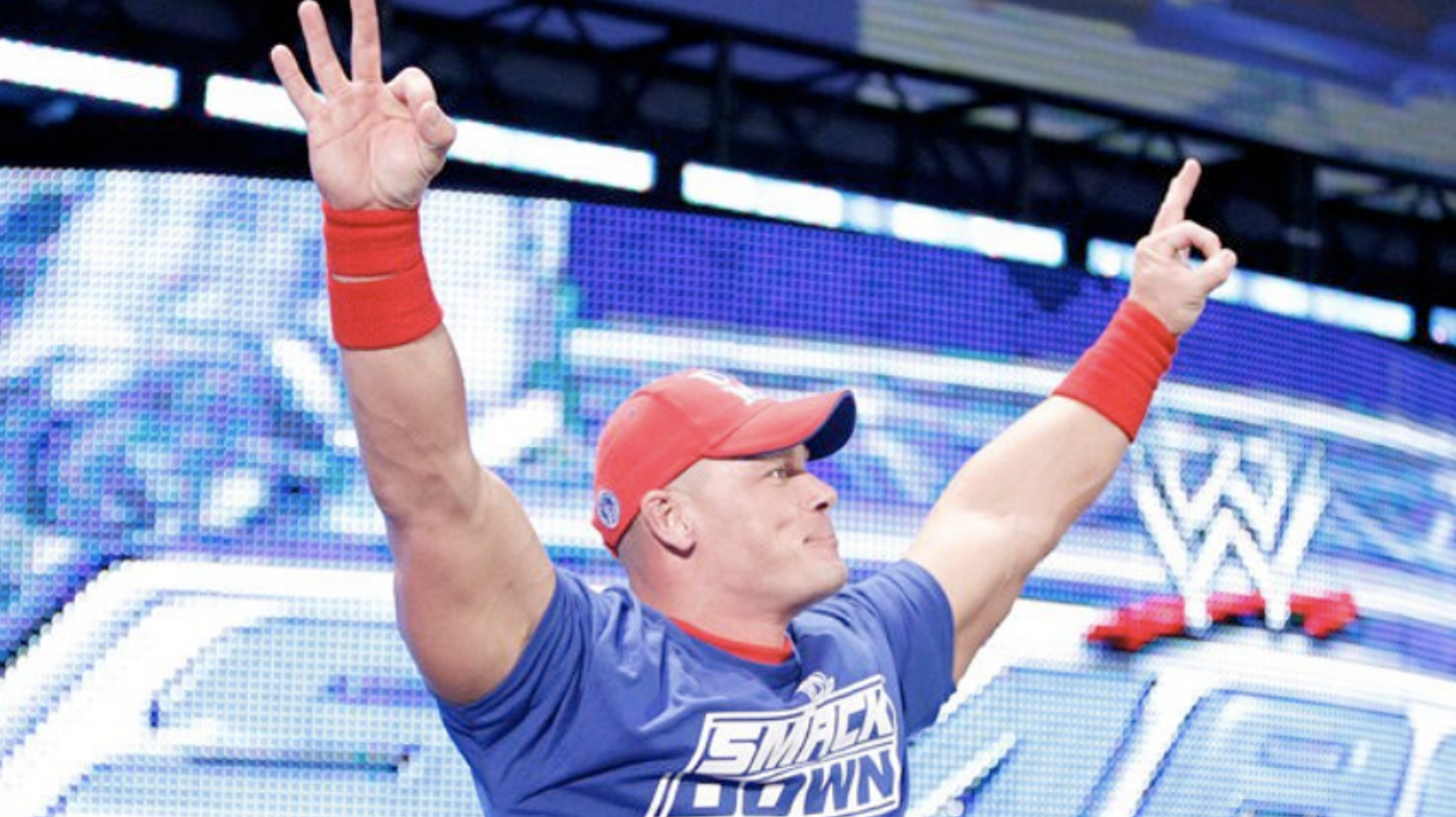
The original iteration of "John Cena: Top Babyface" effectively ran from November 2003 through to August 2005. There, 'The Champ' was audibly booed at SummerSlam against Chris Jericho following a three-way feud with sentimental favourite Christian the prior month. This was significant because many felt the jeers were simply in protest to 'Captain Charisma' not winning. This quickly proved not to be the case, and things only got worse for Cena from there.
When heel Kurt Angle looked exponentially superior as a Challenger, 'The Champ' was once again derided. Edge tried hard to arrest the negative feeling, but Triple H leaned into it and the dynamic defined their WrestleMania 22 main event. Out in the open and impossible to sweeten or ignore, the conversation rightfully changed around Cena - "mixed" was the company line but nobody discerning bought it. He was more product than person, and because a loud third of the audience had spotted that, he was never going to be received like the Rocks, Austins and Hogans before him. WWE, in a sign of the wretched times, simply ignored what was basically a plot-hole in their work of fiction and pushed him as if he was.
They found plenty of highs along the way, but bad nights for John Cena made for truly awful ones for the company writ large. Even the very best nights for the character begged one key question; were they ultimately worth what resulted in the long-run?
1. The Legacy Of Expectation For Future Top Stars
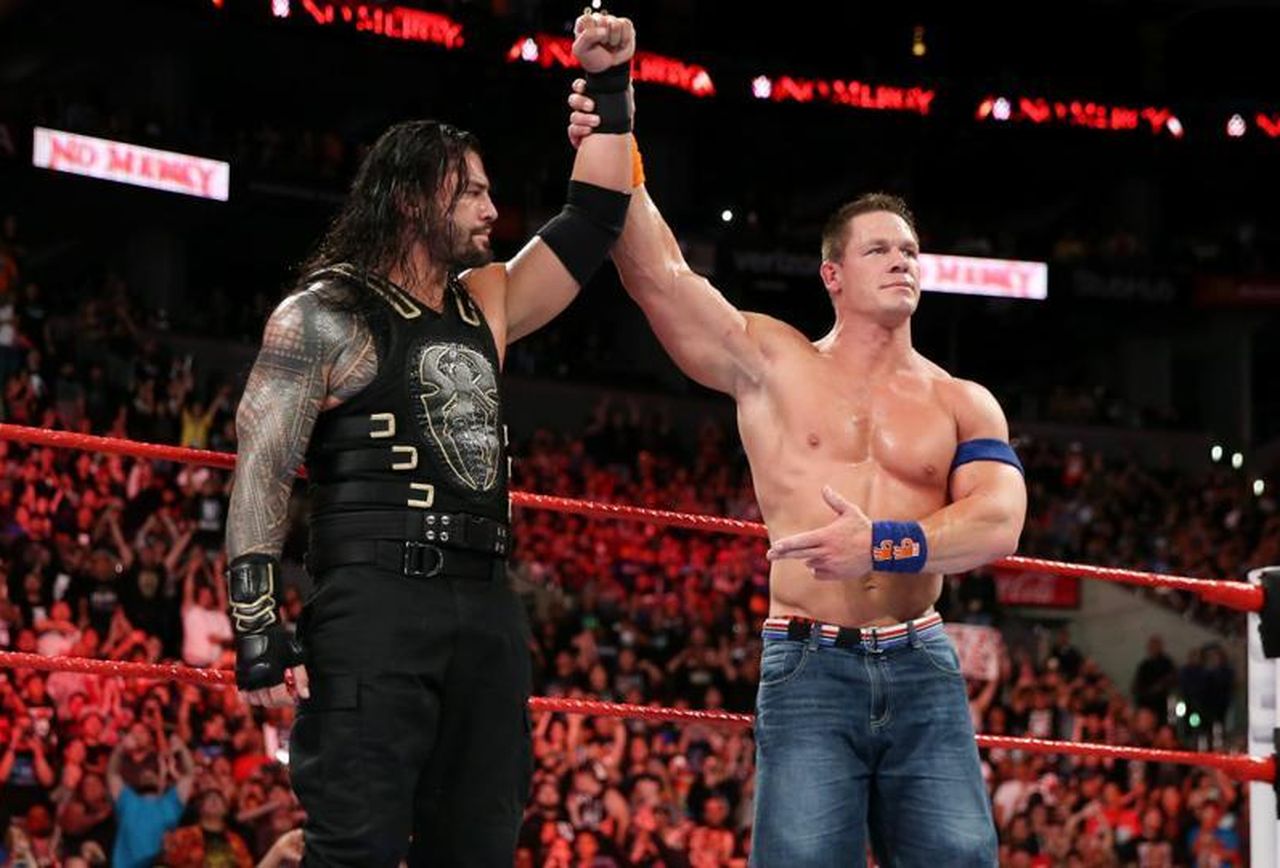
As noted elsewhere in this list, John Cena's 2017 programme with Roman Reigns was designed to to anoint 'The Big Dog' as the next "Guy" in WWE, but the limp nature of the bout itself wasn't the only reason it didn't work.
Having divided audiences for over a decade, Cena wasn't exactly the perfect person to convince people that Reigns was magically their new hero. Furthermore, 'Big Match John' had so profoundly adjusted what it meant to even be the the top star that - and this was key to everything - wins and losses simply didn't matter in the way they used to.
Cena has the most complex legacy of any main eventer in pro wrestling history. For every genuinely great match, there was a business-exposing stinker that ordinarily wouldn't have escaped a training school. For every money promo that kept an empire economically afloat, there was an unthinkably destructive worked shoot or no-sell that chipped away at financial and emotional investment from the company's old base. His ability to draw women and children was an over-criticised element of his offering by frustrated man-babies gatekeeping their hobby. But when his performances were somewhere between risible and abysmal, the counter-point was simply that he worked harder than everybody else protecting WWE's initials, like the two things were remotely related.
He was the only guy for the spot he occupied, but only because he changed what it meant to have the spot. Roman Reigns only truly claimed it in 2020 because he framed what "It" even was, and his excellence in the role paved the way perfectly for Cody Rhodes to take it afterwards. Cena was, more for worse than for better, completely irreplaceable.
Ups…
8. Getting Over After Nearly Getting Fired
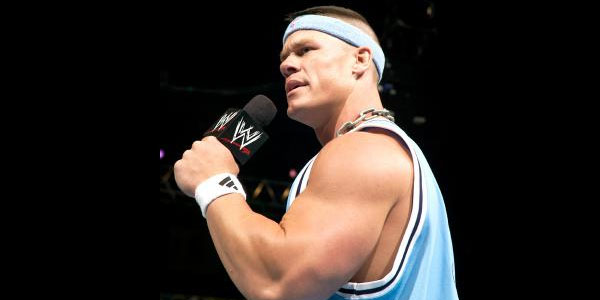
As good an inspirational tale as a cautionary one for today's talents, John Cena was famously a wrestler on the bubble before the right mix of luck and talent took him from the outhouse to the penthouse.
Stephanie McMahon hearing him freestyle on a bus is the apocrypha, stood up by both parties and standing to reason when viewing the now-iconic Halloween Party scene in which Cena portrays Vanilla Ice at the then-SmackDown General Manager's soiree. Having worn the local sports team colours in every town (and then pivoted to their rivals during his pre-rapper heel turn) Cena's new energy, new look and new persona was everything a star-starved WWE needed in 2002.
Timing was on his side, but so was the company machine within a year. Given the likes of Kurt Angle, Brock Lesnar, Eddie Guerrero, Chris Benoit and The Undertaker to work with, Cena wasn't just hanging with big names - he was earning respect of the scariest bullies in an all-time horrifying locker room. On that - his babyface turn occurred around Survivor Series 2003, where he teamed with Angle, Benoit and fellow known awkward bastards Bob Holly and Bradshaw. Whether by accident or design, this scanned as a stamp of approval, and how could the veterans not see it that way? It wasn't their shirts audiences were buying in record amounts, nor their themes getting the biggest pops of the night.
Cena was made, and the company milked every subsequent step on his road to the top.
7. The WrestleMania Entrances
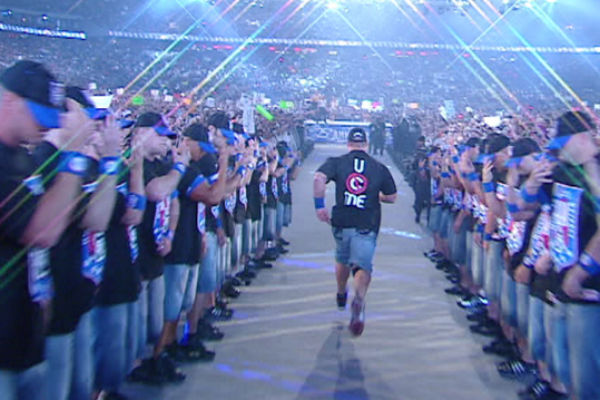
The first time John Cena was given a grandiose WrestleMania entrance proved to be the last time the 'Show Of Shows' took place in an arena rather than a stadium, and the company couldn't have made use of the spectacle any better than when they were welcoming 'The Champ' to the ring.
25's multi-Cena guard of honour might be the weird and on-the-nose peak, but there were some other absolute blinders along the way. The marching band at WrestleMania 24, the kids having the best day of their lives at WrestleMania 39, speeding through Detroit streets and smashing his way into the building at 23, surprising The Rock and everybody else with a WrestleMania 32 cameo despite spending months on the shelf beforehand. Even 42's no-frills opposite land offering was one of the lone highlights from the lousy first half of his 2025 heel run. Typical of the era he defined, Cena didn't always have the matches at the 'Show Of Shows', but he inarguably brought the capital-M moments.
There's also the nice story of him apparently jacking one in for the good of somebody else's cause. His WrestleMania 29 arrival was bizarrely understated, but the reason was revealed after the fact - with time not on the show's side Cena pushed to cut his own big moment in order for a Brodus Clay dancing segment to go ahead as planned.
6. His Matches & Feuds With CM Punk
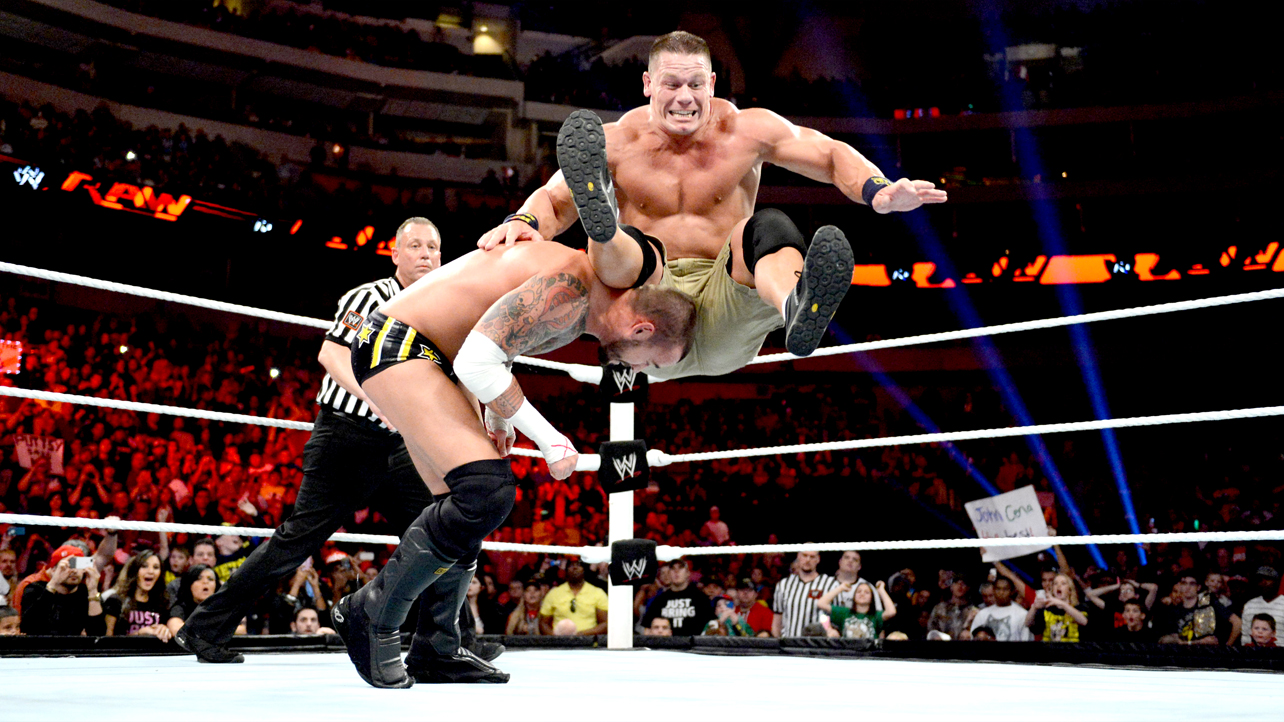
With the exception of their dismal 2025 series, John Cena and CM Punk proved to be unlikely wrestling soulmates at a time when WWE offered so little than could even generously be considered credible. Their matches were electrifying, their promo battles epic and their characters perfectly pitched to oppose one another even when ostensibly fighting the same fight.
Like a lot of WWE talent from the time, they interacted quite a bit before the stakes were really that high. The market leader had a dearth of major match pairings, and Punk rapidly rose through the ranks in the company to the point where he served as a reliable heel for 'The Champ' to beat when the cameras weren't rolling. But the magic really happened when they were.
As part of one of Punk's career-defining rivalries in 2011, then again in 2012 and finally on the road to WrestleMania in 2013, the pair assembled hit after hit in promos and matches. Diametrically opposed personas (even if the real life people were way closer than plenty would have cared to admit), the contrast was obvious and easy to play with. When the bell rang it got even better. Matching each other's freak, moments that often scanned as sloppy suddenly looked like acts of desperation and, paradoxically, brilliance.
Exhaustion, exhilaration and unprecedented drama underpinned their Money In The Bank 2011 classic, while their Autumn 2012 series played brilliantly with asking exactly how much Punk had levelled up during his time at the top, and for that matter how much time he'd even had because of Cena's stranglehold.
5. United States Championship Open Challenge
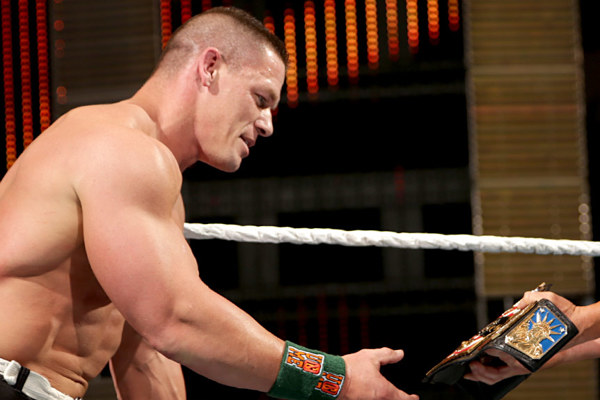
For reasons that at least seemed noble, John Cena decided to mark the true end of his full-time run by dropping down into the midcard and allowing one wrestler a week the chance to have the hottest match on the show while providing him the opportunity to win everybody over as a babyface once and for all.
It was a maverick move from a man who historically played it so safe and a company that seemed to like it that way, but the payoff was evident from the very first night and the outcomes just about satisfied every stated aim. Over the course of a remarkable summer, Cena had great matches against, Dean Ambrose, Stardust, Bad News Barrett, Sami Zayn, Neville, Zack Ryder and Cesaro (twice). Kane also challenged him. It got over enough that the company went with Cena Vs WWE Champion Seth Rollins title-for-title as one of SummerSlam 2015's big matches.
Rollins was successful, but after 'Big Match John' won it back a month later, he resumed proceedings with further bangers against Big E, Xavier Woods and Dolph Ziggler before the sinfully boring Alberto Del Rio was inexplicably chosen - as he often was - to end the fun.
Eventually, WWE came to realise that it was this exact vibe they needed to curate when it came to ending Cena's entire career on a high. As soon as his catastrophic heel turn abruptly came to an end, they set about capturing 2015's energy a decade later...
4. His 2025 Babyface Run
What could have been.
Not rhetorical, what could have been?
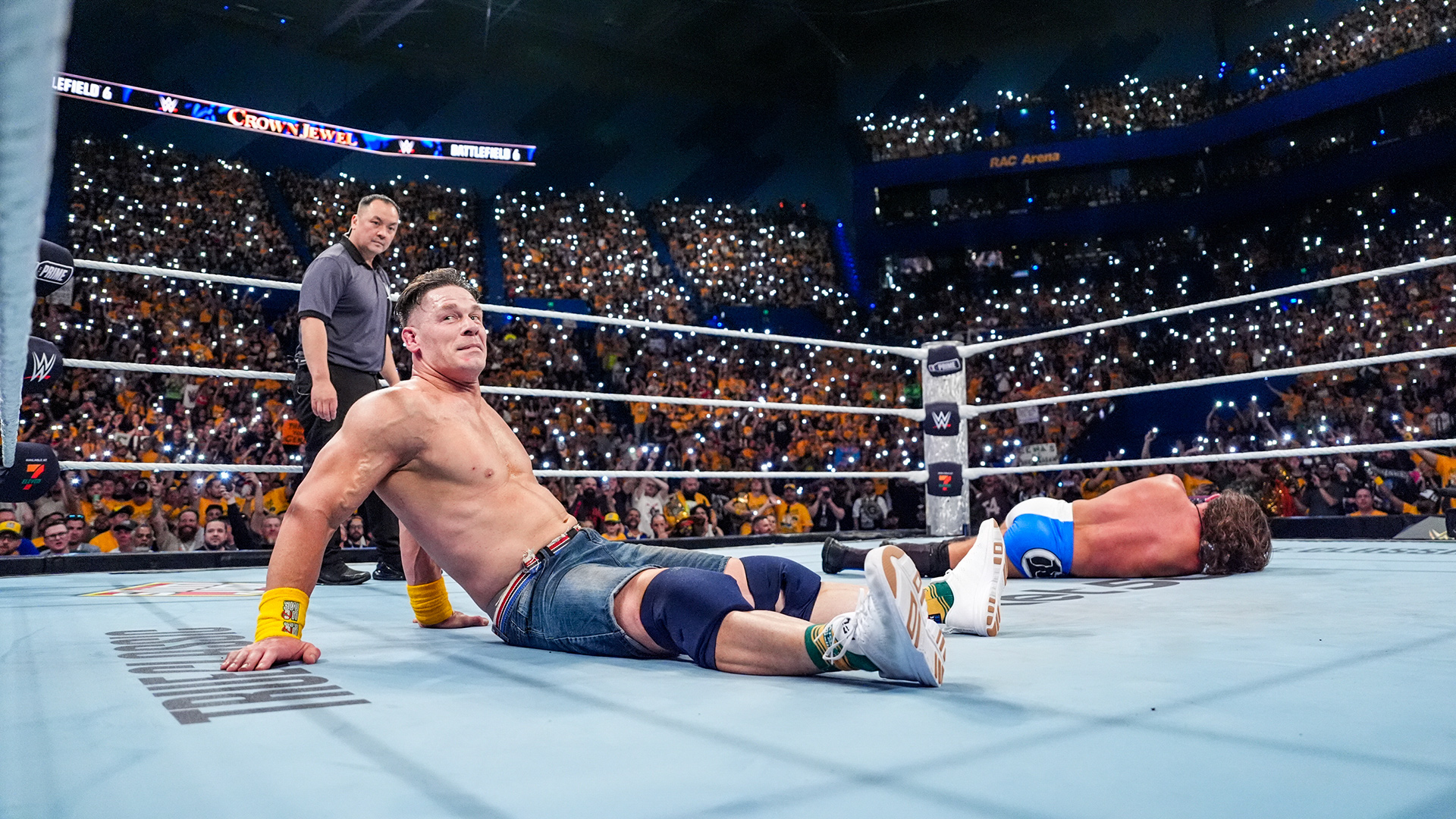
Had WWE, drunk on their own importance from the prior excellent years creatively not gone in search of a big shock for Elimination Chamber after The Rock lost a backstage campaign to turn Cody Rhodes heel, John Cena might have spent his last 12 months having nights like the ones he did against AJ Styles in Australia, Logan Paul in Paris and Rhodes himself at SummerSlam.
'The Biggest Party Of The Summer' showdown between 'The Champ' and 'The American Nightmare' was electrifying in places, a match of the year candidate on its own steam let alone in comparison to their WrestleMania 41 disaster in Las Vegas. A supercharged all-babyface battle that actually dared to serve the purpose of passing the torch to Rhodes once and for all, it was everything their plodding, ruined 'Show Of Shows' match wasn't. The aforementioned Styles match was an experience almost beyond what pro wrestling is theoretically supposed to be, particularly the era Cena presided over. When 'The Champ' was on top, earnest love letters to the past were banned unless Attitude Era fossils or The Undertaker's mates needed putting over.
The shock of the turn was sort of worth looking and sort of worth trying at one point over the last 23 years, but in hindsight, his last one was the absolute worst time for it. Audiences were desperate to embrace Cena while they still had the chance, half of them were robbed of the opportunity, and everything else was so good that it served as a pointed sampler of what could have been.
3. The 2008 Royal Rumble Return
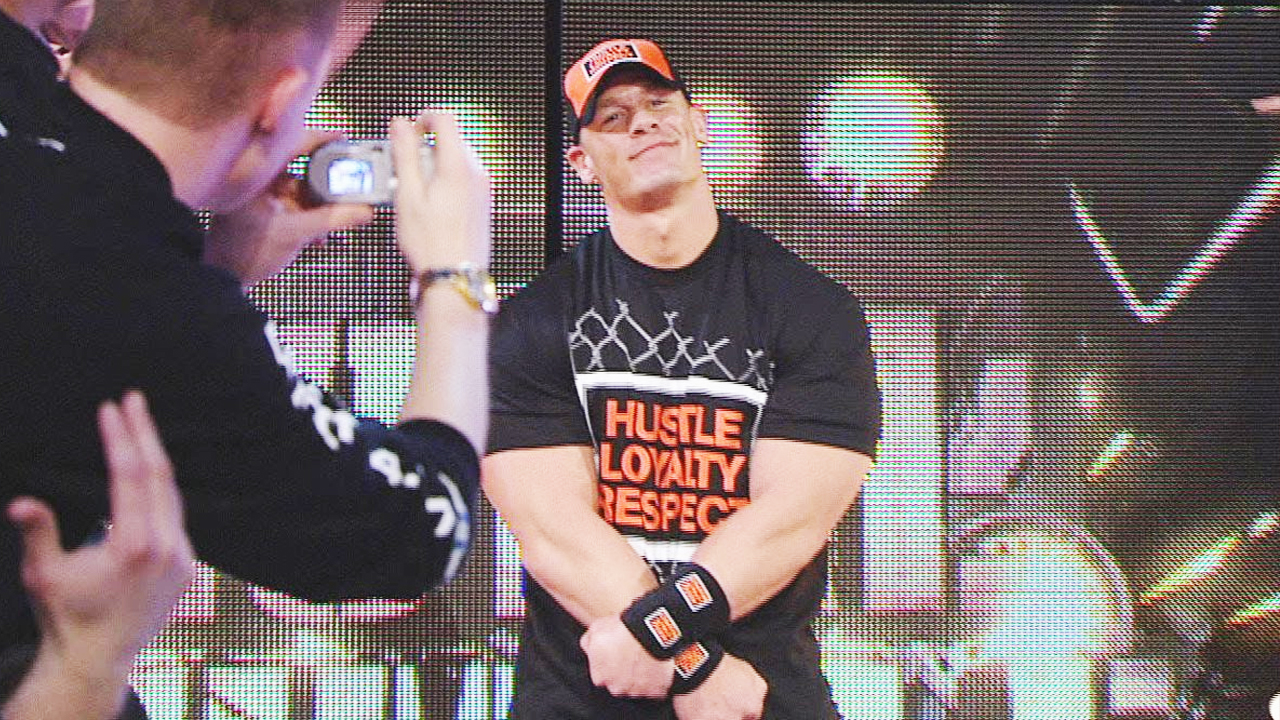
You wonder if the 2008 Royal Rumble could have been the end of the mixed reactions for John Cena had it taken place anywhere but Madison Square Garden.
When 'The Champ' returned fully healed less than three months into an injury rehabilitation that was supposedly set to keep him out over a year, the company's spiritual home (and most ardent and discerning fanbase) came unglued. Very possibly the biggest pop of Cena's career and the best #30 surprise in the history of the stipulation, the moment honestly felt like it could power the removing of MSG's famous roof if the cliché was something that could actually happen. It was an all-timer moment in the company's history, proving conclusively that Project Cena had worked better than millions of dissenters the world over were willing to admit.
He went on to win the match, but by then the audience had just about come down from that original, visceral high. It was as though their real feelings and emotions had betrayed the ones they wished to project to the world, and it was back to booing 'Big Match John' by the time he was eliminating Triple H to send himself to WrestleMania. If there was ever confirmation that more of the audience liked 'The Champ' than were often willing to admit, it was here.
And in defence of them, it was probably because he'd just spent a year giving them every reason to give him a chance...
2. The 2007 In-Ring Run
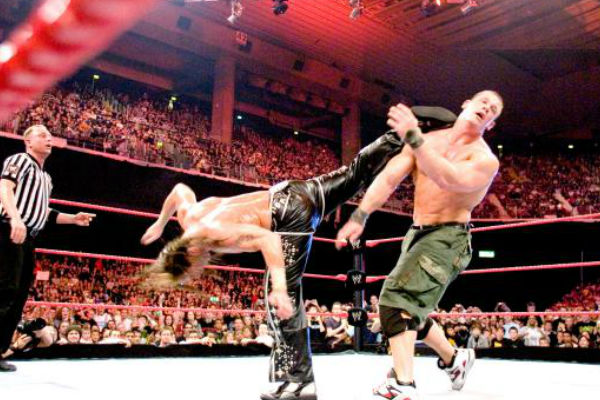
Bleeding, sweating and paying the price against Umaga at the Royal Rumble, going the distance with Shawn Michaels in more dramatic a fashion than Bret Hart managed to on a UK edition of Monday Night Raw, extracting the best match from Bobby Lashley's original WWE run at the Great American Bash, acting as the glue in a bizarrely entertaining fatal 5-way that also featured Lashley, Randy Orton, King Booker and Mick Foley; Cena's list of contemporary (?) classics in 2007 stand as a foundational opposite to the chaos taking place elsewhere in the company.
And that doesn't account for literally and figuratively the biggest triumph of the lot. His feud with The Great Khali was celebrated in the era then somewhat brushed aside as empty nostalgia in the years that followed, but the matches really are the miracle-worker efforts you remember. Their One Night Stand payoff was the best of the lot, following on from 'The Champ' surviving their first bout at Judgment Day and losing via pinfall on a Saturday Night's Main Event special 24 hours earlier. Falls counted anywhere, which helped, but the unstoppable 'Champ' positioned as the giant-killer tasked with winning a "pinfalls only" bout against a monster that had never lost fall was exhilarating. Cena's unrelenting will to deliver the F-U served as the primary illustration of his guile, and when he scored with it on the HGV set to get the win in just over 10 minutes, the crowd bought every bit of the fairytale.
His summer series with Randy Orton was mostly a dull dud, but that contradicts the thinking that comparison is the thief of joy. 2007 was as good as it got for the two, comfortably trumping the extended runs they had together in the many, many years that followed.
1. The Make-A-Wish Record Breaker
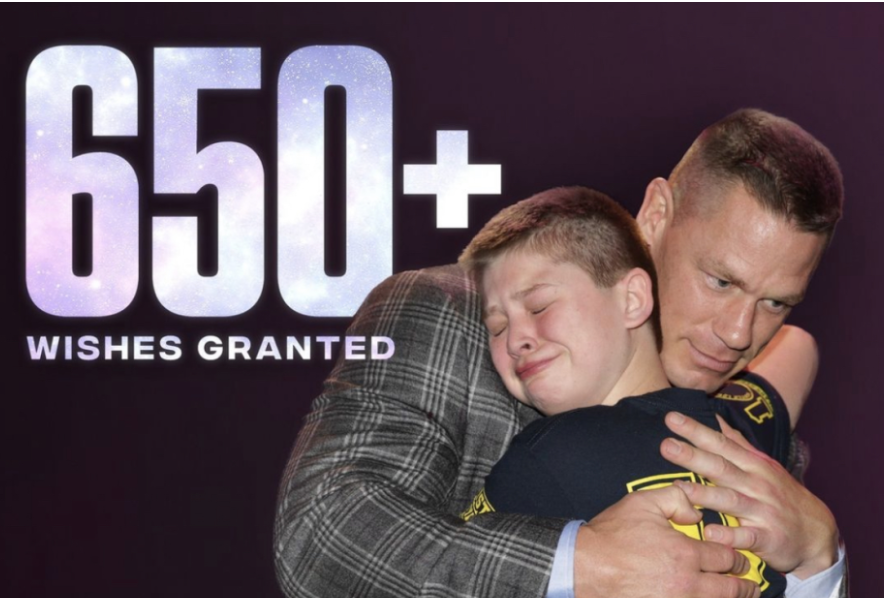
At over 650 wishes granted at time of writing, John Cena's legacy with the Make-A-Wish Foundation should be held up as the crowning achievement of his time at the top of professional wrestling.
Pro wrestling is something absolutely worth critically analysing and also something that's not always worth taking too seriously - both of these things can be simultaneously true. The area in between those divergent mindsets often gets ignored and in some respects that's due to the nature of the game - it's all a work, you're supposed to see somebody on the other side of the screen and make your mind up about them as a character in order to invest in the character they're portraying. For two decades, two thirds of the crowd made their feelings audibly clear on Cena, many of those had extremely difficult lives made better by their meeting with 'Big Match John'.
Plenty of clips over the years made air, leading some to understandably suggest this was strictly shrewd PR from a company known for it, but Cena's numbers don't lie and they spell disaster for the cynics. Furthermore, even with wisdom of a weathered bigger picture, the recipients themselves simply do not care, and are given a moment that Cena himself clearly wants to make count.