15 Exact Moments Failed WWE Ruthless Aggression Gimmicks Actually Got Over
The WWE Ruthless Aggression Era did not quite get started with that John Cena Vs. Kurt Angle match…
In retrospectives, WWE will tell you that the Ruthless Aggression Era was a bold new frontier of its storytelling and talent development model.
The Attitude Era was too risque to last forever. It was a fun time, but WWE had a lot of growing up to do - and, since the Rock and Steve Austin were gone or all but retired by 2003, there were new stars to be made. Luckily for WWE, they didn’t need a territory system for this; the promotion had created a star creation factory named Ohio Valley Wrestling. There, the stars of tomorrow were made.
There was Brock Lesnar, the Next Big Thing. There was Batista, who was turned into a massive star by the benevolent Triple H. There was Randy Orton, the youngest World champion in WWE history. Then there was John Cena, who became the Greatest Of All-Time in WWE canon.
This narrative is not exactly truthful. Tonally, Ruthless Aggression was almost identical to the cheap and nasty controversy bait of Attitude. Come to think of it, multiple storylines were far more offensive than a lot of WWE’s material in an actual year of the Attitude Era, 2000, which felt almost wholesome in comparison.
Also: the vaunted ‘OVW Class of 2002’ took a long time to actually get over. A long time. John Cena, infamously, was almost fired. He was the guy that the very phrase ‘Ruthless Aggression’ teed up, and he was so un-over, and such a massive clutz between the ropes, that he was only saved by serendipity. Stephanie McMahon overheard him freestyle tap on a tour bus, he was handed a homophobic life raft, and he got over in the end.
But when, exactly…?
15. Edge | July 11, 2005

You either die a hero, or live long enough to become Billy Gunn.
That was nearly the fate of Edge, a man who seemed destined to become a main eventer, and who had a great time burying Billy Gunn for doing nothing after winning the 1999 King Of The Ring. Three years after Edge took the crown in 2001, he was floundering. He was superb as a member of the SmackDown Six in 2002, but as an in-house project, lacked the fashionable aura of workrate demigods Eddie Guerrero and Rey Mysterio. Upon returning from neck surgery in early 2004, he remained a bland babyface who struggled to connect with fans - so much so that he was shockingly booed by his hometown fans at SummerSlam 2004 on August 14.
Edge was a poor babyface because his disposition was cocky and his offence wasn’t credible. Tall isn’t the same thing as powerful. He was not the first and would not be the last WWE star that Vince McMahon waited an eternity to turn heel, but when it happened, Edge was forever made. Everything that fans almost subliminally resented about Edge was emphasised when Edge turned and was aligned with Lita: the woman with whom he had embarked on a very real extramarital affair.
The man who’d become known as the Rated-R Superstar was handsome and sneaky, articulating these new (or unearthed) character traits in the ring with a brilliant counter-heavy approach. This absolute winner of an act was crystallised on July 11, 2005 - the episode of WWE Raw on which the fired Matt Hardy was brought back to capitalise on the biggest news report of the year. Their crazed brawl was the greatest angle of 2005. Fans had rallied behind Matt and were frankly jealous of Edge. Edge “took” the alt girl they were drawn to and projected their own rejections onto. Edge mined an actual, toxic emotion, and rubbed their faces in it with a fantastic new array of facial expressions.
But somebody got over on August 14, at least…
14. Batista | August 14, 2004

Batista felt like the least likely babyface star imaginable between 2002 and 2003.
He debuted as a cartoonishly evil deacon providing back up to a reverend, which was a dead-on-arrival parody of a terrible New Generation Era gimmick. Even as the well-dressed muscle of the mega-pushed Evolution stable, context and fashion trends appeared to damn him. Batista was a body guy at a time when casual fans barely existed, and when the dissenting hardcore voices were adamant that WWE should usher in a new era of workrate. That’s how the finale of WrestleMania 20 unfolded. In WWE, though, fans will always gravitate towards size and charisma - it is in the promotion’s DNA - and by the summer, a paradigm shift was set in motion. At SummerSlam, Edge got booed in Toronto - and he was jeered at the expense of Batista.
Edge defended his Intercontinental title against Batista and Chris Jericho in a Triple Threat match. Batista looked like a shredded, oiled God when making his entrance. It didn’t matter that he couldn’t execute a space flying tiger drop. He looked irresistible.
The match was laid out for Batista to look like a badass. The idea was for fans to then pop for Edge and his ability to outsmart the monster. The problem is that fans were actually getting into Batista’s stuff, making wow noises as he drilled Jericho with an explosive launch into the ring post. When Edge took control, he just got in the way.
This was when Batista first got over on a “just looking at the f*cking guy” basis - and when WWE was first tempted to go all the way with him. It wasn’t anywhere near as iconic as WrestleMania 13, obviously - but very quietly, a double-turn of sorts happened here.
13. John Cena | December 19, 2002

On June 24, 2002, Vince McMahon cut his “ruthless aggression” speech.
Far from the dawning of a new era - the phrase was effectively dropped within weeks - he only really said it to tee up John Cena’s push. And it wasn’t much of a push, either: just an introduction. The genesis of Ruthless Aggression basically amounts to Vince being moody that the ratings were bobbins and asking you to get behind Cena for a few weeks. That’s it.
And Cena did not get over. He was so mechanically hopeless that his atomic drop looked like the old comedy spot where a wrestler accidentally headbutts somebody’s balls, and he wore the colours of the local sports teams in order to suck up to crowds. He was rave-reviewed down in Ohio Valley Wrestling, but so were countless others. If anything, that was a mark against many developmental hopefuls. Cena was a legitimate dud who was close to getting bounced - until Stephanie McMahon overheard him freestyle rapping on a tour bus. Cena was asked to do that on TV, and effective from that date, was never not over.
He first rapped in a Halloween party skit on the October 31, 2002 edition of SmackDown. His “flow” was good and impressively complex. He did it again in the form of an elaborate (and rubbish) fat joke at Rikishi’s expense a week later.
It was on the December 19, 2002 edition of the show that it all came together - “it” being the white rapper attire, B2 sidekick and gross homophobia. Cena devised the rhyme you’d expect for the Tampa Bay Buccaneers in his pre-match rap, and as vile as the material was, it connected with the audience at the time - and indeed Michael Cole and Tazz, who pissed themselves on commentary. It was low-hanging fruit, but he carried himself like a genuine superstar that night. The genuinely overnight transformation was incredible.
12. Triple H | February 21, 2005

This one might prove controversial, because Triple H truly ascended to the main event level on January 23, 2000: the date on which he defeated Cactus Jack in an epic blood-soaked brawl at the Royal Rumble. But the man was only selectively over after he did a more effective job of boring the crowd into submission at WrestleMania 18 than Bret Hart did with Steve Austin at WrestleMania 13.
Triple H played a role in the brilliance of the Shawn Michaels return match at SummerSlam 2002. As good as that was, it was the last decent effort Triple H entered for years. The Reign of Terror was upon us after that - a period of time defined by the slowest and most tedious matches imaginable, matches so godawful that the only rational explanation is that Triple H intentionally made almost every opponent look bad. Then again, he liked Shawn Michaels, and almost every other return match was terrible. So perhaps the more likely explanation is “Triple H was terrible”.
He was always very good at the “Oh, no, I’m f*cked here” facial expression, and he pulled a great one when Batista gave him the thumbs down on the February 21, 2005 episode of SmackDown. That was the moment Triple H’s actually effective heel work paid off. Fans knew that he was close to sh*tting himself as Batista tore through everybody in sight - and this is when the turtle’s head descended.
You could argue that this very moment only resonated as strongly as it did precisely because Triple H was such a suffocating presence at the top of the card. At the same time, he could have been good when he won all the time, as opposed to very bad.
11. Randy Orton | April 18, 2004

There are two schools of thought pertaining to Randy Orton.
To some, Orton is an in-ring master who excels at the small details, and whose discipline and deliberate pacing allows his bigger moments to feel massive.
To others, Orton has obvious talent, but is vastly overrated, a touch boring, and has wrestled far more quiet matches than emotional epics.
This divisive reputation will always define him - but the former camp will point to Backlash 2004 as proof that he is a master. But this did not happen quite as quickly as WWE’s retrospective narrative would have you believe; Orton’s initial blue chipper babyface act in early 2002 was a failure eerily reminiscent of Rocky Maivia, and his Randy News Network gimmick was definitionally midcard fare that he lacked the comedic timing to pull off. His poor injury record further stigmatised him as a bust.
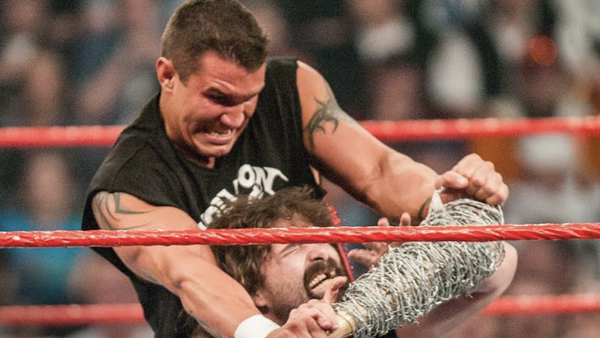
As the reborn Legend Killer, Orton spent his time on the main roster as less laidback, more unflappable. He was composed and relaxed naturally, which enhanced his persona as a young prodigy entitled to success. In his seminal Hardcore match against Mick Foley at Backlash 2004, Orton subverted this to phenomenal effect. His panicked selling when he got thrown into the tacks was incredible. He perfectly conveyed the idea that he was out of his element, and into deep sh*t. But he earned his comeback, and consequently his respect and main event status, by the finishing stretch. It was a masterful job on Foley’s part - but it only worked because Orton was worthy of the rub. His discipline as the guy who could not be fazed had allowed his big, violent, vulnerable moment to feel massive.
Triple H seemed to actively try to erase Orton’s momentum by taking the World title off him a month after SummerSlam 2004, without doing a job in return, but by April 2005, fans were prepared to buy Orton defeating the Undertaker at WrestleMania 21. And, while WWE had only really emphasised the Streak that very match, beating ‘Taker on that stage was still a massive deal - and many thought Orton would get it done.
10. Booker T | June 10, 2002

Booker T was a very funny and charismatic dude. He was treated like a punchline during the Invasion, just like the rest of the WCW crew, but if it even counted as a push, he got one. He was programmed against the Rock. Relative to everybody else, he was promoted and was over - but in reality, he was sort of a joke, even if the joke was funny. He was the guy that the top stars made fun of, and the guy who got his ass kicked in a supermarket by Stone Cold Steve Austin when the “Invasion crap” was done and dusted. After that, Booker slid down the card, had to endure a Worst Feud of the Year-calibre rivalry with Edge, and basically became just another midcarder. The Booker T who had wowed the industry in a famed WCW Best of Seven series with Chris Benoit was a vanishingly rare sight.
Things started to shift in 2002. He was no longer a punchline; he was the one making the jokes. His strange bedfellows partnership with Goldust was a rare joy in a dismal and desperate year. Plagued by top stars leaving and a post-Attitude Era malaise, the WWE of 2002 was downbeat. The levity provided by Bookdust was fun and quietly necessary. The only time that the WWE take on the New World Order was any good was when BookDust got one over on them - but it was actually when Booker was briefly in the nWo that fans took notice of him as a hilarious performer built for the daft context of sports entertainment.
On the June 10, 2002 episode of Raw, Booker expressed his enthusiasm to “collaborise” with new member Shawn Michaels. He even performed his own riff on Shawn’s ‘Sexy Boy’ theme, and it was so good - “I’m not your sucka, SUCKA!” - that he made Kevin Nash and X-Pac corpse.
Booker was actually kicked out that very night. This could have scanned as a burial, but his bit was so priceless that fans wanted him to exact revenge.
9. JBL | May 16, 2004

“Over” has a slippery definition.
JBL was not a draw as World champion, a level to which he was pushed mostly because WWE was desperate, having done such a dismal job of handling the WCW invasion. Well, it’s not as if WWE “handled” the invasion angle; if anything, Vince McMahon picked WCW up and smashed it against the wall full-force. His petulant power trip led to an era in which a former Acolyte drew In Your House numbers on pay-per-view. And people call him a genius.
Bradshaw had enjoyed a decent level of fame in Chris Kreski’s chapter of the WWE Attitude Era; the APA as goon brutes for hire benefitted from Kreski’s signature overlapping narrative approach, and JBL was genuinely witty as the hard-drinking badass. The man floundered big-time when the good times drew to a close. In 2002, WWE presented him as Steve Austin’s mate, which was just sad, before hurriedly reforming the APA in what was only a diminished return. Bradshaw was closer to getting released than becoming a headliner, which was genuinely inconceivable - until it happened, and in record time.
By objective business metrics, John Bradshaw Layfield was a definitional failure - but measured against the standards of a dismal era, his boorish, nasty persona was strong enough heel material. He was the loudest and most insistent voice in the room, which counted for something. His promos were deafeningly vile, and he was a credible bully through his size and gruesome Clothesline From Hell finish. Programming him against Eddie Guerrero put him over the top.
2004 was the year in which great matches were so rare and valuable that Eddie and Chris Benoit were pushed to the main event; JBL embodied the death of sacred workrate, and at Judgment Day 2004, it was a particularly bloody murder. Beating a technical god so violently that Eddie needed a blood transfusion was how to get heat in the era before banger fatigue.
8. Brock Lesnar | October 20, 2002

Brock Lesnar made an immediate and mind-blowing impression upon his March 18, 2002 debut.
He smashed Spike Dudley with such disturbing reckless force, with an organ-squelching spree of powerbombs, that it’s a wonder nobody had to scrape the back of Spike’s head from the ring mat. If a film production company ever requires a sound effect for a murder scene involving a blunt object, they need not hire a foley artist. They need only rip the audio from the third powerbomb.
As awesomely violent as the scene was, it didn’t get Lesnar over as such. It took a while for Lesnar to maintain his aura throughout the body of a match. His two wins en route to being crowned King of the Ring were not good; the semi-final versus Test in particular was weirdly long and competitive. Even at SummerSlam, when he defeated the Rock for the Undisputed WWE title, he was not quite there; the match, while good and loud, felt more like the obvious destination of a mega-push than an earned breakthrough moment. It was at No Mercy where Lesnar truly felt like the headliner WWE had insisted he was.
He cleanly mutilated the Undertaker in a gruesome Hell In A Cell match, which was more claustrophobic and ugly than the diet stunt show the attraction had become. Bloody and harrowing, there wasn’t a single second in which Lesnar did not feel like a killer. WWE chose the perfect visual with which to convey Lesnar’s ascent; when he stood on top of the Cell, he felt like a demigod of combat sports violence above literally everybody.
7. Goldberg | August 24, 2003

To an extent, and not an insignificant one, Goldberg was over to WWE fans before he even signed with the company. He wasn’t some no-mark wearing a red WCW logo t-shirt in 2001. Nor was he Booker T or Diamond Dallas Page. Booker T had name value, but still had to work to get over. DDP also had a strong reputation as a draw, and that still wasn’t enough. It didn’t matter how over he used to be; with such awful booking, he was doomed.
Goldberg was different because his was a universal appeal. He was so intense and badass that he transcended tribalism. It didn’t matter how often the company told you that WCW sucked; the WWF fans secretly thought Goldberg was cool.
Goldberg defeated the Rock at Backlash 2003 in a match that went far too long. The tone was set immediately: WWE didn’t want to book Goldberg like he was Goldberg. His TV efforts were better and more flattering, which was key, but his second pay-per-view bout, against Chris Jericho at Bad Blood, was also a bit long. An improvement, yes, and a good match on its own terms, but it didn’t feel like a uniquely ‘Goldberg’ attraction. Goldberg was over, but not to the level anybody expected (or rather hoped). It was at SummerSlam that WWE let Goldberg be Goldberg.
He ripped and tore everybody in sight in the World Heavyweight title Elimination Chamber main event. It was like the iconic Raven’s Rules match, only better, because these were big name WWE guys he was throwing into the wood-chipper. Triple H had to win, of course, and WWE learned not one lesson. Or perhaps Triple H really did not want to learn it, otherwise his spot was in danger; at Unforgiven, Goldberg won the World Heavyweight title - but in a 15 minute snoozer that exposed his limitations yet again, he lost his aura.
6. Trish Stratus | December 6, 2004

Trish Stratus was over the first second she appeared on WWE television on March 19, 2000. It’s not pleasant to reduce her in such a way, but let’s be real: she was a bombshell that was hired specifically to be over in front of the manospheric Attitude Era demographic. And she was. In time, she developed real presence, and was particularly effective in the very backwards “Jezebel” role, but when she started working matches, it felt like an excuse for WWE to put her in more revealing clothing. While she was a failure as a wrestler in that she was not exactly troubling Match of the Year charts, she wasn’t positioned to be a success. The women of the day were pushed as moving page 3 graphics.
Something unexpected happened, though; as WWE put Stratus in matches to get more out of her, she got good. Really rather good. Her improvement, and the trust she had earned, was rewarded with the first-ever women’s match main event on WWE Raw. Stratus and Lita repaid it with an outstanding match overflowing with drama.
Now, much of that drama was fuelled by a terrifying botch. Early in the match, Lita attempted a suicide dive. It did not go well; she over-shot her trajectory, landed on her throat, and her body twisted into a scorpion shape. It was horrifying, and she was very lucky not to break her neck.
In response, like any good worker, Stratus received the accidental botch as a gift, applying brutal force to a spot in which she dangled Lita by her neck when crouched on the top turnbuckle. Trish’s facial expression was superb; she looked like she was less bothered about her big TV moment and more interested in finishing the job that fate had spared.
5. CM Punk | August 1, 2006

The WWE ECW reboot was infamously very bad.
Vince McMahon was never not going to revert to type; it was borderline miraculous that WWE presented the undiluted, authentic experience at the 2005 and 2006 One Night Stand events. Almost as soon as the brand was rebooted proper, it was impossible to determine why Vince even bothered. He had zero interest in pushing the ECW originals; the WWECW show was essentially a means of procuring a modest rights fee and launching the career of Bobby Lashley, who was dismissed as a body guy and obvious McMahon project by any remaining ECW fans (of which there were probably very few).
What’s irritating is that this all could have worked. Nobody reasonably thought that the Sandman was going to become a headliner or anything, but WWECW could and should have functioned as a “what ECW would have looked like if it had never shuttered” deal - a more violent take on Ring Of Honor, essentially.
CM Punk performed in the idiosyncratic spirit of the original promotion (and would have made a near-perfect heel in the bingo hall, given the characters he’d have interacted with). He was an ECW wrestler born a few years too late, bringing with him a cool style that the mainstream had yet to adopt and a classic pro wrestling sensibility alike. The rave-reviewed sensation was already over before he first appeared on TV, and the in-the-know fans in the Hammerstein Ballroom immediately responded to his accomplished, eye-catching win over Justin Credible. He was their guy - but in 2006, that no longer mattered.
It wasn’t that simple, however; Punk was thought to be a bust. In OVW, he bulked up too much, reasoning that he had joined the land of the giants and needed to fit in, and even the “smarks” were bored senseless by his overlong matches with Brent Albright.
4. The Miz | February 8, 2008
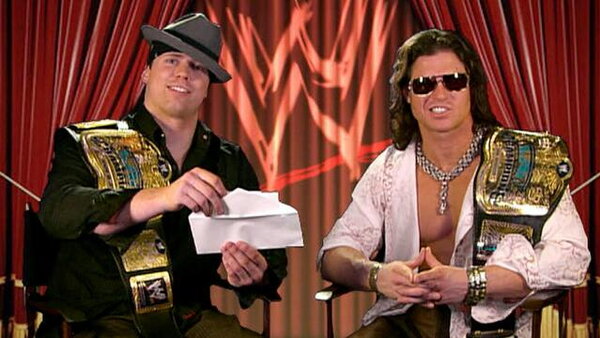
The Miz was flat-out awful at first. You could argue that he never did improve in the ring - judging by the many terrifying dives launched at him, he has literally never caught up - but over time, he finely-tuned his natural charisma to become one of the most tenured and oddly respected midcard-level performers in modern WWE history.
In 2006, he was a hyperactive try-hard who attempted to get a zillion bits over at once. His “hoo-rah!” catchphrase was meant to be dumb jock cheap heat, but since he lacked anything even adjacent to intensity, he just came off as a goof. A wrestler can only be cocky if they can back it up. The Miz could not back it up. He had nothing to show off. He was virtually incompetent, unable to do anything remotely impressive between the ropes, and he was lacking in composure on the mic. He improved (and plateaued) to a respectable enough level towards the end of 2007, at which point fans started to connect with his douchebag schtick.
He was awarded with a digital vehicle alongside fellow SmackDown Tag Team champion John Morrison. ‘The Dirt Sheet’, a burial festival in the style of the gossip shows popular at the time, aired on WWE’s official website from February 8, 2008 - and was an immediate cult hit. (As with far too much WWE material, a lot of it is quite unpleasant in retrospect).
In the very first episode, Miz and Morrison took an old bit - Kurt Angle repurposing old interview footage to make the Rock look bad - and made it their own. They buried Jesse and Festus, using footage of Jesse looking like a totally over-enthusastic geek in a state of pure wonder as the perfect contrast to the vicious editing joke.
3. Shelton Benjamin | April 3, 2005

It’s OK to be a great midcarder. It’s actually incredibly impressive.
In the mid-2000s, though, it was practically an insult. That is because the WWE main event scene was so ancient and overfamiliar, in the main, that fans were desperate to see new stars break through. Vince McMahon was widely considered inept - and while his TV product was mostly rotten, he did build John Cena and Batista and placed them into roles that are traditionally occupied by the same faces for years on end.
Shelton Benjamin lacked the intangibles and promo skills to lead a promotion, but he was a joy to watch in the middle of the card. “Failed gimmick” is a stretch, admittedly, since Shelton’s work alongside Charlie Haas was well-reviewed, but by 2004, he was mostly a guy who existed and was known for good, not great TV matches. His breakthrough series with Evolution never led to anything meaningful. Triple H did job to Shelton, but really, this felt more like a way to deflect criticism than a committed attempt to build a new star.
Shelton evolved into an explosive banger practitioner in 2005, literally launching himself into the conversation with his brilliant display during the inaugural Money In The Bank Ladder match. His sprint up the rungs was a genuine WrestleMania moment - and this was the moment that fans wanted to see him headline the show itself. His incredible leap into Sweet Chin Music later in the year was almost too impressive, in that it popularised the flying nothing spot that only exists for a wrestler to get hurt in a spectacular way.
2. The Spirit Squad | April 30, 2006

Is “bad” the correct word to describe the Spirit Squad?
It’s not inaccurate, since the Spirit Squad were not a good act. If you were in an extraordinarily generous mood, you might say that this was a creative and never-before-seen way to mine the toxic masculinity that once defined the average professional wrestling crowd. We had seen Gorgeous George. We had seen wussy, effeminate poets like The Genius. Boo!
In 1995, WWE debuted Goldust, which was basically Vince McMahon’s new way of saying “Eww, gay!” with the euphemism “androgynous”. WCW preyed on this mentality with the boy band 3 Count, which by WCW 1999 standards was really quite clever. This was the age of nu-metal after all. Then, just when you thought WWE had exhausted every avenue of fear and hatred, they happened upon a troupe of male cheerleaders.
Ultimately, yes, the Spirit Squad was a failure of an act because they were at the sh*tty heart of Raw in the summer of 2006: one of the worst ever periods in the history of the show. They were an animated collection of gay jokes, but unlike so many acts in the 2000s, the group was responsible for one legitimately iconic moment: the spot in which they launched Shawn Michaels into the rafters and through a table at Backlash 2006. This was terrifying, spectacular, and will pop up on X and Reddit and whichever platforms will replace them for years.
The Squad did some decent bumping themselves in the subsequent series with D-Generation X. Tonally, this was all as bad as you remember; action-wise, a damn sight better.
1. The Great Khali | May 20, 2007

If getting over was going to be a struggle for Batista, under the “WWE should give Paul London a run with the World title” principle popular at the time, the Great Khali had no chance in hell. On sight.
For the half of the audience that really didn’t like the John Cena body guy throwback era, Khali, basically another Giant Gonzalez, was the absolute last wrestler they wanted to see. They did not want an immobile spectacle performer. They had that when they were kids. That was the crux of so many issues during an era in which WWE chased a young audience as the existing audience stubbornly refused to move - after all, WWE had changed in parallel with its teenage fans during the Attitude Era. Why not now? Why can’t Akio get the belt?!
Khali could not move, but Vince McMahon did not care. Just look at the guy. He was massive! And he was actually much better than Gonzalez, as he displayed in a shockingly good match against John Cena at Judgment Day 2007. Khali at one point cut Cena off with a staggeringly high back kick.
Khali was probably over before this wild over-delivery of a programme with Cena, to be fair: Judgment Day drew the third-highest B-level PPV buy number of the year (242,000), and the largest since Vengeance 11 months prior in June 2006. While the stipped-up One Night Stand rematch drew a disappointing 186,000, Khali drew a B-level year-best at No Mercy (271,000): the show largely built around his Punjabi Prison match against Batista.
Maybe Khali was over all along, but nobody wanted to admit it.